
Islamabad: (PPF) A judicial magistrate in Islamabad granted the National Cyber Crime Investigation Agency (NCCIA) three-day physical remand of jour
Japanese Scientist Yoshinori Ohsumi wins Nobel Prize in medicine for work on autophagy

Japan: October 3, 2016. The Nobel Prize in medicine has been awarded to Yoshinori Ohsumi for his discoveries on how the body’s cells detoxify and repair themselves.
The Japanese cell biologist will receive the prestigious 8m Swedish kronor (£718,000) award for “mechanisms for autophagy”.
Autophagy is essentially the body’s internal recycling program – scrap cells are hunted down and the useful parts are stripped out to generate energy or create new cells. It is a crucial process to prevent cancerous growths, and, by maintaining a healthy metabolism, helps protect against conditions like diabetes.
Disrupted autophagy has been linked to Parkinson’s disease, type 2 diabetes and other disorders that appear in the elderly. Mutations in autophagy genes can cause genetic disease. Disturbances in the autophagic machinery have also been linked to cancer. Intense research is now ongoing to develop drugs that can target autophagy in various diseases.
The word autophagy originates from two Greek words meaning “self-eating”. This concept emerged during the 1960’s, when researchers first observed that the cell could destroy its own contents by enclosing it in membranes, forming sack-like vesicles that were transported to a recycling compartment, called the lysosome, for degradation.
Difficulties in studying the phenomenon meant that little was known until, in a series of ground-breaking experiments in the early 1990’s, Yoshinori Ohsumi used baker’s yeast to identify genes essential for autophagy. He then went on to elucidate the underlying mechanisms for autophagy in yeast and showed that similar sophisticated machinery is used in human cells.
Last year, the prize was shared by three scientists for discoveries that helped doctors fight malaria and infections caused by roundworm parasites.
The Chinese chemist, Tu Youyou, was recognised for her discovery of artemisinin, one of the most effective treatments for malaria. Two other researchers, Satoshi Ômura, an expert in soil microbes at Kitasato University, and William Campbell, an Irish-born parasitologist at Drew University in New Jersey, shared the other half of the prize, for the discovery of avermectin, a treatment for roundworm parasites.
The winners of the physics, chemistry and peace prizes are to be announced later this week. The economics prize will be announced on Monday 10 October.
You May Also Like
There are victories that end when the guns fall silent, and others that continue to shape a nation’s conscience long after the battlefield ha
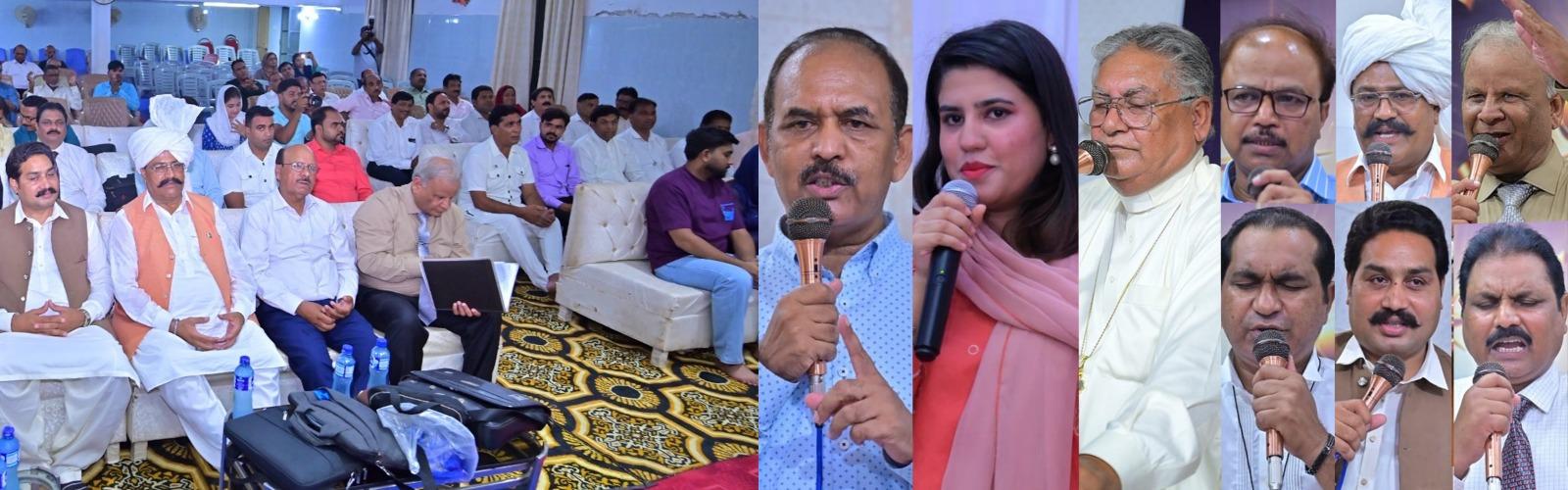
Sialkot: (By Staff Reporter) An event was held to launch several Christian books published by the 'Christian Awareness Movement'


PCP need your support that we may provide you better services: click on donate


"Trial of Pakistani Christian Nation" By Nazir S Bhatti
On demand of our readers, I have decided to release E-Book version of "Trial of Pakistani Christian Nation" on website of PCP which can also be viewed on website of Pakistan Christian Congress www.pakistanchristiancongress.org . You can read chapter wise by clicking tab on left handside of PDF format of E-Book.