
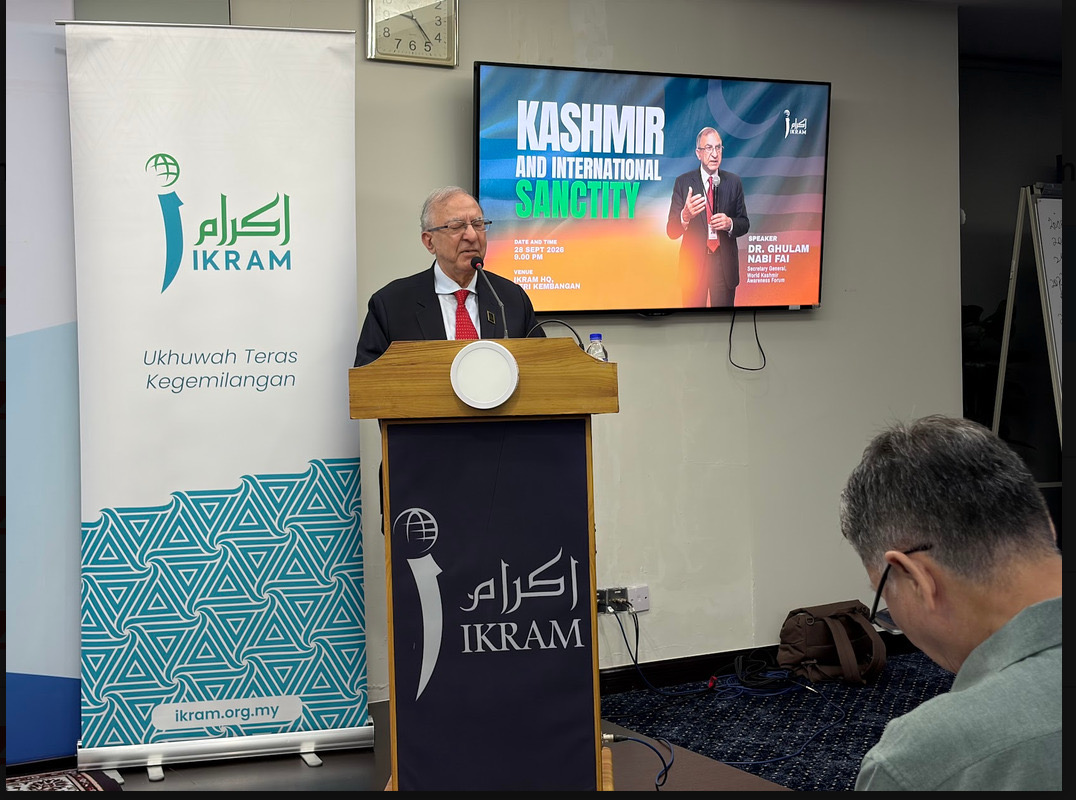
Kuala Lumpur. Malaysia: An enlightened discussion on “Kashmir and International Sanctity” was held at the IKRAM headquarters in Kuala L
IAIS Discussion Highlights Importance of Academic Engagement on Kashmir. By Dr. Ghulam Nabi Fai
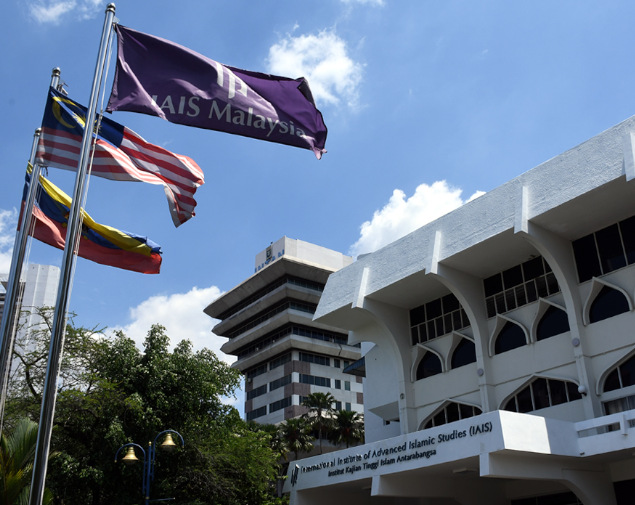
Kuala Lumpur, Malaysia: The International Institute of Advanced Islamic Studies (IAIS) Malaysia hosted an intellectually stimulating and deeply emotional evening of dinner and discussion at Wadi Hadramawat Restaurant in Ampang, Kuala Lumpur, bringing together prominent academics, scholars, political figures and public intellectuals for an exchange of views on Kashmir, Palestine, international affairs and Malaysia’s social and economic challenges.
The gathering underscored the critical importance of sustained academic discussion on Kashmir, particularly at a time when the conflict continues to demand serious attention from scholars, policymakers and the international community. Academic engagement provides an essential space for examining the historical, political, legal and humanitarian dimensions of the Kashmir dispute beyond the immediate headlines and political rhetoric.
IAIS, a Malaysian think tank engaged in global affairs and international relations involving the Muslim community, has consistently contributed to this intellectual discourse. Through research, publications, strategic communication, dialogue and capacity-building, the Institute seeks to promote informed public discussion on global Muslim issues and to advance a fair, just and sustainable world in keeping with Malaysia’s MADANI approach.
Of particular significance is IAIS’s substantial body of research on Kashmir. The Institute has produced more than a dozen briefing papers, background documents and resource materials examining different dimensions of the dispute.
One of its publications, “Kashmir After August 5th: The Anatomy of an Occupation,” examines the developments following August 5, 2019, when the Indian government revoked Jammu and Kashmir’s special constitutional status. The paper argues that the decision, accompanied by a communications blackout and mass detentions, represented a major development in India’s longstanding policy toward the disputed territory.
Another IAIS briefing, “Mourning the Innocent, Confronting the Unresolved: The Kashmir Tragedy Demands Justice, Not Just Condemnation,” argues that while acts of violence in Pahalgam must be condemned, the longstanding political roots of the Kashmir conflict cannot be ignored. It draws attention to United Nations Security Council Resolution 47 of April 21, 1948, and the international commitment to allow the people of Jammu and Kashmir to determine their political future.
A further IAIS paper, “India and Pakistan Must Take the Diplomatic Path to Avoid Nuclear Catastrophe,” emphasizes the dangers posed by recurring India-Pakistan confrontations and argues that sustainable peace requires addressing the unresolved Kashmir dispute rather than merely managing successive crises.
Speaking during the gathering, Dr. Ghulam Nabi Fai, Chairman of the World Forum for Peace and Justice, Washington, DC, expressed his appreciation for IAIS’s willingness to facilitate serious academic discussion on Kashmir.
He said that such forums are particularly important because Kashmir should not be viewed merely through the prism of periodic military confrontation between India and Pakistan. It must also be examined as a question of history, international law, human rights, political rights and the aspirations of the people of Jammu and Kashmir.
Dr. Fai said he was deeply impressed by the participants’ knowledge of international affairs and, in particular, by their sincere interest in understanding how Malaysia’s academic and political communities could contribute constructively to the search for a peaceful resolution of the Kashmir dispute.
The discussion covered a wide range of subjects, including Palestine, Kashmir, the United States-Iran conflict and Malaysia’s social and economic situation. Participants demonstrated a strong understanding of these complex issues and engaged in a thoughtful exchange of views.
The evening also carried a deeply personal and emotional dimension. Many of those present are known to me for more than four decades, and the gathering provided an opportunity for old friends and colleagues who had not met for many years to reunite.
Among the most memorable moments was the warm greeting from Prof. Dato Osman Bakar, a distinguished philosopher and intellectual, Rector of the International Islamic University Malaysia (IIUM) and recipient of numerous national and international honors. Earlier this month, Prof. Osman Bakar was conferred the King Abdullah II Ibn Al Hussein Order for Distinction First Degree by His Majesty King Abdullah II, King of the Hashemite Kingdom of Jordan.
The emotional embrace between the two longtime friends reflected not only their personal bond but also the passage of time and the loss of several mutual friends and colleagues. They remembered, among others, Dato Professor Mohammad Nur Manuty, a prominent academic, scholar and politician who served as Chairman of the Board of Directors of University Sultan Zainal Abidin.
Prof. Osman Bakar also shared an update concerning the health of Sister Fatimah Yappar, who has been a source of inspiration to hundreds of Malaysian students during their years at Temple University in Philadelphia. Other respected friends and colleagues remembered during the evening included Dato Seri Dr. Md. Salleh Yappar, Dr. Bahuddin, Dr. Qamaronia and others.
Dr. Fai also recalled his longstanding friendship with Prof. Imtiyaz Yusuf, whom he first met in the 1970s, emphasizing the enduring relationships that have connected scholars and intellectuals across Malaysia and the United States for decades.
Among those attending the gathering were Dr. Syed Azman Syed Ahmad Nawawi, CEO of IAIS; Mohd Faiz Nawi, Head of International Affairs, IAIS; Dr. Abdul Latiff Mohammad Ibrahim, Head of Research, IAIS; Prof. Dato Osman Bakar, Rector of IIUM; Dato Sri Mohd Sarkar Samsuddin, Speaker of the Pahang State Legislative Assembly; Prof. Dr. Imtiyaz Yusuf of ISTAC-IIUM; Dr. Abdul Razak Idris, President of the IIUM Alumni Association; Syed Mukmin; and other distinguished guests.
Dr. Fai expressed his gratitude to IAIS for its gracious hospitality and for creating an environment in which academic discussion could take place in an atmosphere of friendship, mutual respect and intellectual openness.
He particularly appreciated IAIS’s earlier collaboration with the Malaysian Consultative Council of Islamic Organizations (MAPIM) and Peace, Dialogue and Xenophobia Studies Center (PEDIXS) in organizing his lecture, which brought together academics, scholars, professors and representatives of various diplomatic missions.
The gathering reaffirmed an important principle: lasting peace requires informed dialogue, and informed dialogue requires serious academic engagement. The Kashmir question, with its historical, legal, political and humanitarian dimensions, deserves sustained examination in universities, research institutions and policy forums. Such intellectual engagement can help bridge the gap between scholarship and policymaking and contribute to a more informed and peaceful approach to one of South Asia’s longest unresolved conflicts.
For Dr. Fai, the evening was not only an opportunity to discuss Kashmir and other global issues, but also a reminder that friendship, scholarship and dialogue remain powerful instruments in the pursuit of peace and justice.
(Dr. Ghulam Nabi Fai can be reached at: WhatsApp: 1-202-607-6435 gnfai2003@yahoo.com)
You May Also Like
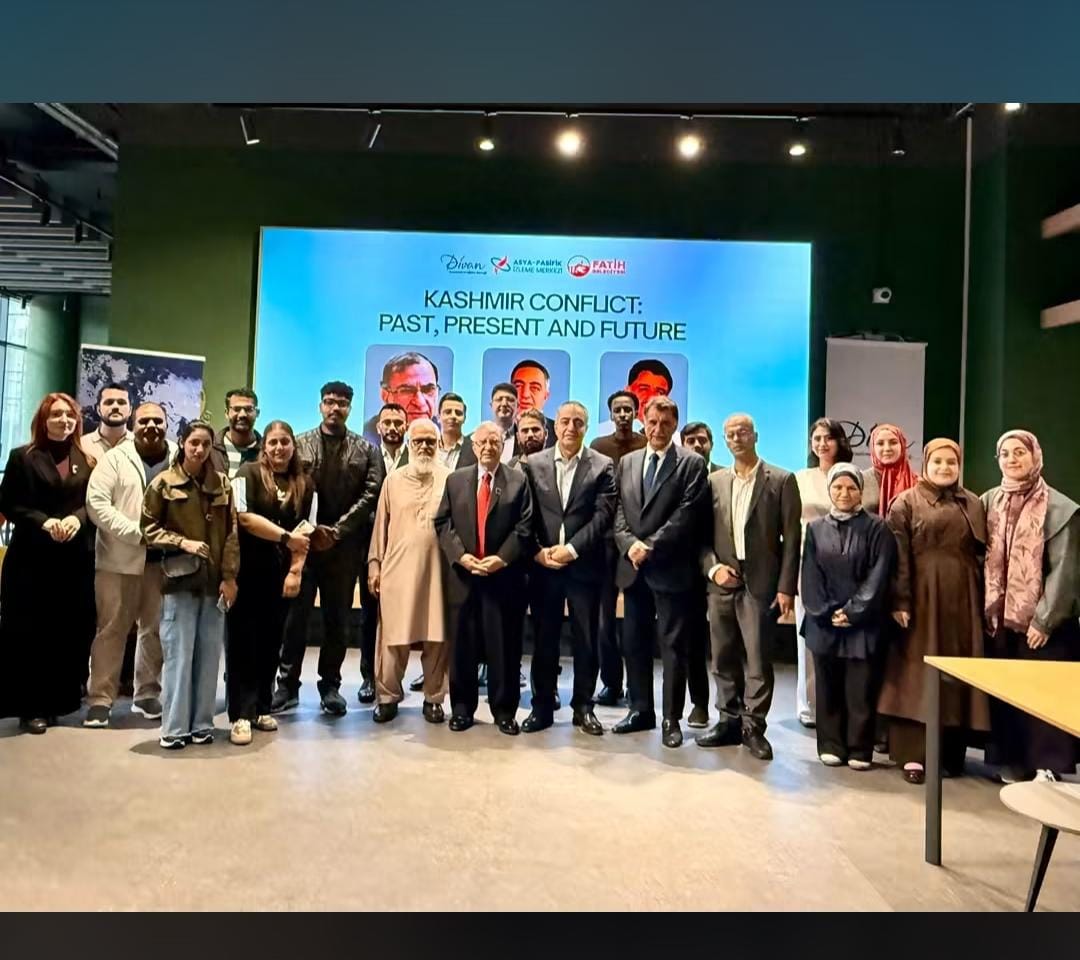
Istanbul, Türkiye: An impressive intellectual discussion on “Kashmir: Past, Present and Future” was held at the headquarters of th
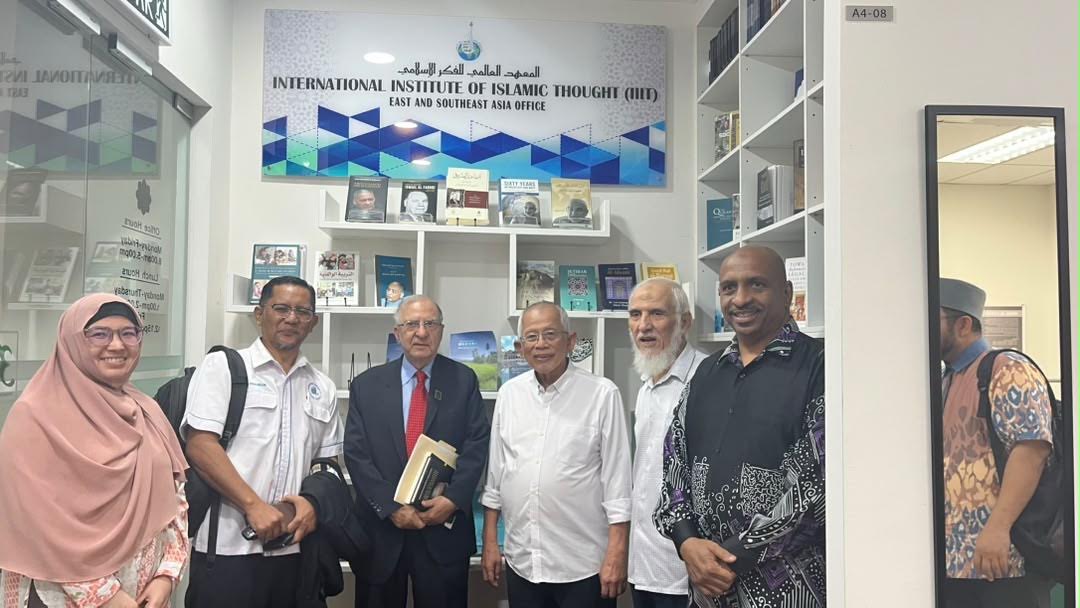
Kuala Lumpur, Malaysia: Dr. Ghulam Nabi Fai, Chairman of the World Forum for Peace & Justice, Washington, DC, addressed an academic gathering a


PCP need your support that we may provide you better services: click on donate


"Trial of Pakistani Christian Nation" By Nazir S Bhatti
On demand of our readers, I have decided to release E-Book version of "Trial of Pakistani Christian Nation" on website of PCP which can also be viewed on website of Pakistan Christian Congress www.pakistanchristiancongress.org . You can read chapter wise by clicking tab on left handside of PDF format of E-Book.