

Islamabad: (PPF) The Pakistan Electronic Media Regulatory Authority (PEMRA) on October 13 directed all satellite television channels to avoid broad
Sheikh Sad-ud-Din: Person of Character, Humility, & Simplicity. By Dr. Ghulam Nabi Fai

(Second part of three parts series) Modesty, Truthfulness and The Courage to Admit One's Mistake
Sheikh Sad-ud-Din occupied the highest office in Jamaat-e-Islami Jammu and Kashmir, yet he lived with extraordinary simplicity. His personal conduct reflected the principles he preached. Whether dealing with money, daily life, or matters of religious judgment, he remained humble, honest, and accountable. Three incidents from my own experience illustrate these qualities.
Fifty Paisa That Revealed a Great Character
In June 1973, I had been staying at the Jamaat headquarters for nearly two weeks without visiting my home. One afternoon, I left the office and walked to the Batamaloo bus station, about a mile and a half away. When I arrived, I discovered that the bus had just departed, and the next one would not leave for another two hours.
After purchasing my ticket, I decided to take a walk. I could have explored the nearby market, but instead I chose to walk back toward the Jamaat office before returning to the bus station.
As I was crossing the Amira Kadal Bridge, I noticed Sheikh Sad-ud-Din walking toward me. He greeted me warmly, came closer, and asked, "Do you have fifty paisa in change?"
At that time, fifty paisa was half a rupee. Fortunately, I had the exact amount and handed it to him. He thanked me, turned around immediately, and walked back in the direction from which he had come. I continued on my way and eventually returned to the bus station.
A few days later, while I was at the Jamaat office, Sheikh Sad-ud-Din approached me and returned the fifty paisa. I told him, "There was no need to return it." He gently insisted that he must.
Knowing that he rarely spoke unless there was something meaningful to say, I asked him what had happened that day. His explanation has remained with me ever since.
As President of Jamaat-e-Islami Jammu and Kashmir, he supervised more than sixty branch offices and over four hundred schools. Yet despite his position, he lived a remarkably simple life.
He explained that he had boarded an auto-rickshaw to return home, nearly three miles from the Jamaat office. Once seated inside, he realized that he did not have enough money to pay the fare. Rather than asking the driver to take him home on credit or expecting special treatment because of his position, he quietly stepped out of the rickshaw and decided to walk home—a journey of nearly an hour and half.
As he began walking, he happened to see me approaching across the bridge. He thought I might be able to lend him fifty paisa. After I gave him the money, he returned to the auto-rickshaw and completed his journey home.
What struck me most was not that he borrowed fifty paisa, but that he returned it promptly a few days later. A man responsible for a large organization considered it his duty to repay even the smallest personal debt. Such humility and integrity are rare qualities in leadership.
The Humility to Accept a Different Opinion
In 1977, Sheikh Sad-ud-Din and I traveled together to New Delhi. I had arranged meetings with several ambassadors to brief them on the situation in Kashmir, including the ambassadors of Saudi Arabia, Qatar, the United Arab Emirates, Kuwait, and several other countries.
We stayed at the headquarters of Jamaat-e-Islami Hind in Chitli Qabar near Jama Masjid, Delhi. Since most embassies were located in Chanakyapuri, the diplomatic district of New Delhi, every visit involved a long drive through heavy traffic.
One afternoon we had a meeting with the Ambassador of Qatar at 3:00 p.m. Before leaving, we performed Salat al-Zuhr at the Jamaat headquarters. Since we were travelers, I also combined Salat al-Asr with Zuhr, a practice that is permissible in Islamic jurisprudence.
Sheikh Sad-ud-Din, who was not only the President of the Jamaat but also an accomplished jurist, preferred another juristic opinion. He advised me that I should have waited and offered Asr after our return. Both opinions are recognized within Islamic scholarship.
When we arrived at the Embassy of Qatar, I called the secretary of the Saudi Ambassador, a Muslim from Hyderabad. He told me that our meeting with the Saudi Ambassador was scheduled for 4:00 p.m. I requested that it be postponed until 5:00 p.m., and he kindly agreed.
Our discussions with both ambassadors lasted nearly an hour each. Heavy traffic delayed our return, and by the time we reached the Jamaat headquarters, the sun had already set. The time for Salat al-Asr had passed.
Sheikh Sad-ud-Din came to me and said with complete sincerity, "You were correct to combine Zuhr and Asr. Had I done the same, I would not have missed Asr." His words left a deep impression on me.
Many leaders find it difficult to acknowledge that someone younger or less experienced may sometimes be right. Sheikh Sad-ud-Din was different. He never allowed his position, age, or scholarship to stand in the way of the truth. When the circumstances proved another opinion to be wiser, he accepted it openly and without hesitation. That willingness to admit one's mistake is itself a mark of genuine scholarship and authentic leadership.
Supporters and opponents, showing regard for his character outside of public scrutiny.
In 1974, when emergency was declared in Jammu and Kashmir, numerous political leaders, including the leadership of Jamaat-e-Islami, were detained. Sad-ud-Din was apprehended from Palhalan near Pattan in Baramullah district, approximately 20 miles from Srinagar. His place of detention was known but not the police station where he was lodged in. late in the evening, Qari Saif-ud-Din contacted the Deputy Inspector General of Police, who was a Kashmiri Muslim, to inquire about Sad-ud-Din's whereabouts and expressed his wish to deliver food to him.
The DIG Police, responsible for ordering Sad-ud-Din’s detention, provided insight into the situation. He informed Qari Saif-ud-Din that Sad-ud-Din was being held at Kothi Bagh Police Station on Residency Road, which is located just a mile and a half from the Jamaat-e-Islami office. The DIG Police further clarified that there was no need to bring food, as he personally prepared and delivered meals for Sad-ud-Din from his own home.
This action demonstrated an unusual level of respect and consideration, especially given the DIGP’s official role in ordering the arrest. It reflected the esteem Sad-ud-Din had garnered among both supporters and opponents, with individuals of differing viewpoints showing regard for his character outside of public scrutiny.
It should be noted that the DIGP operated under the directives of the Chief Minister, Sheikh Muhammad Abdullah, who had banned Jamaat-e-Islami during emergency in 1974. Nevertheless, the DIGP evidently felt compelled to honor Sad-ud-Din as a distinguished scholar and respected individual.
Reflection
The greatness of Sheikh Sad-ud-Din was not measured by the offices he held but by the principles he lived. He was careful with the smallest trust, humble despite his authority, and courageous enough to acknowledge when another opinion proved to be correct. These qualities earned him not only respect but lasting affection from all who knew him.
(To be continued).
(Dr. Ghulam Nabi Fai can be reached at: WhatsApp: 1-202-607-6435 gnfai2003@yahoo.com
You May Also Like
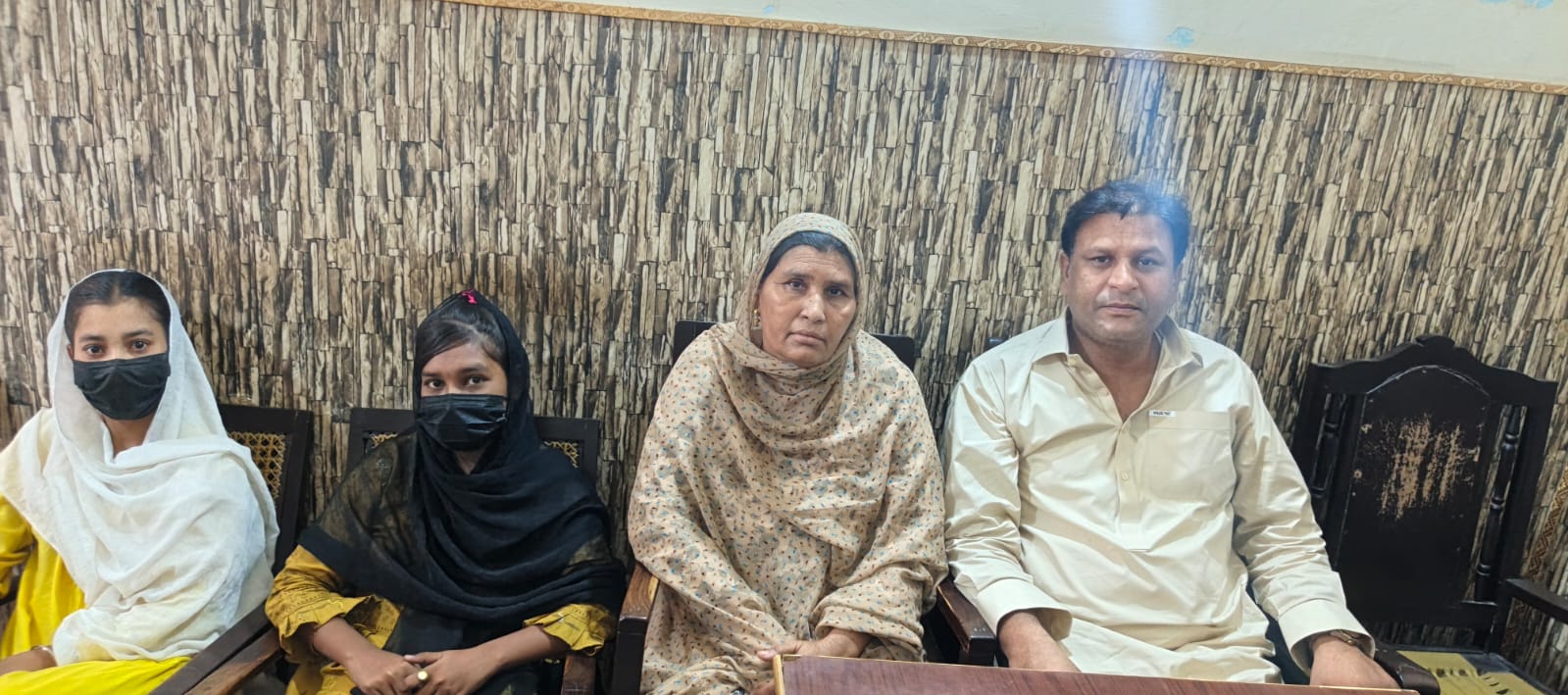
Sahiwal, Punjab: A 14-year-old Christian girl from Sahiwal was allegedly abducted and sexually assaulted after being forced into a room while colle

USA: Declaring Jammu and Kashmir an integral part of India does not resolve the dispute or address the aspirations of its people. A peaceful, negot


PCP need your support that we may provide you better services: click on donate


"Trial of Pakistani Christian Nation" By Nazir S Bhatti
On demand of our readers, I have decided to release E-Book version of "Trial of Pakistani Christian Nation" on website of PCP which can also be viewed on website of Pakistan Christian Congress www.pakistanchristiancongress.org . You can read chapter wise by clicking tab on left handside of PDF format of E-Book.