
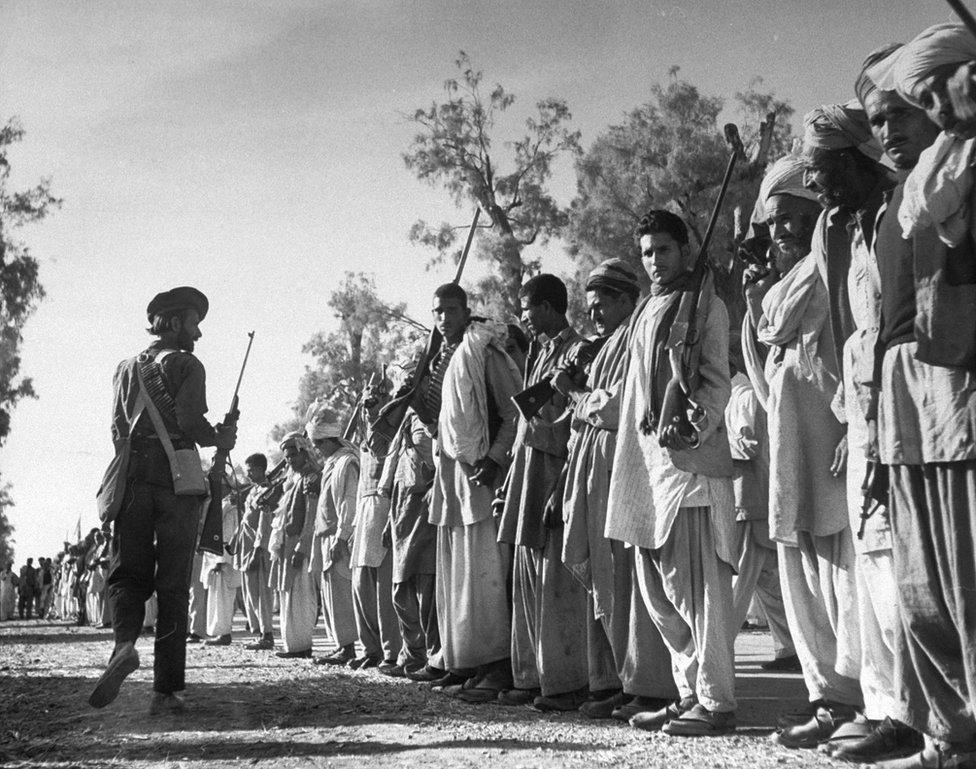
October 22, 1947, remains one of the darkest dates in the history of Jammu and Kashmir. On this day, armed tribal raiders backed by Pakistan launch
Common ground means lasting solutions, not weakness. By John Marks and Susan Collin Marks

US President Barack Obama is currently being attacked by friend and foe alike for his willingness to seek common ground on issues ranging from healthcare to North Korea.
"The common ground is not always the high ground", writes Leon Wieseltier in the New Republic. "It informs the other side that what you most desire is the deal—that you will never acknowledge the finality of the difference, and never be satisfied with the integrity of opposition. There is a reason that 'uncompromising' is a term of approbation."
This statement reflects a profound misunderstanding of what it means to search for common ground. It implies that a president who does not lock himself into a pre-set, principled position is somehow showing weakness and will invariably settle for the lowest common denominator. However, being open to a wide range of opinions, as Obama clearly is, does not mean a president will compromise core values. Rather, openness is essential to finding the highest common denominator, which can be defined as a workable solution that satisfies the needs and desires of a wide range of constituencies and interests.
Former US President George W. Bush was roundly criticised for taking the opposite approach, which his opponents described as uncompromising. He is famously remembered for saying, "You're either with us or against us."
So which approach do Americans really want from a president?
The answer is probably both, depending on the circumstances.
There are clearly times when a president needs to take an unyielding, unambiguous stand, as when former US President Franklin Roosevelt declared that World War II would only end by the unconditional surrender of Nazi Germany. Nevertheless, that solution was feasible because the Allies had overwhelming power to enforce it.
As Obama can testify, now when he is trying to pass healthcare reform or negotiate with North Korea, he lacks the ability to impose his will.
Such was also the case with Canute, the Viking King of England, who ordered that his throne be carried to the edge of the sea and who then commanded the tide to advance no further. He got his feet wet.
There is a broad spectrum of leadership styles. At one end is the authoritarian figure that rules by fiat. At the other end are those who allow the views of others to define their actions. In the middle, there are leaders who seek out a broad range of opinions as a key part of the decision-making process. Bush was clearly more of a "decider" while Obama is inclined toward the middle way.
In this respect, Obama follows in the footsteps of both conservative and liberal presidents. Take Ronald Reagan. He never gave up his essential belief that communism was an evil system. Still, he negotiated a series of arms control agreements with the Soviets, which contained important compromises and which he and Soviet Union President Mikhail Gorbachev both saw as being in the best interest of the two countries.
Or consider Lyndon Johnson. He was a strong advocate of civil rights for all Americans and, at the same time, a master dealmaker. He guided groundbreaking legislation through Congress, both by insisting on a set of general principals and by making compromises in forming bi-partisan coalitions.
These presidents–and most other successful ones–found higher ground that served the best interests of the country.
There is no doubt that the best way to find common ground solutions is to listen carefully to those with different beliefs, to be inclusive and to draw out the best from the various positions. In our individual lives, most Americans know this and reject absolutism. We recognise that listening and including other perspectives works much better than taking intransigent stands. Indeed, most of us hold within ourselves both liberal and conservative attitudes, which we usually find ways to bridge. When we adhere to a single position, no matter how principled, and are closed to alternatives, our lives tend not to work very well. Successful relationships are almost always based on finding common ground, to the mutual benefit of the parties involved.
Why then should it be difficult for Americans to accept a president who acts in the same way in leading the country?
While it is not easy for many pundits and politicians to accept, Americans seem to want a president who is willing to compromise for the common good. Indeed, most of us yearn for a leader who can actually solve our national problems–and that usually requires finding common ground.
###
* John Marks (jmarks@sfcg.org) is founder and president of Search for Common Ground, an international conflict resolution organisation. Susan Collin Marks (scmarks@sfcg.org) is senior vice president of Search for Common Ground and author of Watching the Wind: Conflict Resolution during South Africa's Transition to Democracy. This article was written for the Common Ground News Service (CGNews
"The common ground is not always the high ground", writes Leon Wieseltier in the New Republic. "It informs the other side that what you most desire is the deal—that you will never acknowledge the finality of the difference, and never be satisfied with the integrity of opposition. There is a reason that 'uncompromising' is a term of approbation."
This statement reflects a profound misunderstanding of what it means to search for common ground. It implies that a president who does not lock himself into a pre-set, principled position is somehow showing weakness and will invariably settle for the lowest common denominator. However, being open to a wide range of opinions, as Obama clearly is, does not mean a president will compromise core values. Rather, openness is essential to finding the highest common denominator, which can be defined as a workable solution that satisfies the needs and desires of a wide range of constituencies and interests.
Former US President George W. Bush was roundly criticised for taking the opposite approach, which his opponents described as uncompromising. He is famously remembered for saying, "You're either with us or against us."
So which approach do Americans really want from a president?
The answer is probably both, depending on the circumstances.
There are clearly times when a president needs to take an unyielding, unambiguous stand, as when former US President Franklin Roosevelt declared that World War II would only end by the unconditional surrender of Nazi Germany. Nevertheless, that solution was feasible because the Allies had overwhelming power to enforce it.
As Obama can testify, now when he is trying to pass healthcare reform or negotiate with North Korea, he lacks the ability to impose his will.
Such was also the case with Canute, the Viking King of England, who ordered that his throne be carried to the edge of the sea and who then commanded the tide to advance no further. He got his feet wet.
There is a broad spectrum of leadership styles. At one end is the authoritarian figure that rules by fiat. At the other end are those who allow the views of others to define their actions. In the middle, there are leaders who seek out a broad range of opinions as a key part of the decision-making process. Bush was clearly more of a "decider" while Obama is inclined toward the middle way.
In this respect, Obama follows in the footsteps of both conservative and liberal presidents. Take Ronald Reagan. He never gave up his essential belief that communism was an evil system. Still, he negotiated a series of arms control agreements with the Soviets, which contained important compromises and which he and Soviet Union President Mikhail Gorbachev both saw as being in the best interest of the two countries.
Or consider Lyndon Johnson. He was a strong advocate of civil rights for all Americans and, at the same time, a master dealmaker. He guided groundbreaking legislation through Congress, both by insisting on a set of general principals and by making compromises in forming bi-partisan coalitions.
These presidents–and most other successful ones–found higher ground that served the best interests of the country.
There is no doubt that the best way to find common ground solutions is to listen carefully to those with different beliefs, to be inclusive and to draw out the best from the various positions. In our individual lives, most Americans know this and reject absolutism. We recognise that listening and including other perspectives works much better than taking intransigent stands. Indeed, most of us hold within ourselves both liberal and conservative attitudes, which we usually find ways to bridge. When we adhere to a single position, no matter how principled, and are closed to alternatives, our lives tend not to work very well. Successful relationships are almost always based on finding common ground, to the mutual benefit of the parties involved.
Why then should it be difficult for Americans to accept a president who acts in the same way in leading the country?
While it is not easy for many pundits and politicians to accept, Americans seem to want a president who is willing to compromise for the common good. Indeed, most of us yearn for a leader who can actually solve our national problems–and that usually requires finding common ground.
###
* John Marks (jmarks@sfcg.org) is founder and president of Search for Common Ground, an international conflict resolution organisation. Susan Collin Marks (scmarks@sfcg.org) is senior vice president of Search for Common Ground and author of Watching the Wind: Conflict Resolution during South Africa's Transition to Democracy. This article was written for the Common Ground News Service (CGNews
You May Also Like
In the developed nations of the world—such as those in Europe, the United States, and the United Kingdom—a democratic form of governmen

Evidence is “the raw data, material, testimony, or information presented to support or disprove a claim.” Proof is “the final con


PCP need your support that we may provide you better services: click on donate


"Trial of Pakistani Christian Nation" By Nazir S Bhatti
On demand of our readers, I have decided to release E-Book version of "Trial of Pakistani Christian Nation" on website of PCP which can also be viewed on website of Pakistan Christian Congress www.pakistanchristiancongress.org . You can read chapter wise by clicking tab on left handside of PDF format of E-Book.