

In the developed nations of the world—such as those in Europe, the United States, and the United Kingdom—a democratic form of governmen
Evidence Vs. Proof: By Albert Porter
Evidence is “the raw data, material, testimony, or information presented to support or disprove a claim.” Proof is “the final conclusive result or establishment of truth that emerges when evidence is evaluated and accepted.” When we see evidence, we get encouraged, but when we have proof, we smile, relax, and enjoy the feeling.
I once heard a simple but effective analogy of evidence vs. proof. The story goes that a businessman was asked whether his secretary was in. He said, “Yes, she should be in her office.” The evidence had shown him that she was there at work because he saw her come in, and they exchanged greetings and went into her office and closed the door. but the inquirer then asked, “But is she in her office right now?” The businessman said “yes, I think so” but had to knock on her door to make sure. She responded to the knock and said, “Come in.” so he opened the door and saw her there, and that was the proof he had that she was there.
Sounds simple, but sometimes differentiating between evidence and proof is not so easy. I’ve expounded on these two principles so we can explore some of the archaeological findings that have been discovered through the centuries, and hopefully you will be encouraged or smiling. Both are enjoyable feelings, but “proof” can just strengthen our faith well beyond the realm of doubt.
I’ve always thought that God intentionally created these evidence and proof “vehicles” as an outreach to the world and to strengthen the faith of believers, if there is such a thing as “degrees of faith.” God may have created the first scavenger hunt.
For the next few weeks, I will share some of the most important “proof and evidence” findings that can support our faith. This field of study is called Apologetics (the intellectual defense of the Christian faith).
Let me start with two huge discoveries that are prime examples of Christian evidence. The first discovery has intrigued me for over twenty years as I keep searching for articles on the internet that will provide proof. I’m talking about the Shroud of Turin and the headpiece associated with the shroud called the Sudarium of Oviedo.
Sudarium of Oviedo
The Shroud of Turin is a linen cloth about 4.4 meters long, on which is seen an image of a man with scars traditionally associated with a crucifixion. The relic is kept in the Cathedral of St. John the Baptist in Turin, Italy.
Forensic reconstructions show that the bloodstain patterns, puncture wounds from the crown of thorns, and facial fluid geometries, closely align between both artifacts, showing over 120 points of correlation. They both contain rare Type AB blood. Both cloths hold distinct traces of plant pollen unique to the area around Jerusalem. According to historical and forensic theories, the Sudarium was placed over the head of the crucifixion victim immediately after death to preserve dignity while the body was taken from the cross and was later removed before the body was wrapped in the larger burial shroud.
In the new study, Italian scientists analyzed fibers taken from different parts of the shroud in 1978. The team used modern genetic sequencing technologies that allow the simultaneous examination of millions of DNA fragments.
A debate regarding the authenticity of both artifacts has been going on for centuries, and the evidence changes as new technology becomes available.
The latest news I have is that a new genetic study of the Shroud of Turin has found human DNA lines found in the Middle East, as well as microorganisms characteristic of highly saline environments. The results add new data to the long-standing scientific debate over the relic, but according to the researchers themselves, they do not yet prove that the cloth was the burial shroud of Jesus Christ.
So, the evidence abounds, but there is no conclusive proof that both were placed on Jesus after His removal from the cross. But the fact remains that the blood stains on the shroud match the whippings on His back and nail wounds, and the headpiece matches the placement of the crown. Coincidence? In some Christian circles there is no such thing as a coincidence, and this one really makes me wonder. But doesn’t it make you feel better about your faith – even a little?
I mentioned two huge discoveries, and speaking of “huge,” the second “possible” discovery is Noah’s Ark, which has garnered less press than the shroud but is of interest to the Christian world. I haven’t followed the ongoing trials and tribulations attempting to prove that it’s Noah’s Ark, but like the shroud, there are some elements of the search results that seem to come close to being evidence, but not proof right now.
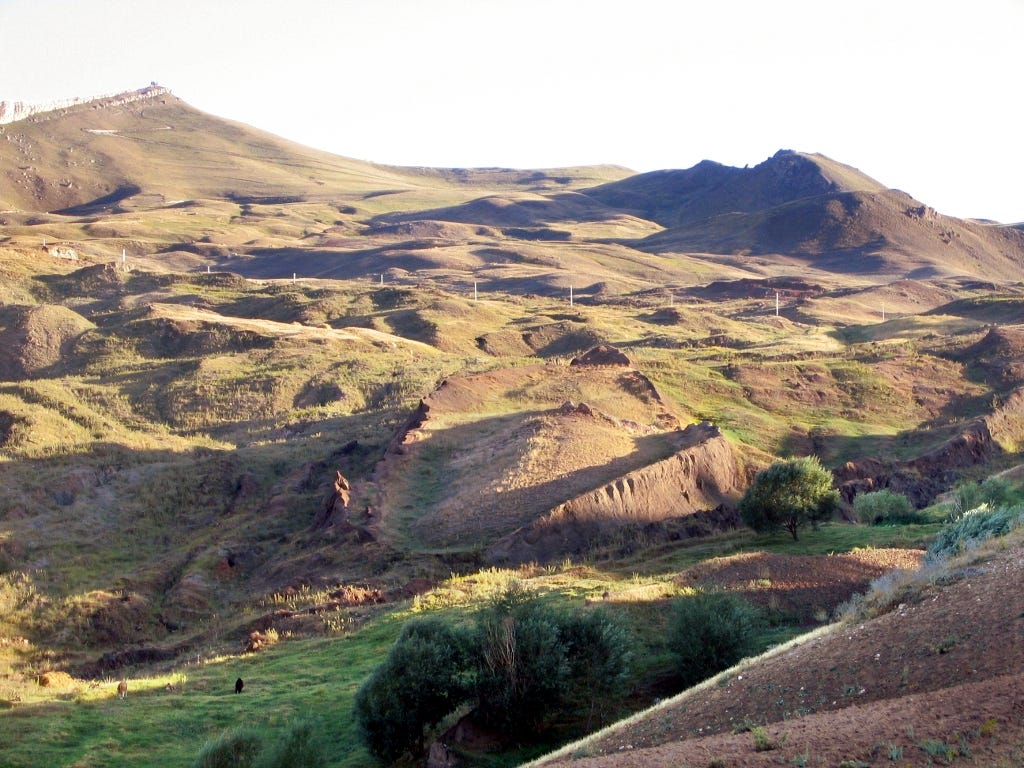
Through the years, there have been more than none claims of a discovery of some relic appearing to be the ark, but the most intense discovery has been at Mount Ararat in Turkey. The highest point in Turkey has fascinated researchers since they first identified the boat-shaped formation in 1959. Now, though, teams of researchers have finally drilled into the site in search of answers. With hundreds of soil samples from both inside and outside the formation, some reaching 60 feet in depth, experts said analysis will show if man-made activity or decaying wood sits in the soil.
As archaeologists dipped into the soil of the Durupinar formation in search of Noah’s Ark, the results offer a mixed bag of possibilities, with further analysis needed, but clues point toward a high concentration of organic matter that offers an intriguing possibility for the site’s history.
Durupinar is the name given to the 515-foot boat-shaped formation.
Unfortunately, the mainstream scientific consensus of geologists and earth scientists is that the formation is a natural geological phenomenon probably caused by a mudflow/landslide structure rather than a man-made vessel. Science hasn’t always been correct. Amen?
Next week I will explore other archaeological discoveries, including the most famous- the Dead Sea Scrolls.
You May Also Like

Jainism, if wants to become a global religion, then should first become relevant to the contemporary world (ii)- Jain organizations of the USA Shou
Nations are shaped not only by their institutions and constitutions but also by historical experiences that leave a lasting imprint on the collecti


PCP need your support that we may provide you better services: click on donate


"Trial of Pakistani Christian Nation" By Nazir S Bhatti
On demand of our readers, I have decided to release E-Book version of "Trial of Pakistani Christian Nation" on website of PCP which can also be viewed on website of Pakistan Christian Congress www.pakistanchristiancongress.org . You can read chapter wise by clicking tab on left handside of PDF format of E-Book.