

As long-term HIV survivors face stigma, fragmented healthcare and financial insecurity, community leaders call for a legally binding UN treat
11th August: A Day for Renewing Pledges in Pakistan. By Dr. Emanuel Adil Ghouri
Every year, as August begins, Quaid-e-Azam Muhammad Ali Jinnah’s historic speech of August 11, 1947, becomes a subject of debate. The government claims that minorities enjoy equal rights under the Constitution, whereas minorities vehemently protest that they do not possess the equal rights envisioned by the Quaid-e-Azam. An impartial comparative analysis suggests there is validity to the stance taken by the minorities. In reality, this speech by the Quaid-e-Azam is not merely a collection of words but a blueprint for action. The speech reveals the vision the state's founder held while the new state was being formed—the kind of state he wished to create and how the rights of citizens would be distributed within it.
The details are as follows
Freedom of Worship: Quaid-e-Azam declared that the people were free; they were entirely at liberty to visit their temples, mosques, or any other places of worship. • Equal Rights: Regardless of religion, color, race, or creed, the rights, privileges, duties, and responsibilities of all individuals within the State of Pakistan would be equal. • Equal Citizens: Every person in the state would enjoy equal rights under the law, and all would be equal citizens and stakeholders of this democratic state. • Elimination of Discrimination: He expressed the resolve that, leaving behind the bitterness of the past, the state would not discriminate against any citizen on the basis of religion or creed
The aforementioned points demonstrate the existence of severe religious pressure, rendering the concept of equal rights obscure. The status of equal citizenship has been overshadowed by social inequality, and discriminatory practices persist; indeed, in today's Pakistan, the principles outlined in the Quaid's speech appear to have been inverted. Furthermore, General Zia-ul-Haq orchestrated a conspiracy to have that very speech removed from the Radio Pakistan archives.
Muhammad Ali Jinnah did not speak about the rights of minorities solely in his speech of August 11; rather, references to this subject can be found in as many as thirty-three different speeches. I venture here to quote a few excerpts from reports published in various newspapers and periodicals
While addressing the annual session of the All India Muslim Students Federation in November 1942, he stated: "It is the right of minorities to have clear guarantees. They ask: 'What will be our position within the concept of Pakistan that you envision?' This is a matter regarding which minorities must receive categorical and explicit assurances. We have already done so; we have passed a resolution affirming that minorities must be granted full protection and security. As I have said before, any civilized government would—and indeed should—do this. As for us, our history and our Prophet (peace be upon him) have provided the clearest evidence that non-Muslims were treated not only with justice and fairness but also with generosity."
Addressing the General Council of the All India Muslim League in a closed-door session in April 1943, he stated: "I would now like to say a few words regarding the minorities of Balochistan. There are Sikhs, Hindus, Christians, and other non-Muslims here. Mr. President! It is not our habit to say things we do not mean, or to say one thing while intending another. We have already clarified our position; yet, I am here now, and if it is deemed necessary—or if there is a need for reassurance—I reiterate my stance in my capacity as the President of the All India Muslim League. I assure the minorities of Balochistan that we shall ensure they are treated with fairness and justice. We will take measures to instill a sense of security and confidence among the minorities."I consider this to be the fundamental duty of any civilized government. We are backed by the loftiest of traditions—a fact attested to by historians, not only Muslim but non-Muslim as well—that, generally speaking, wherever Muslim rule prevailed, minorities were treated with fairness and justice.
Within just thirteen months of Pakistan's inception—following the passing of Quaid-e-Azam—a departure from his stated principles began. With the adoption of the Objectives Resolution on March 12, 1949, minorities were relegated to the status of second-class citizens, and a constitutional restriction was imposed barring non-Muslims from holding the offices of President, Prime Minister, or other high-ranking positions. Did Quaid-e-Azam’s speech of August 11 contain any such restriction? Citing historical Islamic states, he had stated that the protection of the lives, property, and places of worship of minorities was the responsibility of Muslim rulers. Are the lives, property, honor, and places of worship of minorities safe in Pakistan today? Do they enjoy equal political rights? Is that speech of Quaid-e-Azam being preserved?
In 2004 and again in 2011, M.P. Bhandara—a Member of the National Assembly belonging to the Parsi minority—moved a resolution and a constitutional amendment to incorporate this speech into the curriculum and the Constitution; however, according to his son, Isphanyar Bhandara, the initiative failed due to fierce opposition from right-wing religious parties. Isphanyar Bhandara maintains that this speech holds great significance for Pakistan's minorities and emphasizes the necessity of making Quaid-e-Azam's speech a part of the Constitution.
The details are as follows
Freedom of Worship: Quaid-e-Azam declared that the people were free; they were entirely at liberty to visit their temples, mosques, or any other places of worship. • Equal Rights: Regardless of religion, color, race, or creed, the rights, privileges, duties, and responsibilities of all individuals within the State of Pakistan would be equal. • Equal Citizens: Every person in the state would enjoy equal rights under the law, and all would be equal citizens and stakeholders of this democratic state. • Elimination of Discrimination: He expressed the resolve that, leaving behind the bitterness of the past, the state would not discriminate against any citizen on the basis of religion or creed
The aforementioned points demonstrate the existence of severe religious pressure, rendering the concept of equal rights obscure. The status of equal citizenship has been overshadowed by social inequality, and discriminatory practices persist; indeed, in today's Pakistan, the principles outlined in the Quaid's speech appear to have been inverted. Furthermore, General Zia-ul-Haq orchestrated a conspiracy to have that very speech removed from the Radio Pakistan archives.
Muhammad Ali Jinnah did not speak about the rights of minorities solely in his speech of August 11; rather, references to this subject can be found in as many as thirty-three different speeches. I venture here to quote a few excerpts from reports published in various newspapers and periodicals
While addressing the annual session of the All India Muslim Students Federation in November 1942, he stated: "It is the right of minorities to have clear guarantees. They ask: 'What will be our position within the concept of Pakistan that you envision?' This is a matter regarding which minorities must receive categorical and explicit assurances. We have already done so; we have passed a resolution affirming that minorities must be granted full protection and security. As I have said before, any civilized government would—and indeed should—do this. As for us, our history and our Prophet (peace be upon him) have provided the clearest evidence that non-Muslims were treated not only with justice and fairness but also with generosity."
Addressing the General Council of the All India Muslim League in a closed-door session in April 1943, he stated: "I would now like to say a few words regarding the minorities of Balochistan. There are Sikhs, Hindus, Christians, and other non-Muslims here. Mr. President! It is not our habit to say things we do not mean, or to say one thing while intending another. We have already clarified our position; yet, I am here now, and if it is deemed necessary—or if there is a need for reassurance—I reiterate my stance in my capacity as the President of the All India Muslim League. I assure the minorities of Balochistan that we shall ensure they are treated with fairness and justice. We will take measures to instill a sense of security and confidence among the minorities."I consider this to be the fundamental duty of any civilized government. We are backed by the loftiest of traditions—a fact attested to by historians, not only Muslim but non-Muslim as well—that, generally speaking, wherever Muslim rule prevailed, minorities were treated with fairness and justice.
Within just thirteen months of Pakistan's inception—following the passing of Quaid-e-Azam—a departure from his stated principles began. With the adoption of the Objectives Resolution on March 12, 1949, minorities were relegated to the status of second-class citizens, and a constitutional restriction was imposed barring non-Muslims from holding the offices of President, Prime Minister, or other high-ranking positions. Did Quaid-e-Azam’s speech of August 11 contain any such restriction? Citing historical Islamic states, he had stated that the protection of the lives, property, and places of worship of minorities was the responsibility of Muslim rulers. Are the lives, property, honor, and places of worship of minorities safe in Pakistan today? Do they enjoy equal political rights? Is that speech of Quaid-e-Azam being preserved?
In 2004 and again in 2011, M.P. Bhandara—a Member of the National Assembly belonging to the Parsi minority—moved a resolution and a constitutional amendment to incorporate this speech into the curriculum and the Constitution; however, according to his son, Isphanyar Bhandara, the initiative failed due to fierce opposition from right-wing religious parties. Isphanyar Bhandara maintains that this speech holds great significance for Pakistan's minorities and emphasizes the necessity of making Quaid-e-Azam's speech a part of the Constitution.
You May Also Like

Every year on 26 October, Accession Day marks a historic moment in Jammu and Kashmir’s history. In 1947, Maharaja Hari Singh signed the Instr
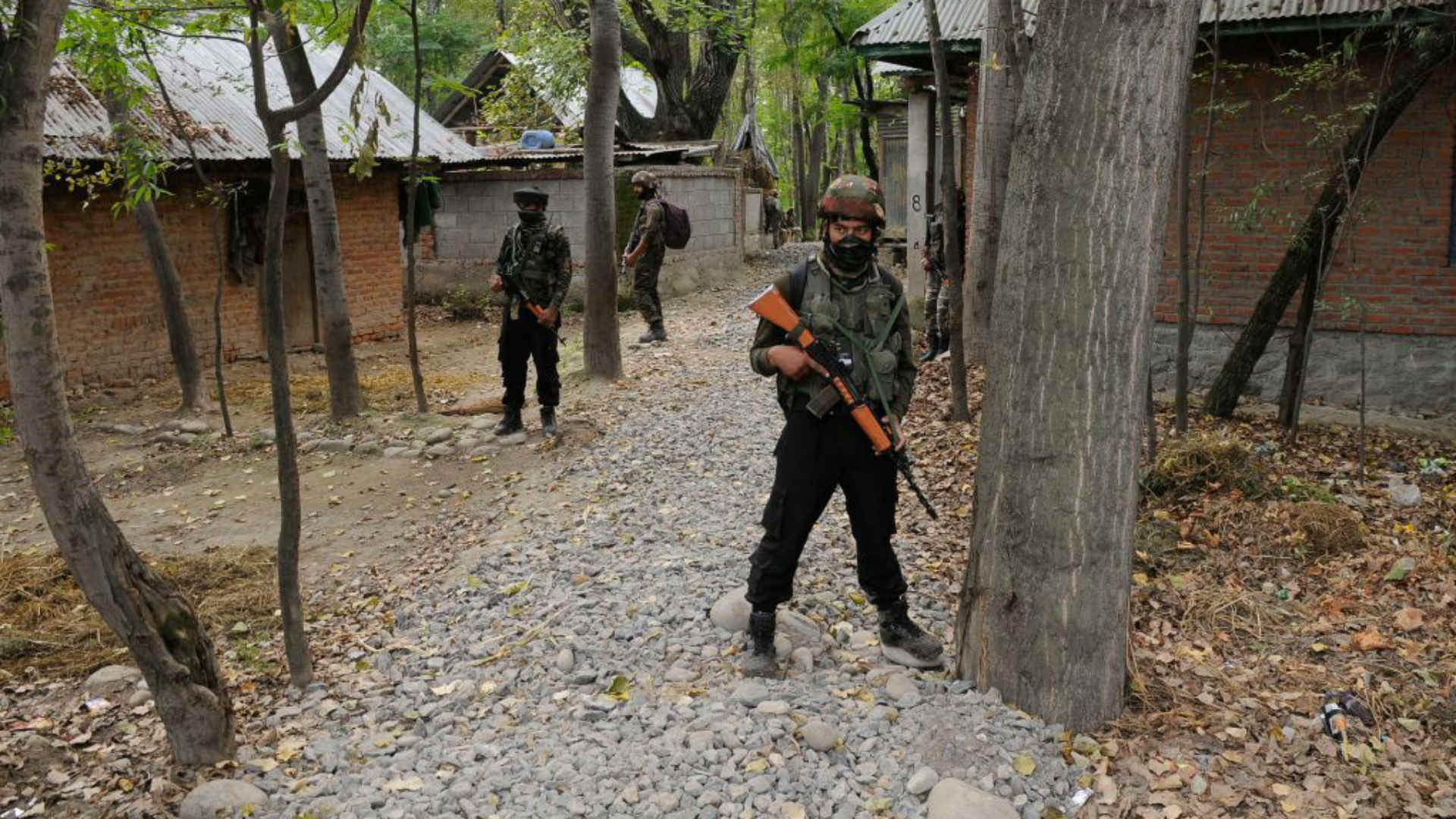
The dispute over Jammu and Kashmir remains unresolved nearly eight decades after the events of October 1947. Although the Government of India maint


PCP need your support that we may provide you better services: click on donate


"Trial of Pakistani Christian Nation" By Nazir S Bhatti
On demand of our readers, I have decided to release E-Book version of "Trial of Pakistani Christian Nation" on website of PCP which can also be viewed on website of Pakistan Christian Congress www.pakistanchristiancongress.org . You can read chapter wise by clicking tab on left handside of PDF format of E-Book.