
As long-term HIV survivors face stigma, fragmented healthcare and financial insecurity, community leaders call for a legally binding UN treat
The Inconvenient Mandela—and the Inconvenient Question of Kashmir: When Will Words Become Action? By Dr. Ghulam Nabi Fai
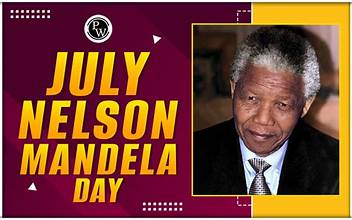
The United Nations marked Nelson Mandela Day at its headquarters in New York on 20 July 2026, although the international observance falls each year on 18 July—the date of Mandela's birth. Established by the United Nations in November 2009 and first observed in 2010, Mandela Day was created not merely to celebrate the life of one of history's greatest leaders, but to inspire action in pursuit of justice, equality and human dignity.
This year's commemoration featured moving tributes from world leaders, diplomats and journalists. They all spoke eloquently about Mandela's unwavering commitment to freedom, reconciliation and justice. Yet the most important question remains unanswered: if Mandela's legacy is truly to be honoured through action rather than remembrance, where is that action today?
President of the General Assembly Annalena Baerbock set the tone by insisting that Mandela Day must mean more than reflection. Mandela's legacy, she argued, should be honoured "not only through remembrance but through action."
A joint statement by Brazil, Norway, South Africa and Spain, delivered by Brazil's Permanent Representative Ambassador Sérgio França Danese, declared that "Mandela understood that political freedom, while indispensable, is incomplete without human dignity, equal opportunity and social justice." The statement concluded with a call to build societies that are "more equitable, more just and more inclusive."
Perhaps the most powerful intervention came from South African journalist and broadcaster Redi Tlhabi, who reminded delegates of the "Inconvenient Mandela." She recalled Mandela's refusal in 1985 to accept conditional freedom in exchange for abandoning the struggle against apartheid. "Only free men can negotiate," Mandela told his captors. Tlhabi reminded the Assembly that reconciliation was never Mandela's starting point—justice was. "He never asked the oppressed to become comfortable with injustice," she said. "He asked the world to become uncomfortable with injustice."
United Nations Secretary-General António Guterres described Mandela as "a towering figure of peace, reconciliation, justice, and human rights." He urged the international community to carry forward Mandela's vision of "a just, inclusive, equal and peaceful world."
These were powerful words. But Mandela himself repeatedly reminded the world that words without action accomplish little.
In his address to the United Nations General Assembly on 3 October 1994, Mandela declared: "The millions across our globe who stand expectant at the gates of hope look to this Organisation to bring them peace, to bring them life, to bring them a life worth living."
g them a life worth living."
He also left humanity with timeless wisdom: "To be free is not merely to cast off one's chains, but to live in a way that respects and enhances the freedom of others." And perhaps most relevant today: "It is easy to break down and destroy. The heroes are those who make peace and build."
Mandela consistently stood with oppressed peoples, regardless of political convenience. His commitment to justice extended far beyond South Africa.
Addressing the Twelfth Summit of the Non-Aligned Movement in Durban on 2 September 1998, Mandela expressed concern about unresolved international conflicts, including Jammu and Kashmir. He stated: "All of us remain concerned that the issue of Jammu and Kashmir should be solved through peaceful negotiations and should be willing to lend all the strength we have to the resolution of this matter." Nearly three decades later, the question deserves to be asked: what has become of that commitment?
Secretary-General António Guterres stated in August 2019 that the Kashmir issue should be resolved in accordance with the UN Charter and the applicable Security Council resolutions. Seven years later, has there been any action since 2019?
President Annalena Baerbock, while serving as Germany's Foreign Minister, stated during her visit to Islamabad in October 2022 that Germany had "a role and responsibility" regarding Kashmir and supported United Nations efforts to achieve a peaceful resolution. Now, as President of the General Assembly, does that commitment translate into any practical diplomatic initiative?
The joint statement on Mandela Day was also endorsed by Norway, Spain and Brazil—three countries whose own diplomatic history demonstrates longstanding support for a peaceful settlement of Kashmir.
Norway's Ambassador Arne Sunde told the Security Council in December 1949 that his country's only interest in the dispute was "justice and peace." He urged India and Pakistan to fulfil their solemn obligations under the UN Charter by resolving the dispute peacefully.
Years later, another Norwegian representative, Ambassador Sivert Andreas Nielsen, reminded the Security Council that the resolutions adopted on Kashmir "have not been rescinded or abrogated; they therefore remain valid." He affirmed that Kashmir remained an issue with an important international dimension. What practical diplomatic efforts has Norway undertaken in recent years to encourage meaningful dialogue between the parties?
Brazil's diplomatic record is equally noteworthy. In March 1951, Ambassador João Carlos Muniz urged India and Pakistan to embrace a peaceful settlement, arguing that doing so
would contribute not only to the prosperity of their peoples and the people of Kashmir but also to the peace and security of South Asia.
In 1964, Ambassador Mário de Andrade Bernardes supported renewed United Nations engagement and encouraged the Secretary-General's good offices in pursuit of a fair settlement.
Brazil today enjoys close relations with India through BRICS and other multilateral forums. Has Brazil raised this issue in its bilateral engagement with India?
These questions are not intended to diminish the sincerity of the tributes delivered on Mandela Day. Rather, they seek to honor Mandela's own example. He challenged the world not merely to celebrate justice but to pursue it. He believed that moral leadership requires consistency, courage and action.
Mandela's legacy is not preserved through annual commemorations or carefully crafted speeches at the United Nations. It lives only when governments are willing to apply the principles they celebrate—even when doing so is politically inconvenient.
For those who invoke Mandela's name, the challenge is simple: transform eloquent words into meaningful action.
Among those continuing to promote Mandela's ideals is Salman Khan, Founding Chairman of the South African Kashmir Action Group (SAKAG), who has long been engaged with the Mandela legacy. Following Nelson Mandela's passing, Khan has worked closely with Nkosi Zwelivelile Mandela, Mandela's grandson, organising numerous international initiatives focused on peace, justice and the unresolved question of Kashmir. Their work reflects a belief that Mandela's principles remain relevant wherever people continue to seek justice through peaceful means.
Lastly, the true measure of our devotion to Nelson Mandela is not found in annual commemorations or eloquent speeches. It is found in whether we are prepared to apply the principles he lived by—even when they are politically inconvenient. As Madiba reminded us, 'To be free is not merely to cast off one's chains, but to live in a way that respects and enhances the freedom of others.' Until those words guide international action as much as international rhetoric, Mandela's legacy will remain honoured in ceremony more than in substance."
(Dr. Fai can be reached at: WhatsApp: 1-202-607-6435 gnfai2003@yahoo.com
This year's commemoration featured moving tributes from world leaders, diplomats and journalists. They all spoke eloquently about Mandela's unwavering commitment to freedom, reconciliation and justice. Yet the most important question remains unanswered: if Mandela's legacy is truly to be honoured through action rather than remembrance, where is that action today?
President of the General Assembly Annalena Baerbock set the tone by insisting that Mandela Day must mean more than reflection. Mandela's legacy, she argued, should be honoured "not only through remembrance but through action."
A joint statement by Brazil, Norway, South Africa and Spain, delivered by Brazil's Permanent Representative Ambassador Sérgio França Danese, declared that "Mandela understood that political freedom, while indispensable, is incomplete without human dignity, equal opportunity and social justice." The statement concluded with a call to build societies that are "more equitable, more just and more inclusive."
Perhaps the most powerful intervention came from South African journalist and broadcaster Redi Tlhabi, who reminded delegates of the "Inconvenient Mandela." She recalled Mandela's refusal in 1985 to accept conditional freedom in exchange for abandoning the struggle against apartheid. "Only free men can negotiate," Mandela told his captors. Tlhabi reminded the Assembly that reconciliation was never Mandela's starting point—justice was. "He never asked the oppressed to become comfortable with injustice," she said. "He asked the world to become uncomfortable with injustice."
United Nations Secretary-General António Guterres described Mandela as "a towering figure of peace, reconciliation, justice, and human rights." He urged the international community to carry forward Mandela's vision of "a just, inclusive, equal and peaceful world."
These were powerful words. But Mandela himself repeatedly reminded the world that words without action accomplish little.
In his address to the United Nations General Assembly on 3 October 1994, Mandela declared: "The millions across our globe who stand expectant at the gates of hope look to this Organisation to bring them peace, to bring them life, to bring them a life worth living."
g them a life worth living."
He also left humanity with timeless wisdom: "To be free is not merely to cast off one's chains, but to live in a way that respects and enhances the freedom of others." And perhaps most relevant today: "It is easy to break down and destroy. The heroes are those who make peace and build."
Mandela consistently stood with oppressed peoples, regardless of political convenience. His commitment to justice extended far beyond South Africa.
Addressing the Twelfth Summit of the Non-Aligned Movement in Durban on 2 September 1998, Mandela expressed concern about unresolved international conflicts, including Jammu and Kashmir. He stated: "All of us remain concerned that the issue of Jammu and Kashmir should be solved through peaceful negotiations and should be willing to lend all the strength we have to the resolution of this matter." Nearly three decades later, the question deserves to be asked: what has become of that commitment?
Secretary-General António Guterres stated in August 2019 that the Kashmir issue should be resolved in accordance with the UN Charter and the applicable Security Council resolutions. Seven years later, has there been any action since 2019?
President Annalena Baerbock, while serving as Germany's Foreign Minister, stated during her visit to Islamabad in October 2022 that Germany had "a role and responsibility" regarding Kashmir and supported United Nations efforts to achieve a peaceful resolution. Now, as President of the General Assembly, does that commitment translate into any practical diplomatic initiative?
The joint statement on Mandela Day was also endorsed by Norway, Spain and Brazil—three countries whose own diplomatic history demonstrates longstanding support for a peaceful settlement of Kashmir.
Norway's Ambassador Arne Sunde told the Security Council in December 1949 that his country's only interest in the dispute was "justice and peace." He urged India and Pakistan to fulfil their solemn obligations under the UN Charter by resolving the dispute peacefully.
Years later, another Norwegian representative, Ambassador Sivert Andreas Nielsen, reminded the Security Council that the resolutions adopted on Kashmir "have not been rescinded or abrogated; they therefore remain valid." He affirmed that Kashmir remained an issue with an important international dimension. What practical diplomatic efforts has Norway undertaken in recent years to encourage meaningful dialogue between the parties?
Brazil's diplomatic record is equally noteworthy. In March 1951, Ambassador João Carlos Muniz urged India and Pakistan to embrace a peaceful settlement, arguing that doing so
would contribute not only to the prosperity of their peoples and the people of Kashmir but also to the peace and security of South Asia.
In 1964, Ambassador Mário de Andrade Bernardes supported renewed United Nations engagement and encouraged the Secretary-General's good offices in pursuit of a fair settlement.
Brazil today enjoys close relations with India through BRICS and other multilateral forums. Has Brazil raised this issue in its bilateral engagement with India?
These questions are not intended to diminish the sincerity of the tributes delivered on Mandela Day. Rather, they seek to honor Mandela's own example. He challenged the world not merely to celebrate justice but to pursue it. He believed that moral leadership requires consistency, courage and action.
Mandela's legacy is not preserved through annual commemorations or carefully crafted speeches at the United Nations. It lives only when governments are willing to apply the principles they celebrate—even when doing so is politically inconvenient.
For those who invoke Mandela's name, the challenge is simple: transform eloquent words into meaningful action.
Among those continuing to promote Mandela's ideals is Salman Khan, Founding Chairman of the South African Kashmir Action Group (SAKAG), who has long been engaged with the Mandela legacy. Following Nelson Mandela's passing, Khan has worked closely with Nkosi Zwelivelile Mandela, Mandela's grandson, organising numerous international initiatives focused on peace, justice and the unresolved question of Kashmir. Their work reflects a belief that Mandela's principles remain relevant wherever people continue to seek justice through peaceful means.
Lastly, the true measure of our devotion to Nelson Mandela is not found in annual commemorations or eloquent speeches. It is found in whether we are prepared to apply the principles he lived by—even when they are politically inconvenient. As Madiba reminded us, 'To be free is not merely to cast off one's chains, but to live in a way that respects and enhances the freedom of others.' Until those words guide international action as much as international rhetoric, Mandela's legacy will remain honoured in ceremony more than in substance."
(Dr. Fai can be reached at: WhatsApp: 1-202-607-6435 gnfai2003@yahoo.com
You May Also Like
Every year on 26 October, Accession Day marks a historic moment in Jammu and Kashmir’s history. In 1947, Maharaja Hari Singh signed the Instr
The dispute over Jammu and Kashmir remains unresolved nearly eight decades after the events of October 1947. Although the Government of India maint


PCP need your support that we may provide you better services: click on donate


"Trial of Pakistani Christian Nation" By Nazir S Bhatti
On demand of our readers, I have decided to release E-Book version of "Trial of Pakistani Christian Nation" on website of PCP which can also be viewed on website of Pakistan Christian Congress www.pakistanchristiancongress.org . You can read chapter wise by clicking tab on left handside of PDF format of E-Book.