

As long-term HIV survivors face stigma, fragmented healthcare and financial insecurity, community leaders call for a legally binding UN treat
From Resolution to Reality: Why Implementation Defines the Credibility of the United Nations. By Dr. Ghulam Nabi Fai
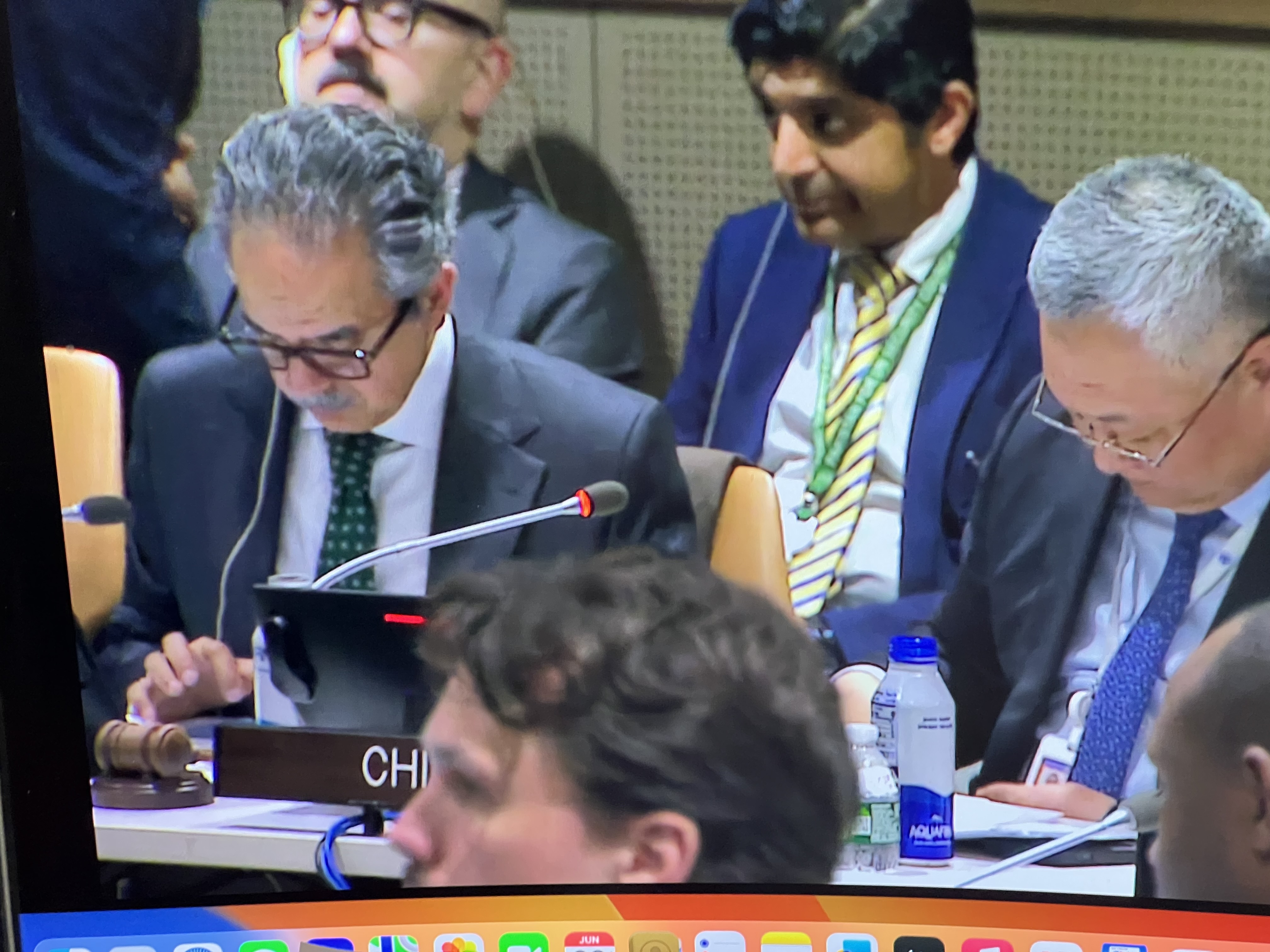
The Arria-Formula Meeting of the United Nations Security Council on “Bridging the Implementation Gap: Security Council Resolutions and the Maintenance of International Peace and Security”, held at UN Headquarters in New York on 23 June 2026, highlighted a fundamental truth about the international system: resolutions matter only when they are implemented.
The concept note for the meeting correctly observed that the significance of Security Council resolutions lies not merely in their adoption but in their implementation. A resolution that is ignored, selectively applied, or left without follow-up weakens not only the authority of the Security Council but also confidence in the United Nations Charter itself. If the Council is entrusted with the primary responsibility for maintaining international peace and security, then its decisions must be treated as more than diplomatic statements. They must be translated into action.
The remarkable feature of the debate was the breadth of agreement. Thirty-six member states took the floor, representing diverse regions, political systems, and strategic interests. Yet there was overwhelming consensus on one central principle: implementation is indispensable to the credibility of the Security Council.
Delegates repeatedly referred to Article 25 of the UN Charter, under which member states agree to accept and carry out Security Council decisions. Many also cited Article 2(2), which requires all members to fulfill their Charter obligations in good faith. Several speakers emphasized that when Council resolutions become dead letters, the consequences are not merely procedural. Delayed or selective implementation can prolong conflicts, facilitate violations of international law, obstruct humanitarian relief, and cost human lives.
Ambassador Fu Chong of China, co-chairing the meeting, warned that ineffective implementation undermines the authority of the Security Council and may contribute to worsening crises and escalating conflicts. Khaled Khiari, Assistant Secretary-General, similarly noted that selective implementation weakens multilateralism, respect for international law, and conflict-prevention efforts. Shamala Kandiah Thompson of Security Council Report argued that the effectiveness of the Council should be measured not only by the resolutions it adopts but by whether those resolutions achieve their intended objectives. Richard Gowan of the International Crisis Group offered an even starker assessment, observing that many states now believe they can ignore Council decisions and broader international law with impunity.
The message was echoed by representatives from France, Denmark, the United States, the United Kingdom, Russia, the European Union, Qatar, Japan, Saudi Arabia, Nepal, Panama; Liberia; Greece; Columbia, DRC; Switzerland; Angola; Mexico; Oman; Zimbabwe; Azerbaijan; Australia; Algeria; Lebanon; Morocco; Cuba; Cambodia; Nepal; Liechtenstein; Serbia; and Venezuela, Latvia, Iran, Bahrain, and Somalia. Their wording differed, but the conclusion was the same: the authority of the Security Council depends upon faithful, timely, and non-selective implementation of its resolutions.
Against this backdrop, Ambassador Asim Iftikhar of Pakistan, Co-Chair of the meeting raised the issue of Jammu and Kashmir as an example of what he described as a longstanding case of non-implementation. He argued that Security Council resolutions concerning Kashmir remain unfulfilled decades after their adoption and that selective approaches to implementation undermine both the Charter and the Council's credibility. In his view, the continued failure to resolve the dispute demonstrates the costs of allowing Security Council decisions to remain unimplemented.
The Indian representative, Ambassador Parvathaneni Harish, emphasized that the Security Council is the principal organ responsible for maintaining international peace and security and argued for greater review of Security Council mandates under broader UN reform efforts. He also reiterated India's longstanding position that Jammu and Kashmir is an internal matter of India.
Ambassador Parvathaneni Harish is undoubtedly aware that Security Council resolutions concerning disputes addressed under Chapter VI of the UN Charter do not simply disappear through the passage of time. Unless they are implemented, superseded, or otherwise set aside through subsequent decisions of the Council, they remain part of the body of Security Council decisions. The resolutions relating to Jammu and Kashmir have never been formally annulled and the issue itself remains on the Security Council's agenda.
It is equally important to recall the historical context in which these resolutions were adopted. The proposal that the final disposition of Jammu and Kashmir should be determined through a plebiscite was not imposed from outside; it emerged during the deliberations of the parties and subsequently formed part of the framework endorsed by the United Nations. Both India and Pakistan accepted the relevant UN resolutions at the time and acknowledged the commitments contained therein. The fact that these resolutions have not been implemented does not, by itself, erase their historical significance or the obligations and expectations associated with them. Rather, it is the continuing gap between commitment and implementation that remains at the heart of the unresolved dispute.
The exchange between the Indian and Pakistani representatives underscored a broader reality exposed by the meeting. The challenge is not the absence of resolutions. The challenge is the gap between adoption and implementation. It is easy for states to endorse the principle of implementation in the abstract. The true test comes when implementation affects issues of sovereignty, territorial disputes, strategic interests, or long-standing political disagreements.
The debate therefore raised an uncomfortable but necessary question: can the United Nations maintain its credibility if some resolutions are treated as binding imperatives while others are effectively ignored? Numerous speakers argued that selective implementation weakens the Council's legitimacy and erodes confidence in the rules-based international order. As the representative of the European Union observed, the principles of the Charter cannot be negotiated away, and non-implementation cannot become the norm.
The broader lesson extends beyond any single dispute. Whether the issue concerns conflict prevention, sanctions, peacekeeping, humanitarian access, or unresolved territorial questions, Security Council resolutions must remain living instruments rather than historical documents gathering dust in archives. Their value is measured not by the number adopted but by the peace they help secure, the conflicts they help prevent, and the lives they help protect.
The Arria-Formula meeting served as a reminder that the credibility of the United Nations rests not on words alone. Resolutions are promises made by the international community. If those promises are not honored, the authority of the Security Council is diminished, and the integrity of the Charter system is weakened.
Bridging the implementation gap is therefore not merely an institutional challenge. It is a test of whether the international community is willing to uphold the principles it has repeatedly affirmed. The future relevance of the United Nations may well depend on the answer.
In conclusion, I would like to express my sincere appreciation to the Permanent Missions of China and Pakistan for convening this important Arria-Formula meeting and to all participating delegations, briefers, and UN officials for their thoughtful contributions. Their interventions highlighted the urgent need to strengthen respect for the United Nations Charter and to ensure that Security Council resolutions are implemented faithfully, consistently, and in good faith. The discussion was a valuable contribution to the ongoing effort to enhance the effectiveness, credibility, and legitimacy of the United Nations system.
(Dr. Fai is also Secretary General of World Kashmir Awareness Forum. He can be reached at: WhatsApp: 1-202-607-6435 gnfai2003@yahoo.com)
The concept note for the meeting correctly observed that the significance of Security Council resolutions lies not merely in their adoption but in their implementation. A resolution that is ignored, selectively applied, or left without follow-up weakens not only the authority of the Security Council but also confidence in the United Nations Charter itself. If the Council is entrusted with the primary responsibility for maintaining international peace and security, then its decisions must be treated as more than diplomatic statements. They must be translated into action.
The remarkable feature of the debate was the breadth of agreement. Thirty-six member states took the floor, representing diverse regions, political systems, and strategic interests. Yet there was overwhelming consensus on one central principle: implementation is indispensable to the credibility of the Security Council.
Delegates repeatedly referred to Article 25 of the UN Charter, under which member states agree to accept and carry out Security Council decisions. Many also cited Article 2(2), which requires all members to fulfill their Charter obligations in good faith. Several speakers emphasized that when Council resolutions become dead letters, the consequences are not merely procedural. Delayed or selective implementation can prolong conflicts, facilitate violations of international law, obstruct humanitarian relief, and cost human lives.
Ambassador Fu Chong of China, co-chairing the meeting, warned that ineffective implementation undermines the authority of the Security Council and may contribute to worsening crises and escalating conflicts. Khaled Khiari, Assistant Secretary-General, similarly noted that selective implementation weakens multilateralism, respect for international law, and conflict-prevention efforts. Shamala Kandiah Thompson of Security Council Report argued that the effectiveness of the Council should be measured not only by the resolutions it adopts but by whether those resolutions achieve their intended objectives. Richard Gowan of the International Crisis Group offered an even starker assessment, observing that many states now believe they can ignore Council decisions and broader international law with impunity.
The message was echoed by representatives from France, Denmark, the United States, the United Kingdom, Russia, the European Union, Qatar, Japan, Saudi Arabia, Nepal, Panama; Liberia; Greece; Columbia, DRC; Switzerland; Angola; Mexico; Oman; Zimbabwe; Azerbaijan; Australia; Algeria; Lebanon; Morocco; Cuba; Cambodia; Nepal; Liechtenstein; Serbia; and Venezuela, Latvia, Iran, Bahrain, and Somalia. Their wording differed, but the conclusion was the same: the authority of the Security Council depends upon faithful, timely, and non-selective implementation of its resolutions.
Against this backdrop, Ambassador Asim Iftikhar of Pakistan, Co-Chair of the meeting raised the issue of Jammu and Kashmir as an example of what he described as a longstanding case of non-implementation. He argued that Security Council resolutions concerning Kashmir remain unfulfilled decades after their adoption and that selective approaches to implementation undermine both the Charter and the Council's credibility. In his view, the continued failure to resolve the dispute demonstrates the costs of allowing Security Council decisions to remain unimplemented.
The Indian representative, Ambassador Parvathaneni Harish, emphasized that the Security Council is the principal organ responsible for maintaining international peace and security and argued for greater review of Security Council mandates under broader UN reform efforts. He also reiterated India's longstanding position that Jammu and Kashmir is an internal matter of India.
Ambassador Parvathaneni Harish is undoubtedly aware that Security Council resolutions concerning disputes addressed under Chapter VI of the UN Charter do not simply disappear through the passage of time. Unless they are implemented, superseded, or otherwise set aside through subsequent decisions of the Council, they remain part of the body of Security Council decisions. The resolutions relating to Jammu and Kashmir have never been formally annulled and the issue itself remains on the Security Council's agenda.
It is equally important to recall the historical context in which these resolutions were adopted. The proposal that the final disposition of Jammu and Kashmir should be determined through a plebiscite was not imposed from outside; it emerged during the deliberations of the parties and subsequently formed part of the framework endorsed by the United Nations. Both India and Pakistan accepted the relevant UN resolutions at the time and acknowledged the commitments contained therein. The fact that these resolutions have not been implemented does not, by itself, erase their historical significance or the obligations and expectations associated with them. Rather, it is the continuing gap between commitment and implementation that remains at the heart of the unresolved dispute.
The exchange between the Indian and Pakistani representatives underscored a broader reality exposed by the meeting. The challenge is not the absence of resolutions. The challenge is the gap between adoption and implementation. It is easy for states to endorse the principle of implementation in the abstract. The true test comes when implementation affects issues of sovereignty, territorial disputes, strategic interests, or long-standing political disagreements.
The debate therefore raised an uncomfortable but necessary question: can the United Nations maintain its credibility if some resolutions are treated as binding imperatives while others are effectively ignored? Numerous speakers argued that selective implementation weakens the Council's legitimacy and erodes confidence in the rules-based international order. As the representative of the European Union observed, the principles of the Charter cannot be negotiated away, and non-implementation cannot become the norm.
The broader lesson extends beyond any single dispute. Whether the issue concerns conflict prevention, sanctions, peacekeeping, humanitarian access, or unresolved territorial questions, Security Council resolutions must remain living instruments rather than historical documents gathering dust in archives. Their value is measured not by the number adopted but by the peace they help secure, the conflicts they help prevent, and the lives they help protect.
The Arria-Formula meeting served as a reminder that the credibility of the United Nations rests not on words alone. Resolutions are promises made by the international community. If those promises are not honored, the authority of the Security Council is diminished, and the integrity of the Charter system is weakened.
Bridging the implementation gap is therefore not merely an institutional challenge. It is a test of whether the international community is willing to uphold the principles it has repeatedly affirmed. The future relevance of the United Nations may well depend on the answer.
In conclusion, I would like to express my sincere appreciation to the Permanent Missions of China and Pakistan for convening this important Arria-Formula meeting and to all participating delegations, briefers, and UN officials for their thoughtful contributions. Their interventions highlighted the urgent need to strengthen respect for the United Nations Charter and to ensure that Security Council resolutions are implemented faithfully, consistently, and in good faith. The discussion was a valuable contribution to the ongoing effort to enhance the effectiveness, credibility, and legitimacy of the United Nations system.
(Dr. Fai is also Secretary General of World Kashmir Awareness Forum. He can be reached at: WhatsApp: 1-202-607-6435 gnfai2003@yahoo.com)
You May Also Like

Every year on 26 October, Accession Day marks a historic moment in Jammu and Kashmir’s history. In 1947, Maharaja Hari Singh signed the Instr
The dispute over Jammu and Kashmir remains unresolved nearly eight decades after the events of October 1947. Although the Government of India maint


PCP need your support that we may provide you better services: click on donate


"Trial of Pakistani Christian Nation" By Nazir S Bhatti
On demand of our readers, I have decided to release E-Book version of "Trial of Pakistani Christian Nation" on website of PCP which can also be viewed on website of Pakistan Christian Congress www.pakistanchristiancongress.org . You can read chapter wise by clicking tab on left handside of PDF format of E-Book.