
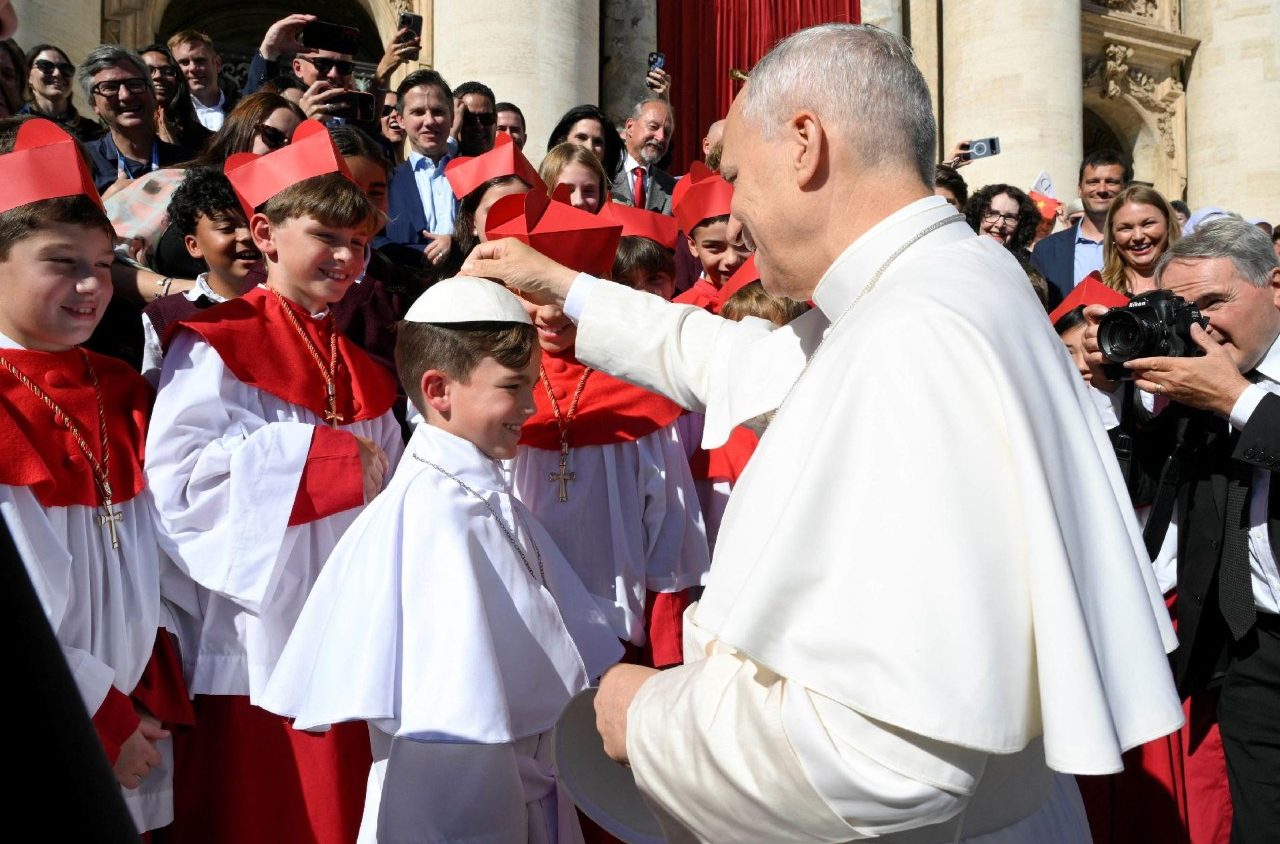
Vatican City: (Vatican News) Students from a Catholic school in Pope Leo XIV’s hometown of Chicago are preparing a "care package" f
Pope Leo names US Catholics to Vatican's social justice office
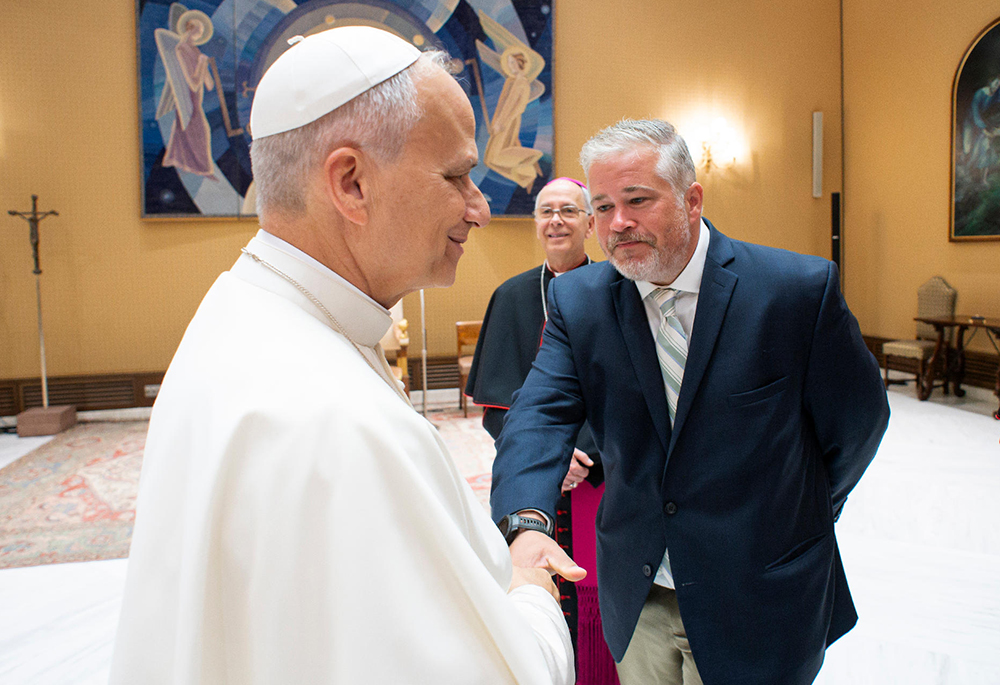
Dylan Corbett, executive director of the Hope Border Institute in El Paso, Texas, meeting Pope Leo XIV at the Vatican, in October 2025 (Courtesy of Vatican Media)
Vatican City: (NCR) Pope Leo XIV has named a trio of Catholic academics and the head of a church-based center for migrants at the U.S.-Mexico border to be among the new members of the Vatican's office on Catholic social doctrine.
The Vatican announced the pope's new appointments to the Dicastery for Promoting Integral Human Development on March 30. The office, led by Cardinal Michael Czerny, is devoted to the social teachings of the church, including on justice and peace, human rights, migration and the environment.
Among the 11 new members are Holy Cross Fr. Daniel Groody, vice president and an associate provost for undergraduate education at the University of Notre Dame; Meghan Clark, a theologian and vice dean of the Department of Theology and Religious Studies of St. John's University in New York; Léocadie Wabo Lushombo, a professor of ethical theology at the Jesuit School of Theology of Santa Clara University in Berkeley; and Dylan Corbett, executive director of the Hope Border Institute in El Paso, Texas.
Corbett brings to the role more than a decade of work at the intersection of migration, policy and Catholic social teaching, much of it grounded along the U.S.-Mexico border. As a founding executive director of the Hope Border Institute, he has focused on accompaniment of migrants and advocacy rooted in church teaching on human dignity.
Holy Cross Fr. Daniel Groody, vice president and an associate provost for undergraduate education at the University of Notre Dame, meeting Pope Leo XIV at the Vatican, in July 2025 (Courtesy of Vatican Media)
Holy Cross Fr. Daniel Groody, vice president and an associate provost for undergraduate education at the University of Notre Dame, meeting Pope Leo XIV at the Vatican, in July 2025 (Courtesy of Vatican Media)
The Hope Border Institute has played a leading role in the U.S. church's response to the Trump administration's mass deportation campaign. Earlier this year, it helped form the Catholic Immigrant Prophetic Action Project to organize a robust church response on behalf of migrants and refugees in the country.
"I'm honored by the trust of Pope Leo and I think this is really about Pope Leo's attentiveness to the presence of God in border communities and issues of human migration," Corbett said.
That emphasis reflects a broader concern within the Vatican office, which has increasingly highlighted migration as a defining issue for the global church. Corbett pointed to what he described as a period of global instability shaping that work. "We're living in a moment of institutional collapse at all levels," he said, citing weakened global norms and strains on international cooperation.
He connected the current moment to the church's social tradition, invoking the legacy of Rerum Novarum, Pope Leo XIII's 1891 encyclical that is considered the beginning of modern Catholic social teaching.
"It's no accident that the Holy Father chose the name Leo, because this really is a Rerum Novarum moment," Corbett said. "The challenge is to promote human fraternity at a time of real, global collapse of institutions and norms."
"The Holy Father is confident that Catholic social teaching can make a real contribution, and this is one of the demands of the Gospel in our time," he said.
Bishop Mark Seitz of El Paso said Corbett's appointment affirms his "faithful leadership and his witness of faith to our border community, where the dignity of all that is encountered and defended each day."
In a statement, Seitz expressed confidence that Corbett would bring the perspectives of the border region to the global church, calling the appointment "a sign of hope" and pledging continued prayers and support for his new role.
Clark, who has spent two decades in the field of Catholic social thought and has authored and edited several books on Catholic social teaching and the common good, was left speechless when she opened the email with the letter — in Latin — notifying her of the appointment. (A copy in English was included, too.)
"I did not anticipate that. It is a huge honor," she told the National Catholic Reporter.
Clark has worked with the Vatican in other roles, including as part of a team assisting the Dicastery for Promoting Christian Unity and as an expert for the Holy See's Mission to the United Nations.
In 2022, Clark worked with the human development dicastery's migrant and refugee section on a project where theologians around the globe documented voices from the peripheries to inform the 2021-2024 synod on synodality. For her contribution, she interviewed day laborers and waste collectors as well as migrants and survivors of trafficking.
"I'm really excited to have the opportunity to serve this particular dicastery … and the ways in which they disseminate and promote the social teachings of the church and support the local church in doing so, as well, in practice," she said.
Clark and Lushombo both commended the Vatican for including the voices of lay and women theologians as dicastery members.
"It shows that the church really is willing to be inclusive, at least inclusive in terms of insight. And this is hopeful," said Lushombo, a consecrated member of the lay Teresian Association from the Democratic Republic of Congo.
Like Clark, she previously worked with the dicastery as part of a study group for the synod on synodality on the cry of the poor and the cry of the earth. She suggested the intersectionality of her research — involving human dignity, ecology, justice and the perspectives of women and the Global South — led to her appointment.
"The church doesn't separate faith and justice," she said. "Being aware that the people of God in many parts of the world are lacking basic goods, are lacking justice, oppressed, excluded, dying premature deaths. So the church is just expecting that we the members of the dicastery can contribute to add more value in enhancing human dignity."
For Groody, the appointment signals continuity with longstanding efforts to link theology and global concerns. A professor at the University of Notre Dame, Groody has written extensively on migration and refugee issues and has worked with policymakers and international bodies.
He described his new role as part of a broader discernment within the church.
"We're trying to figure out how a community of faith can respond to needs and challenges of the world as God calls us in Jesus," he said to NCR. The task, he added, is "to really be a sign of hope and also a sign of healing" amid conflict and displacement.
Three bishops were also appointed to the dicastery: Archbishop Rogelio Cabrera López of Monterrey, Mexico; Archbishop Fulgence Muteba Mugalu of Lubumbashi, Democratic Republic of the Congo; and Auxiliary Bishop Lizardo Estrada Herrera of the Archdiocese of Cuzco, Peru.
Jesuit Fr. Rampeoane Hlobo, director of the Jesuit Justice and Ecology Network–Africa and Brazilian climate scientist Carlos Nobre were also appointed to the dicastery, which has led in amplifying and acting upon Pope Francis' 2015 encyclical on ecology "Laudato Si', on Care for Our Common Home."
Francis formed the integral human development dicastery in 2016 as part of a reorganization that combined the work of four pontifical councils. Each of the 11 new members will serve five-year terms.
Groody pointed to a range of issues likely to shape the dicastery's work in the coming years. "We have war, we have violence, we have poverty, we have human degradation across so many levels," he said. "Then we've got challenges of migration, of climate change, of economic disorders."
"The threat to human dignity is arguably more extensive and greater than any other time," he said, calling the mission of the dicastery "all the more important."
On migration in particular, Groody urged a shift away from polarized debate. Instead, he framed migration as central to Christian identity.
"The bottom line is that God came to save the world through an undocumented, illegal alien [Jesus]. And the church itself sees itself as a migrant in this world. Therefore it's not about us and them, it's about all of us," he said.
You May Also Like
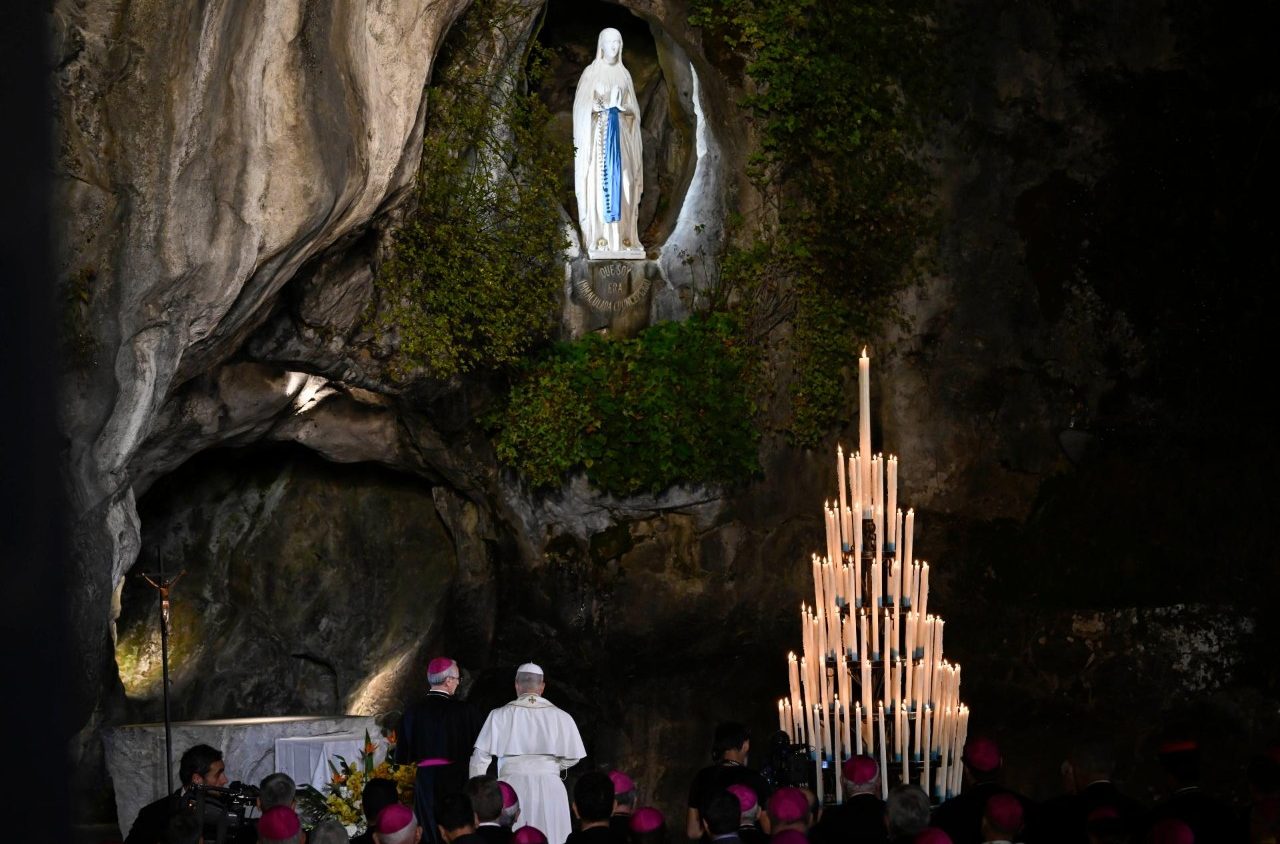
Lourdes: (Vatican News by Isabella H. de Carvalho) “Mesdames et messieurs, le Pape est à Lourdes!” (“Ladies and gentlemen,
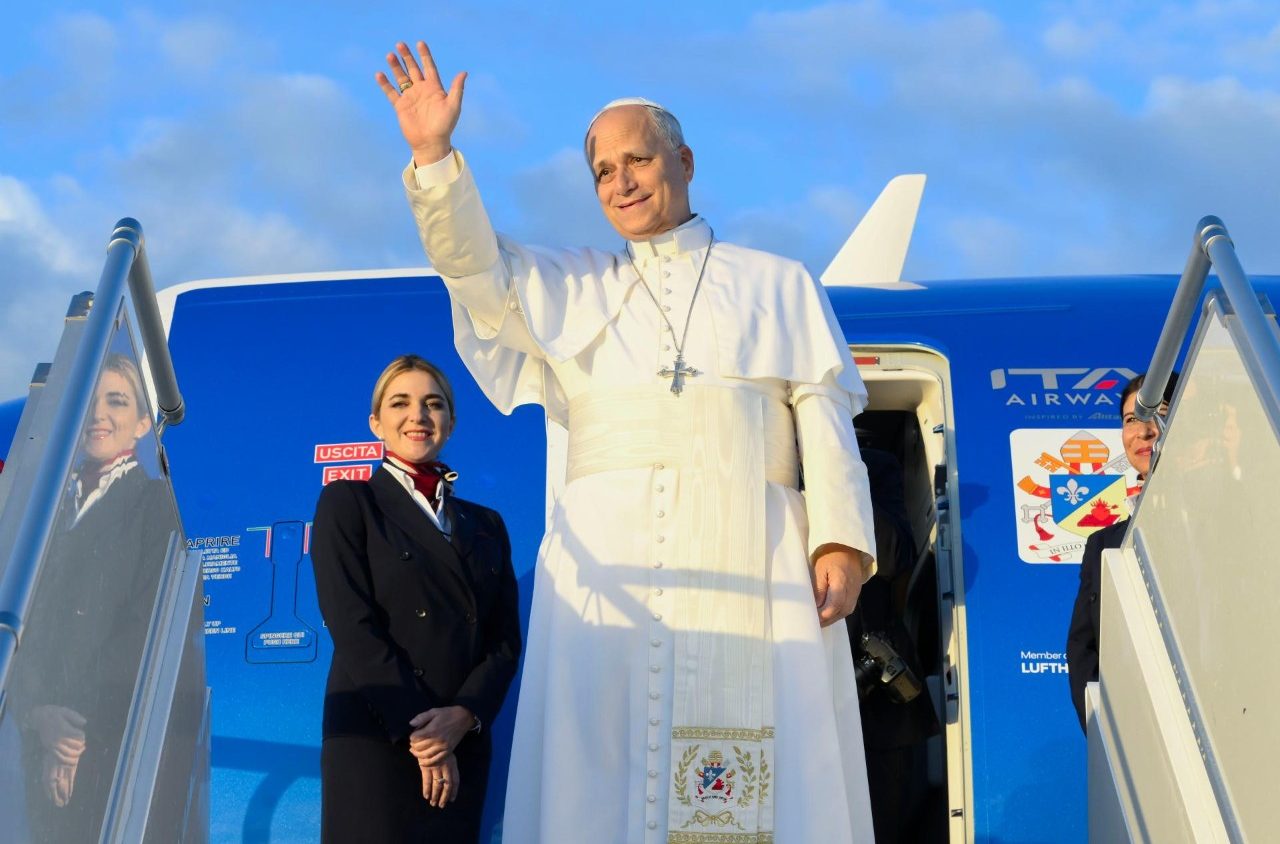
Vatican City: (By Devin Watkins for Vatican News) Pope Leo XIV boarded the papal plane at Rome’s Fiumicino airport on Friday, accompanied by


PCP need your support that we may provide you better services: click on donate


"Trial of Pakistani Christian Nation" By Nazir S Bhatti
On demand of our readers, I have decided to release E-Book version of "Trial of Pakistani Christian Nation" on website of PCP which can also be viewed on website of Pakistan Christian Congress www.pakistanchristiancongress.org . You can read chapter wise by clicking tab on left handside of PDF format of E-Book.