

Lahore: Forced Conversion to Islam for Marriage Is a Serious Human Rights Concern. No religion, tradition, or social practice can justify coercion,
Graves at Risk: Islamabad Christian Cemetery Dispute Exposes Deepening Concerns Over Minority Land Rights. Report by Sardar Mushtaq Gill
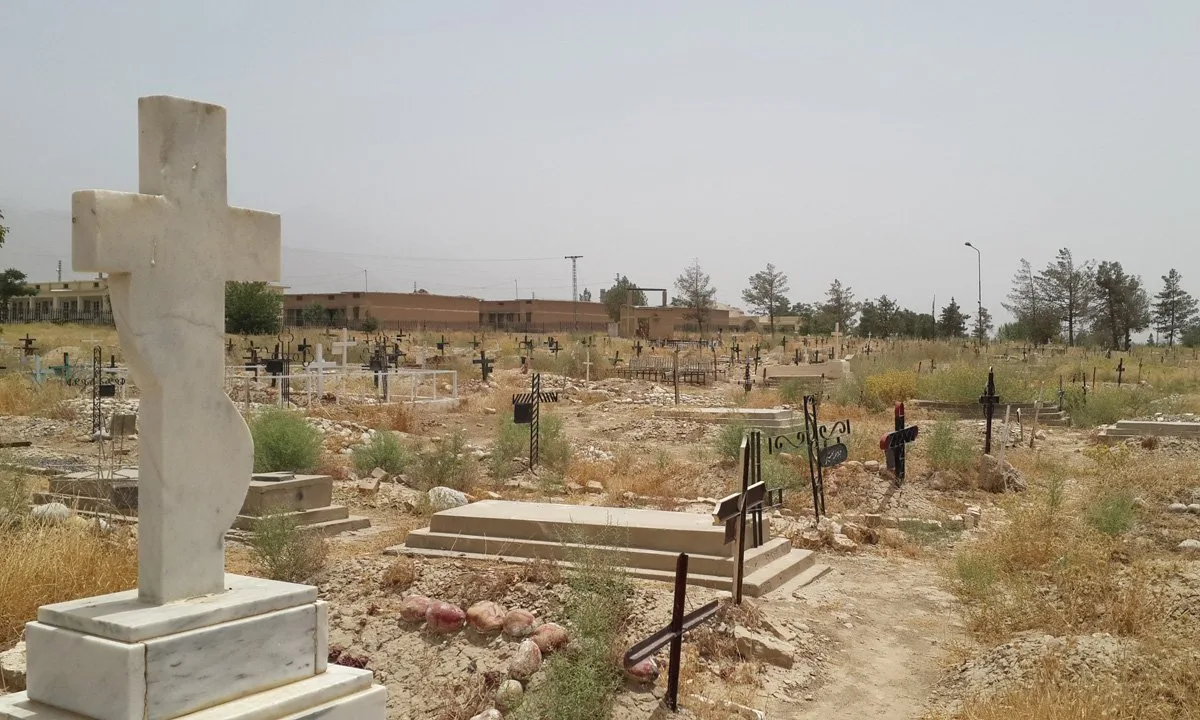
ISLAMABAD — A long-running dispute over land designated for a Christian cemetery in Islamabad has raised concerns about the protection of minority property, the security of Christian burial grounds, and the ability of vulnerable communities to obtain effective protection when their land rights are challenged.
The dispute centres on approximately 10 kanals of land that the Roman Catholic Christian Society says was officially allocated for a Christian cemetery decades ago. According to documents and historical records presented by representatives of the society, the community’s claim to the property predates the subsequent development of Bahria Town in the surrounding area.
The society says it was registered on July 7, 1987, and that its land was acquired during the following years, with purchases continuing until approximately 1996–97. According to the society, the cemetery allocation was subsequently incorporated into official records under the 1995 arrangements and Mutation No. 2298.
The society maintains that the 10-kanal area was specifically designated as cemetery land and reflected as such in its master plan.
A Land Claim That Predates Later Development
The chronology of the property is central to the dispute.
Representatives of the Christian society argue that their ownership and cemetery allocation existed long before Bahria Town’s development reached the area. According to the society’s account, Bahria Town began entering the surrounding area after 2005, while the Christian society’s land had already been acquired during the late 1980s and 1990s.
The society alleges that efforts to take control of portions of the cemetery property have continued since 2016.
Those allegations require examination against the original title documents, revenue records, approved maps, mutations, and any competing claims or court orders concerning the property.
Revenue Officials Reportedly Identify Existing Graves
A significant development came on September 10, 2026, when representatives of the Revenue Department reportedly visited the disputed site.
According to the Christian society, officials inspected the property and confirmed the presence of graves covering approximately 2.5 kanals of the designated cemetery area.
The society argues that the existence of graves demonstrates that the property has been used for Christian burials and that the remaining cemetery allocation should also be protected from encroachment or unauthorized development.
The official inspection records and any written findings from the Revenue Department will be important in determining precisely what was verified during the visit.
Police Response Comes Under Scrutiny
The dispute escalated further following an incident in late September 2026.
Representatives of the Christian community say they submitted a formal application to the police seeking protection for the cemetery and the society’s property. They allege that, instead of receiving adequate protection, they encountered an official response that failed to address their concerns.
The community subsequently publicized its allegations on social media, drawing renewed attention to the dispute.
The allegations concerning police conduct have not independently been established in the material available for this report. A complete account would require the police’s response, the original application submitted by the society, and any subsequent administrative or legal action.
The Historic Contribution of Catholic Missionaries
The dispute also brings into focus a broader chapter of Christian history in Pakistan, particularly the contribution of Catholic missionaries, religious congregations, and Christian charitable institutions to the development of Christian communities.
For generations, Catholic missionaries and Church institutions played significant roles in education, healthcare, social welfare, and community development in areas of Punjab and other parts of what is now Pakistan. Mission schools, hospitals, dispensaries, orphanages, and charitable programmes became important institutions serving communities that frequently had limited access to education, healthcare, and secure livelihoods.
Christian historical accounts also describe instances in which Church institutions, missionaries, and charitable organizations acquired, provided, or facilitated access to land and housing for economically disadvantaged Christian families, including communities in parts of Punjab. In some locations, land was reportedly made available at little or no cost to enable families to establish homes and build stable communities.
This development involved more than the construction of churches. It included the creation of social foundations that allowed families to live together, educate their children, access healthcare, and establish sustainable neighbourhoods.
At the same time, individual land-allocation histories differ considerably from one locality to another. Claims regarding particular parcels should therefore be established through historical deeds, institutional records, revenue documents, and archival material.
From Missionary Settlement to Modern Land Security
The historical contribution of Christian institutions makes present-day land disputes particularly significant.
Many Christian community representatives now argue that the challenge has shifted from helping vulnerable families establish communities to protecting those communities from displacement, encroachment, and loss of property.
Christian families with limited financial resources may be particularly vulnerable when disputes involve valuable urban or peri-urban land. Community representatives say that losing even a relatively small parcel can affect housing, community institutions, churches, and cemeteries, gradually weakening established neighbourhoods.
A Call of LEAD Ministries for International Churches and Christian Humanitarian Organizations
Against this background, A Call of LEAD Ministries for International Churches and Christian Humanitarian Organizations is for renewed attention to Christian community development in Pakistan.
International churches, Catholic institutions, Christian charities, and humanitarian organizations could consider programmes that provide affordable or free housing for vulnerable Christian families, particularly those facing homelessness, extreme poverty, or displacement.
Such initiatives could combine secure housing with education, healthcare, vocational training, legal assistance, and community infrastructure.
Potential areas of support include:
Secure housing for poor and vulnerable Christian families;
Community housing projects with legally documented titles;
Assistance in protecting existing Christian properties;
Legal support for communities facing documented land disputes;
Properly registered and protected Christian cemeteries;
Educational and vocational facilities;
Healthcare and social-welfare programmes; and
Lawful road access to churches and cemeteries.
The objective would be to help vulnerable families achieve long-term security, dignity, and self-sufficiency rather than relying solely on short-term assistance.
Beyond One Cemetery
For Pakistan’s Christian community, the Islamabad dispute represents a wider concern about the security of minority-owned land and religious sites.
Community representatives in different parts of Pakistan have raised allegations involving encroachment on Christian properties, disputes over agricultural land, restrictions on access to cemeteries, and attempts to acquire or develop land reserved for Christian burial grounds.
There have also been reports and community allegations concerning difficulties in obtaining or maintaining road access to cemeteries. In some areas, community members say private landowners have restricted pathways leading to Christian burial grounds, making burials more difficult.
Such allegations must be examined individually and supported by evidence. Nevertheless, recurring disputes involving burial grounds can create significant insecurity for communities already concerned about property rights.
When a Cemetery Becomes a Symbol of Minority Rights
A cemetery is not simply another parcel of land.
For Christian families, burial grounds are sacred spaces where generations of relatives are laid to rest. Any threat to such property therefore carries religious, emotional, and cultural consequences beyond questions of commercial ownership.
The Islamabad dispute has consequently raised the question of whether minority communities can rely on official records and state institutions when their religious property comes under challenge.
The central issue is whether documented ownership, approved land use, and the sanctity of an established cemetery are being adequately protected under the law.
Concerns Over Access to Justice
Christian representatives have also expressed broader concerns about whether minority communities receive equal and effective protection when they approach government departments, police, or courts over property disputes.
Some members of the community allege that Christian litigants can face disadvantages when challenging influential parties. Claims that courts systematically favour Muslim parties on religious grounds, however, are serious allegations requiring case-specific evidence and should not be treated as established fact without examination of judgments, applicable law, and the conduct of individual proceedings.
What can be examined objectively is whether complaints are registered, property records are properly investigated, disputed land is protected from unlawful occupation, and affected citizens have meaningful access to legal remedies.
The Documents May Hold the Answer
The Islamabad cemetery dispute now turns largely on documentation.
The Christian society points to:
Its registration in 1987;
Land purchases made during the late 1980s and 1990s;
The 1995 records concerning the cemetery;
Mutation No. 2298;
The allocation of approximately 10 kanals for cemetery purposes;
The society’s master plan identifying the cemetery;
The reported September 10, 2026, Revenue Department inspection; and
The existence of graves on approximately 2.5 kanals of the disputed area.
These records, together with any competing title documents, development approvals, revenue proceedings, police reports, and court orders, should provide the foundation for determining the legal status of the land.
A Call to Protect a Community’s Future
The history of Christian community development in Pakistan demonstrates the importance of secure land and housing. Today, international Christian organizations and local institutions have an opportunity to build on that legacy through programmes that promote lawful housing, community development, legal protection, and the preservation of religious sites.
Such assistance could help ensure that Christian families are not forced into displacement or dependency because they lack secure access to land and housing.
The Islamabad cemetery dispute has therefore become more than a disagreement over property. It has raised questions about land security, religious freedom, minority protection, and the future of established Christian communities in Pakistan.
For the Christian community, these are not merely acres and kanals on a map. They are homes, churches, cemeteries, memories, family histories, and sacred ground.
The response required is one based on documented ownership, transparent investigation, due process, and equal protection under the law.
Beyond this individual case, the broader humanitarian appeal of LEAD Ministries is for churches and international Christian organizations that have historically helped vulnerable communities establish secure lives to consider renewed efforts to help today’s most vulnerable Christian families obtain safe, lawful, and dignified housing.
This is also a true church-planting mission — one that seeks not only to establish churches, but to help build secure, Christ-centred communities where vulnerable Christian families can live, worship, serve, and grow together with dignity, hope, and the true freedom of faith.
The next chapter should be determined not by power or influence, but by evidence, law, and the principle that every citizen — regardless of faith — has the right to property, dignity, security, and a final resting place protected by the law.
You May Also Like
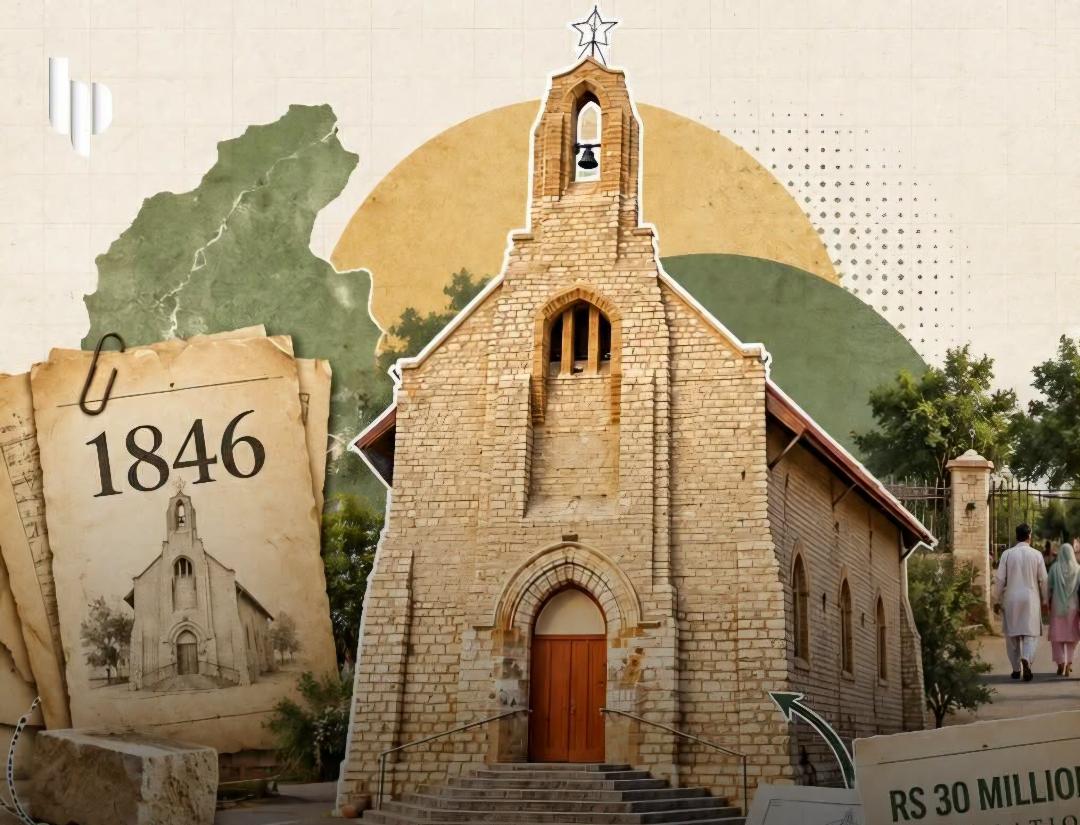
Kotri: The first church in Sindh, the historic Church of Kotri, has been preserved as a historical heritage after 180 years; Deputy Speaker

Pakistan came into being on August 14, 1947 as a result of the division of India which had strong diverse multireligious and multicultural backgrou


PCP need your support that we may provide you better services: click on donate


"Trial of Pakistani Christian Nation" By Nazir S Bhatti
On demand of our readers, I have decided to release E-Book version of "Trial of Pakistani Christian Nation" on website of PCP which can also be viewed on website of Pakistan Christian Congress www.pakistanchristiancongress.org . You can read chapter wise by clicking tab on left handside of PDF format of E-Book.