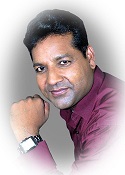
Faisalabad: March 17, 2015. (PCP) The Pakistan Minorities Teachers’ Association Chairman Professor Anjum James Paul requests Prime Minister to remove biases against religious minorities from the curriculum and textbooks.
Professor James Paul is only academic in Pakistan who has conducted research on syllabus and text books to identify anti-Christian and anti-Pakistan material from years and presenting it to education and other government departments to create religious harmony through teaching in schools.
There are many Christian and Muslim run institutions and commissions on government of Pakistan and foreign funding’s for research on syllabus and text books of schools but have not performed such progress which Professor Anjum James Paul have conducted with any financial assistance of any funding agency.
Here we are presenting a recent letter to Prime Minister of Pakistan Mian Nawaz Sharif by Professor James Paul:
Ref No PMTA/13-27/15 Dated: March 16, 2015
To
Mr. Muhammad Nawaz Sharif
Prime Minister of Pakistan
Prime Minister’s Secretariat
Islamabad.
Subject: REQUEST TO IMPLEMENT ARTICLE 22(1) OF THE CONSTITUTION OF PAKISTAN IN THE NATIONAL CURRICULUM & TEXTBOOKS AND TO REMOVE BIASES AGAINST MINORITIES FROM THE NATIONAL CURRICULUM AND TEXTBOOKS
Honourable Sir,
Greetings and peace from Pakistan Minorities Teachers’ Association (PMTA).
PMTA would like to draw your kind attention on the subject cited above.
Pakistani religious minorities are in grief and shock due to the insecurity of life, property and honour. The most recent tragic incident of attacking two churches of Youhanabad, Lahore by the extremists that has taken the lives of 16 innocent human beings and injuring 70 people yesterday on March 15, 2015 is a big question mark.
Pakistani textbooks promote extremism and intolerance against the non-Muslims as material has been developed on desecration of the worship places, desecration of Holy Books, insulting and degrading the sacred personalities, heroes and looting the properties. Article 22 (1) the Constitution of Pakistan guarantees, “No person attending any educational institution shall be required to receive religious instruction, or take part in any religious ceremony, or attend religious worship, if such instruction, ceremony or worship relates to a religion other than his own.” Due to the violation of Article 22 (1), students of religious minorities are not considered of their own religion/s and are even forcibly persuaded to convert their religion/s to the majority religion of Pakistan.
Article 25 (1) of the Constitution of Pakistan guarantees equal rights to all citizens as it declares , “All citizens are equal before law and are entitled to equal protection of law.” But it is so sorrowful that there are biases against the religious minorities. There has been violation of Article 25 (1) of the Constitution and only the minority students have
been deprived of their religious education which is discriminatory. The state is considered to be the mother of all citizens indiscriminatory.
Comparison on the Contents of Curriculum of Ethics III and Islamic Education III according to National Curriculum 2006-2007 Government of Pakistan, Ministry of Education, Islamabad is presented below.
Contents of Ethics III Contents of Islamic Education III
(Note) The textbook has not yet been published by any textbook Board or National Book Foundation, Islamabad. Date of Publication Edition Impression
March 2014 First Second
Publisher: Urdu Book Stall, Lahore
Unit –I Introduction to Religions:
Brief introduction to primitive Religions: Nature Worship
• Sky gods
• Earth gods
Mythologies (Greek, Babylonian, Egyptian)
Brief introduction to primitive Religions: Animism and magic
• Totemism
• Fables & Myths
Unit-II
Introduction to Religious Ethics:
• Importance of moral values
• Relation between religion and ethics
Ethical Values:
Importance of life:
• Respect for Human Life
• Respect for the Life on Earth (animals, plants)
• Plant Life
Respect for Humans:
• All human beings are born equal
• Respect for all people irrespective of race, gender, social status, profession and religion
Self Respect:
• Maintain ones own dignity as human being with the sense of equality and justice.
Education:
• Importance of knowledge and its impact on character
Health:
• Looking after oneself
• Cleanliness and hygiene
• Keeping environment clean
Unit-III
Personalities:
Prophet Abraham:
• Life & Travelling
• Strong believer in God
• Uprightness
• Sacrifice (Eldest Son)• Chapter 1 Holy Quran
• Nazra Quran
• Hifaz-e- Quran
Chapter 2 Beliefs and Prayers
(A)
• Oneness
• Prophethood
• The Day of Judgment
(B)
• Introduction of the Holy Quran
• Manners of the recitation of the Holy Quran
(C)
• Prayer
• Timings of Prayer
• Manners of Prayer
• Introduction and importance of Kaa’ba
• Significance and importance of Mosque
Chapter 3 Life of the Holy Prophet صلی اللہ علیہ والہٖ وسلم
• Bringing up by Hazrat Abu Talib
• Journey to Syria
• Halaf-ul-Fazool
• Marriage with Hazrat Khadeja رضی اللہ تعالیٰ عنھا
• Installation of Hijr-e-Aswad
• Seclusion in the Cave Hira
(B)
• Truthfulness of Hazrat Muhammad صلی اللہ علیہ والہٖ وسلم
• Honesty of Hazrat Muhammad صلی اللہ علیہ والہٖ وسلم
• Fair Dealings
(C)
In the light of the life of Hazrat Muhammad صلی اللہ علیہ والہٖ وسلم
• Tolerance
• Patience
• Fair Socialization
Chapter 4 Ethics and Manners
Chapter 5 Sources of Guidance/ Islamic Heroes
• Hazrat Abraham علیہ السلام
• Hazrat Abu Bakar رضی اللہ تعالیٰ عنہ
Some examples of the violation of Article 22 (1) of the Constitution of Pakistan and biases against the religious minorities in the present Pakistani textbook from the textbooks of National Book Foundation Islamabad, Sindh Textbook Board Jamshoro, Punjab Textbook Board Lahore, Balochistan Textbook Board, Quetta and Khyber Pakhtunkhwa Textbook Board Peshawar are presented below. The details are in five research based documents on all the Textbook Boards of Pakistan and National Book Foundation Islamabad published in February 2015 are being posted with this letter. PMTA has already mailed three research based documents to your good office on December 26, 2014 published in various subjects in English language. The present research is on the textbooks published in Urdu language in various subjects.
.
URDU 3
Third Impression: 2014
National Book Foundation
Who is the best
Page 31 Line 15
Our teachers teach us, tell us the way to become a good human being and a good Muslim.
HISTORY 6
First Edition: 2013 First Impression: 2013
National Book Foundation Islamabad
Chapter 3 Muslims in South Asia-I
Page 43 Lines 12-16
The capture of Somnath was a crowning glory of Sultan Mahmud, The Shiva Ji temple of Somnath in Gujrat Kathiawar. In 1026 A.D. Sultan Mahmud attacked Somnath through Ajmer and suddenly appeared before the gates of Somnath. All neighboring Rajput rulers gathered their forces to protect the temple but Sultan Mahmud defeated them all with his best army. Sultan Mahmud entered the temple and with one blow shattered the idol into pieces.
GENERAL KNOWLEDGE 1
Edition Month & Year of Publication
First April 2014
Sindh Textbook Board, Jamshoro
Unit 6 The Mosque of our locality
Page 47 Lines 1-5
This is the mosque of our locality.
We come to say our prayer here.
On hearing the voice of the Azan (call), we go to say prayer in the mosque.
URDU 1
Edition Month & Year of Publication
First April 2014
Sindh Textbook Board
Greetings
Page 11 Lines 1-4
When Muslims meet they say “Assalam O Alaikum.” “Assalam O Alaikum” means “Peace of Allah be upon you.” The other Muslim in reply says, “Wa Alaikumus
Salam.” “Wa Alaikumus Salam” means “And also peace of Allah be upon you.” Muslims pray for the peace of one another.
SOCIAL STUDIES 6
Month & Year of Publication
Jan. 2009
Sindh Textbook Board, Jamshoro
Chapter 8 Arrival of British in South Asia
Page 85 Line 1
Christian missionaries forcibly started converting the local people to Christianity.
SOCIAL STUDIES 5
Date of Publication Edition Impression
March 2014 First First
Publisher: Gohar Publishers 11-Urdu Bazar Lahore
Chapter 7 Culture
Page 94 Line 2
Islam is the most important recognition of being Pakistanis.
HISTORY 6
Date of Publication Edition Impression
March 2013 First First
Publisher: Kitabistan Publishing Company 38 Urdu Bazar, Lahore
Page 38 Lines 8-10
Practical Activities:
Students present the conversation in the shape of a dialogue between Sultan Mahmud Ghaznavi and worshippers of Somnath in the classroom.
Chapter 5 Social and Cultural Development
Page 63 Lines 3-5
He invited the people to religion. Influential Hindus in Sindh and Lahore embraced Islam on his hands.
HOME ECONOMICS 7
Date of Publication Edition Impression
August 2013 First 17th
Publisher: Punjab Textbook Board, Lahore
Importance of education
Page 91 Lines 4-5
In our religion Islam, much stress has been laid down on the importance of Education.
PAKISTAN STUDIES 12
Date of Publication Edition Impression
November 2014 First 14
Publisher: Majid Book Depot, Lahore
Chapter 2 Initial problems of Islamic Republic of Pakistan
Page 28 Line 3
Hindus and Sikhs executed Muslims who wanted to remain in India.
ETHICS 9-10
Date of Publication Edition Impression
September 2013 First 6th
Prepared by: Punjab Textbook Board, Lahore
Chapter 2 World Religions
Page 32 Lines 15-17
Activities for students:
1. Prepare a chart with two columns and write the names of different religions in column I and write the name of God of every religion in front of column II.
Page 34 Line 9
There is worship of idols in the mandir. Dancing, clapping and singing are part of worship in Hinduism.
URDU 4
Year of Publication Edition
2014 First
Publisher: Balochistan Textbook Board, Quetta
Good Citizen
Page 70 Lines 13-14
We are Muslims by the grace of Allah. Islam is our religion. Islam has emphasized much on duties. We shall be good citizens if we are good Muslims.
SOCIAL STUDIES 4
Year of Publication Edition
2014 First
Publisher: Balochistan Textbook Board, Quetta
Chapter 6 Our Culture
Page 108 Line 4
Eid- Fitr and Eid Ul Azha are our main religious festivals.
GENERAL KNOWLEDGE 2
Code No
BP/G-3/45 (O)
Publisher: Khyber Pakhtunkhwa Textbook Board Peshawar
Villages and cities of old age
Page 25 Line 11
My mother and maternal grandmother taught Holy Quran to the children at home.
HISTORY 7
Code No
BP/E-8/34 (O)
Publisher: Khyber Pakhtunkhwa Textbook Board Peshawar
Chapter 5 Dominance of British
Page 80 Lines 7-8
There was the government of Sikhs in Punjab. Sikhs treated badly with the Muslims and they deprived them of their religious freedom.
Sir, it is utmost need to review the National Education Policy 2009, National Curriculum 2006-2007 and textbooks and to remove biases against religious minorities and to
implement Article 22 (1) of the Constitution of Pakistan, June 19 verdict of Supreme Court of Pakistan regarding the protection of minority rights and National Action Plan 2014 with letter and spirit on urgent bases.
Following research based documents are attached herewith;
1. Aayen-e-Pakistan wa Nisabi Kootub ( National Book Foundation Islamabad)
Constitution of Pakistan and Textbooks (National Book Foundation Islamabad)
2. Aayen-e-Pakistan wa Nisabi Kootub (Sindh Textbook Board, Jamshoro)
Constitution of Pakistan and Textbooks (Sindh Textbook Board, Jamshoro)
3. Aayen-e-Pakistan wa Nisabi Kootub (Punjab Textbook Board, Lahore)
Constitution of Pakistan and Textbooks (Punjab Textbook Board, Lahore)
4. Aayen-e-Pakistan wa Nisabi Kootub (Balochistan Textbook Board, Quetta)
Constitution of Pakistan and Textbooks (Balochistan Textbook Board, Quetta)
5. Aayen-e-Pakistan wa Nisabi Kootub (Khyber Pakhtunkhwa Textbook Board, Peshawar)
Constitution of Pakistan and Textbooks (Khyber Pakhtunkhwa Textbook Board, Peshawar)
With best regards,
PROF.ANJUM JAMES PAUL
CHAIRMAN
Copy to:
1. Mr. Mamnoon Hussain, President of Pakistan, President’s House, Islamabad
2. Mr. Nasirul Mulk, Chief Justice Supreme Court of Pakistan, Islamabad
3. Mr. Baligh ur Rehman, State Minister for Education, Trainings and Standards in Higher Education and Interior and Narcotics Control, Islamabad
4. Joint Educational Advisor, Government of Pakistan, Islamabad
5. Director General (Human Rights) Ministry of Law, Justice & Human Rights, Islamabad
6. Chief Ministers of all the provinces of Pakistan
7. Rt. Rev. Sebastian Shaw, Archbishop of Lahore
8. Moderator, National Council of Churches in Pakistan, Lahore
9. Dr. Ramesh Kumar MNA, Chairman Pakistan Hindu Council, Karachi
10. Mr. Isphanyar Bhandara MNA, Rawalpindi
11. Sardar Sham Singh, President Pakistan Sikh Gurdwara Parbhandak Committee, Lahore