
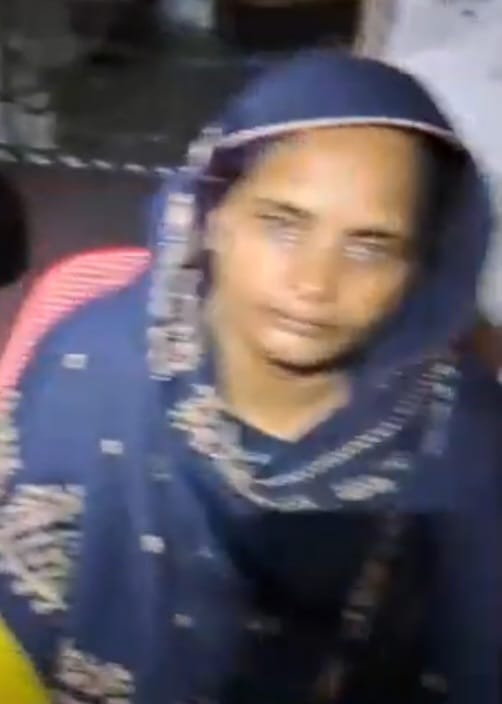
SHEIKHUPURA, PAKISTAN: “Bring my son home.” Behind these words is the desperate cry of a Christian mother who says she has been separat
Pakistani Minorities have no faith in democracy

Hyderabad: May 9, 2013. (Abbas Kassar) In majority Muslim Pakistan, religious minorities say democracy is killing them.Intolerance has been on the rise for the past five years under Pakistan's democratically elected government because of the growing violence of Islamic radicals, who are then courted by political parties, say many in the country's communities of Shiite Muslims, Christians, Hindus and other minorities.
On Saturday, the country will elect a new parliament, marking the first time one elected government is replaced by another in the history of Pakistan, which over its 66-year existence has repeatedly seen military rule. But minorities are not celebrating. Some of the fiercest Islamic extremists are candidates in the vote, and minorities say even the mainstream political parties pander to radicals to get votes, often campaigning side-by-side with well-known militants.
More than a dozen representatives of Pakistan's minorities interviewed expressed fears the vote will only hand more influence to extremists. Since the 2008 elections, under the outgoing government led by the left-leaning Pakistan People's Party, sectarian attacks have been relentless and minorities have found themselves increasingly targeted by radical Islamic militants. Minorities have little faith the new election will change that.
"We are always opposed to martial law (but) during all the military regimes, the law and order was better and there was good security for minorities," said Dr. Sarwan Kumar of Mirpurkhas,Sindh a human rights activist for Pakistan's Hindu community.
About 96 percent of Pakistan's population of 180 million is Muslim. Most are Sunni, but according to the CIA Factbook about 10 to 15 percent are members of the Shiite sect. The remaining 4 percent are adherents to other religions such as Christians, Hindus and Ahmedis.
Being fed up with victimization and atrocities, Pakistan Christian Congress led by Dr. Nazir Ahmed has lately been demanding a separate province for Christians in Punjab province of Pakistan as according to him number of Christians in Pakistan is 20 millions. According to Dr. Nazir, Dr. Sarwan Kumar, Virjee Kolhi, and Bhagwandas advocate and other minority leaders the minorities have been deprived of right to elect their own representatives to parliament as their members to parliament and provincial assemblies are selected by Muslim political parties.
The US Commission on International Religious Freedom in a report last month berated the Pakistani government for its poor record of protecting both its minorities and its majority Sunni Muslims and recommended that Pakistan be put on a list of worst offenders, which could jeopardize billions of dollars in US assistance.
"The government of Pakistan continues to engage in and tolerate systematic, ongoing and egregious violations of freedom of religion or belief," the report said. "Sectarian and religiously motivated violence is chronic, especially against Shiite Muslims, and the government has failed to protect members of religious minority communities, as well as the majority faith."
In the past three years, 11,000 Hindus living in Pakistan's Sindh and Balochistan provinces have migrated to India because they were worried about security and frustrated by kidnappings and forced conversions of young Hindu girls to Islam. Pakistan's Hindu minority complains that scores of Hindu girls have been kidnapped, forced to marry their abductor and convert to Islam.
"In Pakistan's southern Sindh province, from every Hindu house, one member of the family has left either for Karachi or for a foreign land. "We have lost our hope from the democratic forces because they do everything for money" and nothing for minorities, say Hindu leaders.
In March, a mob of young Muslims stormed and set fire to nearly 150 homes and shops in the Joseph Christian Colony, a Christian enclave on the outskirts of Lahore, the capital of Punjab, Pakistan's most populous province, where 60 percent of Pakistanis live and where militant Islamic groups have their headquarters. The mob gathered after one resident was accused of blasphemy, but local people say it was a tiff over money. Most residents fled for their lives, returning the next morning and eventually rebuilding their homes..
The non-believer epitaph is also widely used in reference to Ahmedis, who consider themselves Muslims but have been explicitly declared non-Muslims in Pakistan's constitution. As well as violent attacks on its members, Ahmedi leaders told the they have been singled out with a separate electoral roll that identifies them as Ahmedis. The separate list also gives their addresses, making them easy targets. Security was tightened after a brutal attack in 2010 when militants simultaneously hit two Ahmedi mosques in Lahore killing more than 100 people and wounding scores more.
Ahmedis rarely vote in elections because to do so they have to declare they are non-Muslims. a spokesman for the Ahmedi community said..
You May Also Like
Sardar Mushtaq Gill Calls for a New Standard in Bible Distribution: “A Bible Must Be Read, Not Simply Distributed”
LEAD Minis

Faisalabad: Human Rights Focus Pakistan (HRFP), in collaboration with the Taiwan Foundation for Democracy (TFD), held a consultation meeting in Fai


PCP need your support that we may provide you better services: click on donate


"Trial of Pakistani Christian Nation" By Nazir S Bhatti
On demand of our readers, I have decided to release E-Book version of "Trial of Pakistani Christian Nation" on website of PCP which can also be viewed on website of Pakistan Christian Congress www.pakistanchristiancongress.org . You can read chapter wise by clicking tab on left handside of PDF format of E-Book.