
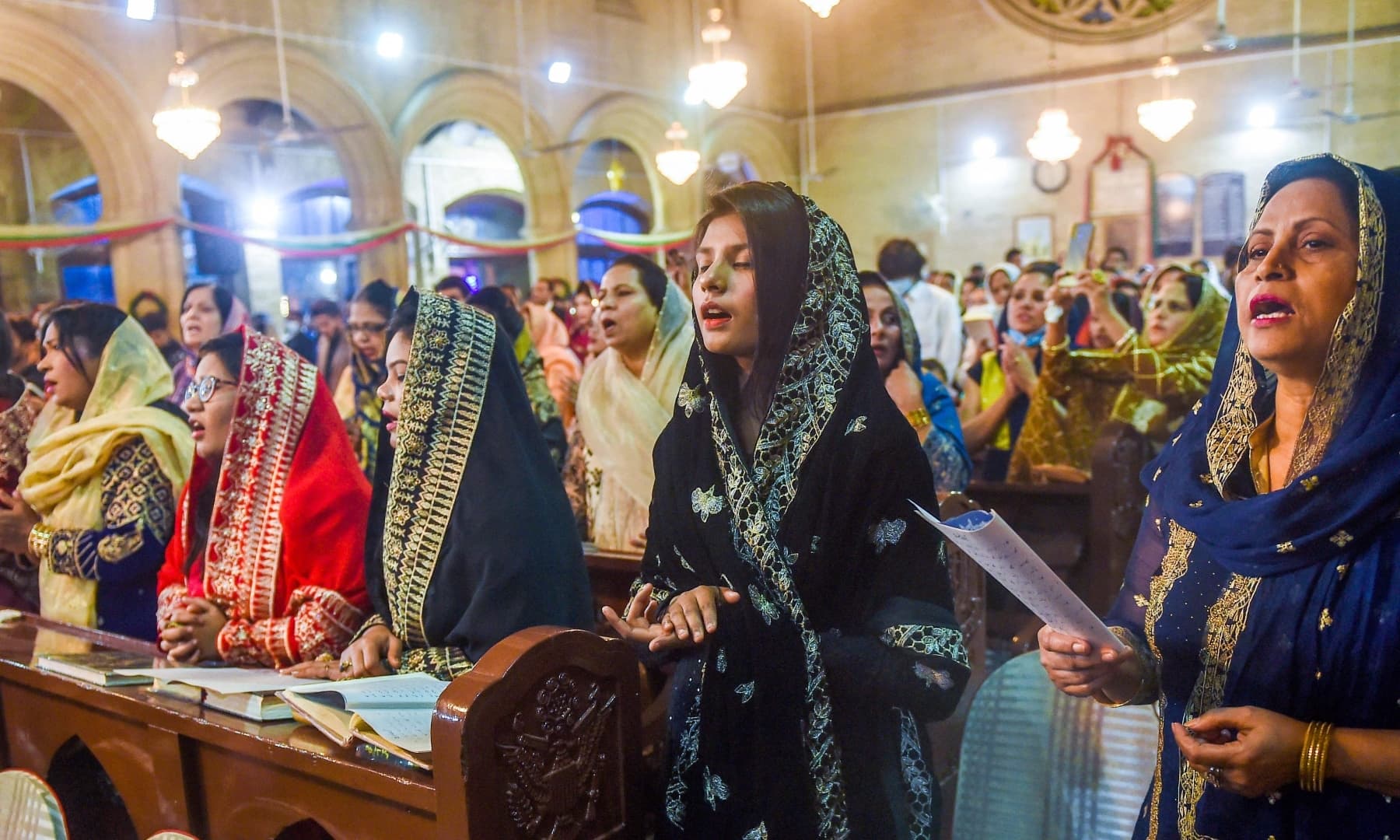
FAISALABAD, Pakistan: A Christian woman from an exceptionally vulnerable family in Faisalabad is pursuing justice after allegedly fighting off a ne
Pakistan and the Blasphemy Laws: Islamic rage even aimed at children. By P William, Modern Tokyo Times

Pakistan’s notorious “blasphemy” laws can put even children at risk, and Christians, Hindus, and other minorities, say the days when they could protect their offspring is getting harder and harder because of institutional discrimination and growing Islamic militancy in Pakistan. This applies to disparaging Islam and the prophet of this faith.
In the past children escaped heavy questions about religion which many entrap them innocently. A 30-year-old Pakistani woman who grew up in Lahore said her Christian parents taught her formula answers to keep from falling prey to accusations under the blasphemy statutes, such as “I am a Christian, I can only tell you about Christianity.” However, before radical Islamists began influencing Pakistani society as they have in recent years, schoolchildren were taught not to discuss religion commented the young lady.
She continued by stating“We knew never to get into religious discussions with others.” Therefore, “We had them at home – our parents would put us through the drill of asking us tough questions to see how we answered. Only now do I realize that was practice for school.”
In this way, she was imbued with the fundamentals of the Christian faith and at the same time learned that she should discuss it only with her parents, said the source, who spoke on condition of anonymity. Though the Christian faith is inherently evangelistic, the need to remain silent is even more important today, she added.
She further added that today Christians, Hindus, and other minorities, constantly face questions like, “What do you think of the Quran, do you like it?” and “what do you think of Muhammad?’” In the past a simple saying that they could not read Arabic was enough but today times have changed and it is getting riskier for children from non-Muslim backgrounds
The blasphemy statutes signal to non-Muslims that they are second-class or “dhimmi” status citizens who must stay within narrow social boundaries. At worse, it is a threat to Christians, Hindus, Sikhs, and others, to leave or be killed.
Ahmadiyya Muslim children also face enormous problems because mainstream followers of Sunni Islam deem them to be apostates despite them being Muslim. Therefore, sectarianism and classification of what it is to be a Muslim is also turning on the diversity within Islam in Pakistan. This trend is worrying and is spreading to nations like Indonesia where Ahmadiyya Muslims face open persecution and clearly this religious minority needs global support.
“Some parents don’t even tell their children about Jesus, because they are scared they will go to school and say something wrong,” she said. “One street kid did not know anything except about the blasphemy law. When her mother was asked why she did not teach her daughter about Jesus instead of the blasphemy law, she replied, ‘If I tell her too much, she will talk about it on the street, and someone will kill her or charge her with blasphemy.’
An entire generation, Christians and other minorities fear, is growing up not knowing their faith for fear that it will lead to potentially disastrous schoolyard talk. Moreover, children required to take Islamic studies in school are in danger with a single misstep.
“If they write anything or misspell anything to do with the prophet Muhammad, they can be in serious danger,” the source said. “In fact, the other side of this is that they are made to answer questions saying what a wonderful man he was.”
Christian kids in predominantly Muslim areas don’t have friends to play with, as even a cricket game can be risky, she said. Adults are equally fearful and the international community just doesn’t understand the real Pakistan.
Conviction under Section 295-C of the blasphemy law for derogatory comments about Muhammad is punishable by death, though life imprisonment is also possible. Curiously, accusers in blasphemy cases cannot repeat the alleged derogatory comments without risk of being accused of blasphemy themselves. Section 295-B makes willful desecration of the Quran or use of an extract in a derogatory manner punishable with life imprisonment. Section 295-A prohibits injuring or defiling places of worship and “acts intended to outrage religious feelings.” It is punishable by life imprisonment, which in Pakistan is 25 years.
Law Leading to Lawlessness
A district court judge last November stunned the nation and the international community by handing down a death sentence to a Christian mother of five for allegedly speaking ill of Muhammad.
Subsequently three politicians spoke out against the blasphemy law that put Asia Noreen (also called Asia Bibi) in prison. Two of them have been killed for standing up for Noreen and against the blasphemy law. One is in hiding for fear of her life.
Noreen, mother of two children and stepmother to three others, has been in prison in solitary confinement since June 2009, accused of having blasphemed against Muhammad, after a verbal disagreement with some women in the village of Ittanwali, near Lahore. If she is released from prison, her life will be at risk. Her husband and children are on the run, receiving constant threats from Muslims who say they will take justice into their own hands.
Thousands of Pakistanis who think and believe differently than mainstream Muslims are at risk of being slandered under the blasphemy law, and those who live in poverty or are illiterate are particularly vulnerable. Personal vendettas from neighbors, co-workers and rivals are the most common reasons blasphemy law cases are filed, according to Paul Marshall of the Hudson Institute’s Center for Religious Freedom.
“Most victims are Muslims, but non-Muslims or minority Muslims suffer disproportionally,” said Marshall. “Ahmadis [an unorthodox Islamic sect] are probably proportionally the greatest victims. There are more victims from mobs and vigilantes than from the government itself, but the government bears responsibility because it does not protect the victims.”
Suspected Islamic extremists in Faisalabad shot dead two Christians about to be acquitted of blasphemy charges on July 19, 2010. The Rev. Rashid Emmanuel, 32, and his 30-year-old brother Sajid Emmanuel were shot days after handwriting experts on July 14 notified police that signatures on papers denigrating Muhammad did not match those of the accused. Expected to be exonerated, the two leaders of United Ministries Pakistan were being led in handcuffs under police custody back to jail when they were shot.
Christian Lawyers’ Foundation President Khalid Gill said the two bodies bore cuts and other signs of having been tortured, including marks on their faces, while the brothers were in police custody.
Most recently, 40-year-old Arif Masih, from a village near Faisalabad, was arrested after leaving his house on April 5 after Muslims accused him of ripping pages of the Quran and writing a threatening letter ordering them to become Christians. His brother claims that a neighbor fabricated the accusations in order to acquire property adjacent to that of Masih’s.
Though the much-abused blasphemy law is punishable by death, at times vigilantes have taken matters into their own hands. At least eight Christians accused of blasphemy are estimated to have been killed since 1986. The number of Muslims accused of blasphemy and killed extra-judicially may be twice that figure.
For secular-educated Pakistanis, the blasphemy law has come to symbolize the measure to which extremist Islam has overtaken society. In the span of three months, radical Islamists have murdered two of the nation’s most outspoken leaders against the blasphemy law. On Jan. 4 Salman Taseer, the governor of Punjab Province, was murdered, and on March 2 parliamentarian Shahbaz Bhatti, who as federal minister for minority affairs was the only Christian cabinet member, was assassinated in Islamabad.
A third official, Sherry Rehman, a parliamentarian from Karachi, led an effort to reform the blasphemy law after Noreen was sentenced to death last year. Taseer, Bhatti and Rehman were the most vocal about injustices that Noreen has suffered and their disapproval of the law was well-known. Rehman, in hiding since Taseer’s murder, is said to be next on the Islamic terrorists’ hit list.
Noreen’s case drew little attention before she received the death sentence. One advocate said he believes that had her case not drawn so much attention, she would have been quietly acquitted by a higher court without criticism abroad or at home. Now her release would look like a win for the “Christian” West, he said.
Of course the Christian faith is not from the West and Hindus predate both Christianity and Islam in this part of Asia. Therefore, the “Christian West” is just sheer propaganda and nothing to do with this issue. Also, Muslims are victims of the same blasphemy law and Islamists will use anything in order to back-up their indoctrination.
“Hence, we are not going to have any concrete benefit out of whatever decision comes on her,” said Rizwan Paul. He continued by stating that “I don’t see any decision having some fruitful result” said the representative from the Life for All organization.
Paul concurred with other Christians that the blasphemy law has led to a steep drop in freedom of expression. Mosques in neighborhoods where blasphemy cases are filed become centers for inciting people to the streets and where destruction ensues. Since Noreen’s death sentence in November, sermons against changing the blasphemy law are commonly broadcast from mosques, especially in neighborhoods where there is a Christian presence.
“People do not talk, and it is proving an embargo on thinking,” Paul said. “It has caused vigilante justice, and several incidents have taken place. After that, now whenever this issue arises, people become afraid that it might turn into a demolition of the entire place.”
Victims of the blasphemy law cannot hope for justice from the local police, who “do not dare to declare innocent anyone accused of blasphemy,” Paul said, and often lower court judges and magistrates do little to give them their rights. “Now the slogan is that the one who sympathizes with the blasphemer is also a blasphemer,” he said, pointing to the deaths of Taseer and Bhatti.
Pakistan is moving increasingly towards a state driven by fear of extremists, where even moderate politicians make conservative choices to appease Islamist threats, according to Sara Taseer Shoaib, daughter of the late Taseer.
“Pakistan is definitely becoming more right-wing and extremist when it comes to religion,” she said. “Religious parties are gaining a cult following, and even moderate leaders are trying to gain popularity and votes by taking a right-wing position.”
The reasons for this shift to the ultra-right, she said, are many: conservative issues like defense of the blasphemy law serve to deflect attention from the real issues of poverty and lack of hope; there is an increasing trend to blame all woes on the West; and there is a prevailing sense of a need to defend Islam as the perception remains that it is under global attack.
Shoaib said her father spoke about Noreen as a member of Pakistan’s poor, disenfranchised minority. Determined to defend her and the rights of others like her, Taseer had visited Noreen in prison before he died.
“He felt that she was a victim of the ambiguity of this law, and [that] she was unable to defend herself fairly,” she said. “[He felt that] she was the prime candidate where the unfairness of this law could be brought to light. He wanted an amendment to the law which is man-made.”
The source from Lahore said that fear among Christians after Taseer and Bhatti’s death is palpable. Christians feel left alone, not knowing who to trust. The same applies to other minorities which includes Ahmadi Muslims, Hindus, Sikhs, and all minorities who reside under constant fear.
“Everything seems to have snowballed,” she said. “People are really, really scared. Someone who you see as out there defending you and speaking for you has been silenced; someone just goes up to him and shoots him.” Therefore, this increases the fear factor because if Islamists have no qualms in killing Muslims who are trying to speak out against injustice – then, clearly, the same Muslim radicals will not think twice about killing non-Muslims who are also fighting against the system.
She said Christians feel that the mentality of their Muslim fellows has hardened as the Pakistani Taliban and other extremist elements seem to be holding the government and people’s minds to hostage.
“For the extremists, it’s no longer making Pakistan a Muslim country, but how they use Pakistan to promote the cause of Islam across the world,” she said. “It’s not for love of the nation, or national identity, but entirely about religious identity. That completely isolates those who do not subscribe to the same views … you are on the street in terms of identity and your social belonging in the community.”
Growing Issue
Paul said blasphemy looms larger in Pakistani minds and anti-Christian sentiment is growing because of socio-economic and global reasons.
“In today’s impoverished Pakistan, and after U.S. led wars in Muslim-majority Iraq and Afghanistan following the Sept. 11 terrorist attacks, people see even Pakistani Christians as allies of the West and threatening their identity… Poverty and a religion that upholds violence as a means to an end only fuel this mob mentality,” he said.
“This has helped create a sense of alienating the Muslim world, and that the ‘blasphemous’ West is trying to snatch the values by movies and technology and globalization and trying to capture areas of the Islamic world,” Paul said. “Because of this, their sense of insecurity has made them more religious.”
Of course in the real world Christians resided in Iraq long before the Islamic invasions of this nation. Also, Saddam Hussein slaughtered vast numbers of Shia Muslims and Kurds who are mainly Muslim.
More ironic, Iraq was secular before the American led invasion and the Christian minority was mainly left alone. However, since the American led invasion around 40% of all Christians have fled and now the legal system is based on Sharia Islamic law.
However, Islamists are not being challenged about this by either political institutions or mainstream Islam within Pakistan. Therefore, the propaganda machine is gaining in the war for hearts and minds.
Pakistan’s law against defaming religion was amended in 1982 to include desecrating the Quran and in 1986 to include disparaging Muhammad. Since then, at least 37 blasphemy law suspects have been killed while in police custody, according to Paul.
On March 15, Qamar David, 55, died while serving a life sentence in a prison in Karachi for alleged blasphemy. Prison authorities claimed that David died of a heart attack, but his supporters have called for an investigation, as he had received threats and was subject to beatings and mistreatment from prison authorities.
While the murders of Bhatti and Taseer have helped to remove a “Defamation of Religions” resolution from the United Nations which was under consideration – for now – the assassinations have also brought any movement toward amending Pakistan’s blasphemy laws to a standstill.
“Although there is a section of the media that is highlighting the issue of blasphemy, the situation hardly allows any movement or legislation on this subject,” said a Pakistani lawyer on condition of anonymity. “In my experience in the past 24 years, I have not seen [such a] stalemate condition, mainly due to the violence and terrorist threat that prevails.”
http://moderntokyotimes.com
You May Also Like

SHEIKHUPURA, PAKISTAN: “Bring my son home.” Behind these words is the desperate cry of a Christian mother who says she has been separat
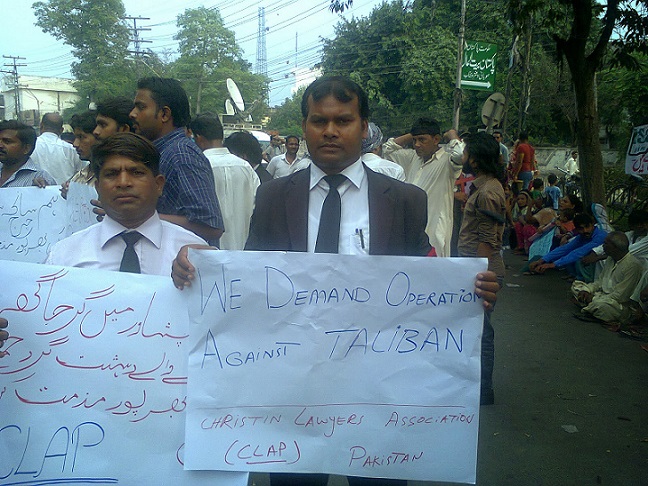
Sardar Mushtaq Gill Calls for a New Standard in Bible Distribution: “A Bible Must Be Read, Not Simply Distributed”
LEAD Minis


PCP need your support that we may provide you better services: click on donate


"Trial of Pakistani Christian Nation" By Nazir S Bhatti
On demand of our readers, I have decided to release E-Book version of "Trial of Pakistani Christian Nation" on website of PCP which can also be viewed on website of Pakistan Christian Congress www.pakistanchristiancongress.org . You can read chapter wise by clicking tab on left handside of PDF format of E-Book.