
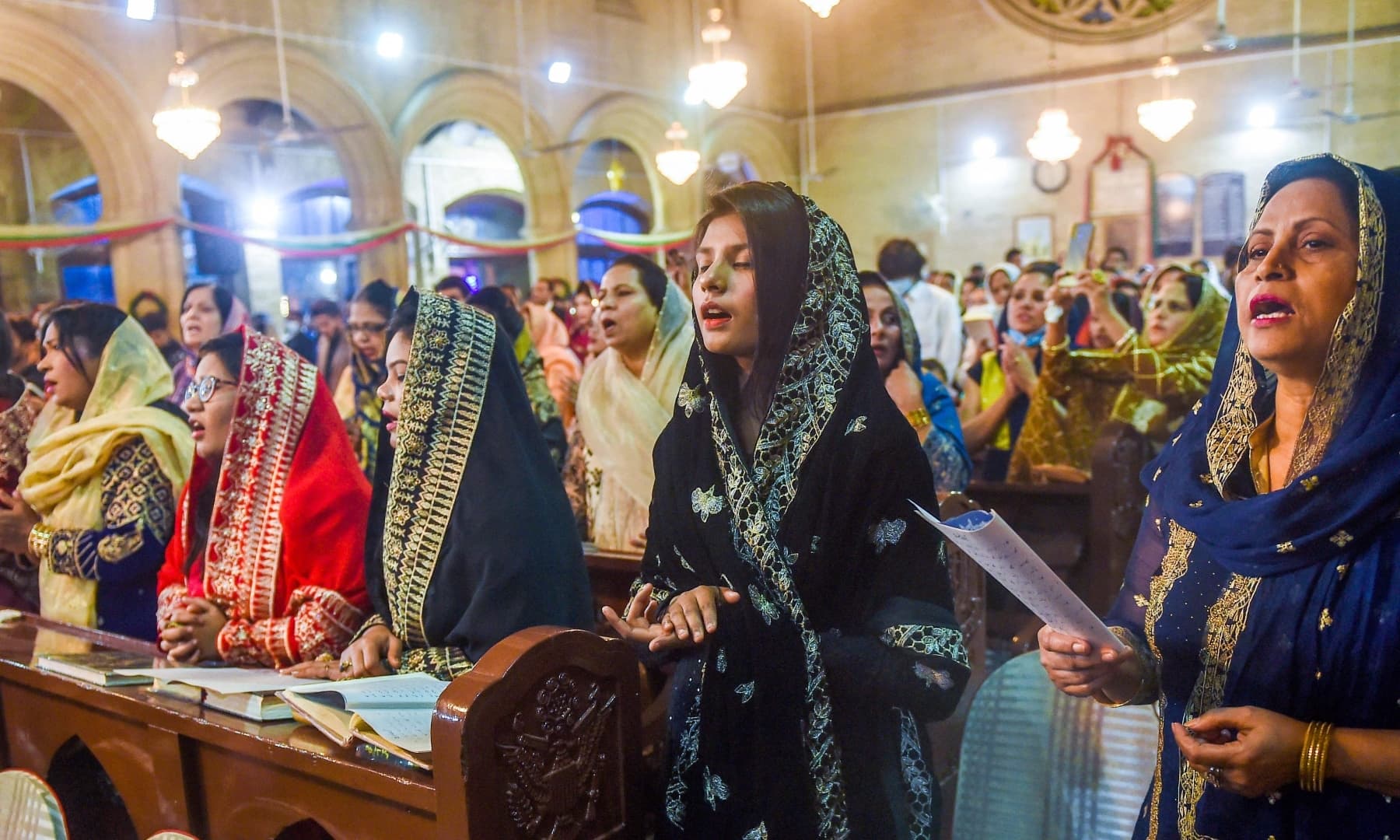
FAISALABAD, Pakistan: A Christian woman from an exceptionally vulnerable family in Faisalabad is pursuing justice after allegedly fighting off a ne
“The Way, The Truth, The Life” A Sermon by The Very Rev’ d. Canon Dr. Patrick P Augustine Rector

On Fifth Sunday of Easter, May 22, 201, at Christ Episcopal Church, La Crosse, Wisconsin
John 14: 1-14
THE WAY, THE TRUTH, THE LIFE
Jesus claim to “I am the way, and the truth, and the life” can be troublesome for many. How could there be just one true faith. Isn’t it arrogant to say my religion is superior and try to convert others to that belief? Good, tolerant people will say that all religions are equally good and valid for meeting the needs of their particular followers. One can say, “Religious exclusivity is not just narrow—it’s dangerous. If Christians continue to insist that they have the truth’—and if other religions do this as well—the world will never know peace.” Many in the west say that it is ethnocentric to claim that our religion is superior to others. Yet isn’t this very statement ethnocentric? Most non-Western cultures have no problem saying that their culture and religion is best. The idea that it is wrong to do so is deeply rooted in our traditions of self-criticism and individualism.
The reality is that Christianity actually provides a firm basis for respecting people of other faiths. Jesus assumes that nonbelievers in the culture around them will gladly recognize much Christian behavior as good (Matthew 5:16). Christians believe that all human beings are made in the image of God, capable of goodness and wisdom. We know that fundamentalism in religion has led many to violence and intolerance. So, the question we may ask is: Which fundamentals will lead their believers to be the most loving and receptive to those with whom they differ? And, which set of unavoidably exclusive beliefs will lead us to humble, peace-loving behavior? Can we claim to the world that Jesus is the way, the truth and life and still live in harmony with others?
In other great religions and philosophies followers can follow the teachings of their founder without having a relationship with that founder. But not so with Jesus Christ. The teachings of Jesus cannot be separated from Jesus himself. For Christians, Christ is the aperture of God. In Christ, God the infinite became finite.[1] All the rays of truth in the universe focus through him: “the Son is the radiance of God’s glory and the exact representation of his being, sustaining all things by his powerful words (Hebrew 1:3).
During the Easter season every Sunday we make this acclamation that “Christ is Risen.” Christ is still alive, and he embodies his teachings. This is what separates him from every great teacher and moral philosopher in history. This is not to say that other religious traditions don’t focus on a person. Yet in all these religions, a follower can abide by all the teachings of its founder without having a relationship with that founder. Not so with Jesus Christ. [2]
For followers of Christ who believe that Jesus is the way, the truth and the life, Christ is not a dogma or philosophy but a personal encounter with the risen Lord. Let me share with you a story of such encounter of an Indian Sikh who found Christ as his way, the truth and the life.
Sadhu Sundar Singh was born in 1889 into an affluent Sikh family in Punjab, India. He grew up to hate Christianity as (in his view) a foreign religion. He even expressed his hostility at the age of fifteen, by publicly burning a Gospel. But three days afterwards he was converted through a vision of Christ, and later, though still in his teens, he determined to become a Sadhu, a wandering holy man and preacher.[3] On one occasion Sundar Singh visited a Hindu college and was accosted, rather aggressively, by a lecturer who asked him what he had found in Christianity that he did not have in his old religion. “I have Christ”, he replied. “Yes, I know”, continued the lecturer impatiently, “but what particular principal or doctrine have you found that we did not have before?” The particular thing I have found”, replied Sundar Singh, “is Christ.”[4]
“I am the way, the truth, and the life” is one of the most startling sayings of Jesus. The modern pluralistic world we live in is far different than the world of Jesus day. You and I live in a shrunken world where direct contact with people of other faiths is common. The claim of the gospel ‘I am the way, the truth, and the life’ is pretty direct isn’t it?
I must confess that I respect other faiths and beliefs. All human beings have the ability to discern God’s goodness and light. My sharing of the claim of the gospel that Jesus Christ is the way and the truth and the life, I want to do with utmost humility.
In our world today there are many claims to the path to eternity. Many gurus claim numerous ways and signs pointing to the goodness of God. Sometimes I find it’s like my GPS which may give me four different directions and can even confuse me more. All I need is help to get me directly to my destination.
Hearing the words of Jesus, “I am the way, the truth, and the life” helps me to get clear understanding who Jesus is. A man of peace, a healer full of grace and of mercy who invites everybody baptized or non-baptized:
Come to me, all you that are weary and are carrying heavy
burdens, and I will give you rest (Matthew 11:28).
It is an inclusive statement. It is this Jesus who calls us to be the harbingers of his truth, his way of peace and offer life and healing to a troubled world. In 1997 Pope John Paul II invited Bob Dylan to sing at the Italian Eucharistic Congress in Bologna. His intention was not to feature Bob Dylan but to use Dylan’s music to make a point: he chose “Blowin’ in the Wind” and said this: “You ask me how many roads a man must walk before they call him a man? I answer: there is only one road for man, and it is the road of Jesus Christ, who said, “I am the way, the truth and the life.”[5]
Note: (The song has been embraced by many liberal churches, and in the 1960s and 1970s it was sung both in Catholic church "folk masses" and as a hymn in Protestant ones. In 1997, Bob Dylan performed three other songs at a Catholic church congress. Pope John Paul II, who was in attendance, told the crowd of some 300,000 young Italian Catholics that the answer was indeed "in the wind" – not in the wind that blew things away, but rather "in the wind of the spirit" that would lead them to Christ. In 2007, Pope Benedict XVI (who had also been in attendance) wrote that he was uncomfortable with music stars such as Dylan performing in a church environment.[18])
________________________________________
Endnotes:
[1] Timothy Keller, The Reason for God, Dutton, 2008, Pp. 3-21.
[2] Leonard Sweet and Frank Viola, Jesus Manifesto, Thomas Nelson, 2010, Pp.82-84.
[3] Sadhu Sundar Singh, With and Without Christ (Cassell, 1929), pp. 100-101
[4] E. Stanley Jones, The Christ of the Indian Road, (1925; Hodder & Stoughton, 1926), p.64
[5] Leonard Sweet, Frank Viola, Jesus Manifesto, Thomas Nelson, 2010, p.121
You May Also Like

SHEIKHUPURA, PAKISTAN: “Bring my son home.” Behind these words is the desperate cry of a Christian mother who says she has been separat
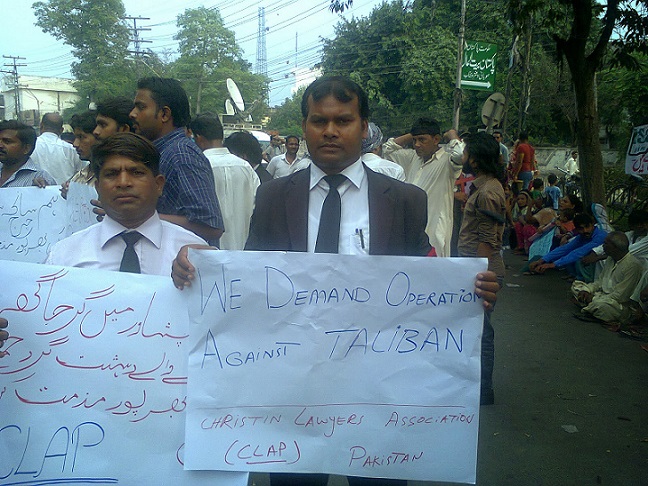
Sardar Mushtaq Gill Calls for a New Standard in Bible Distribution: “A Bible Must Be Read, Not Simply Distributed”
LEAD Minis


PCP need your support that we may provide you better services: click on donate


"Trial of Pakistani Christian Nation" By Nazir S Bhatti
On demand of our readers, I have decided to release E-Book version of "Trial of Pakistani Christian Nation" on website of PCP which can also be viewed on website of Pakistan Christian Congress www.pakistanchristiancongress.org . You can read chapter wise by clicking tab on left handside of PDF format of E-Book.