
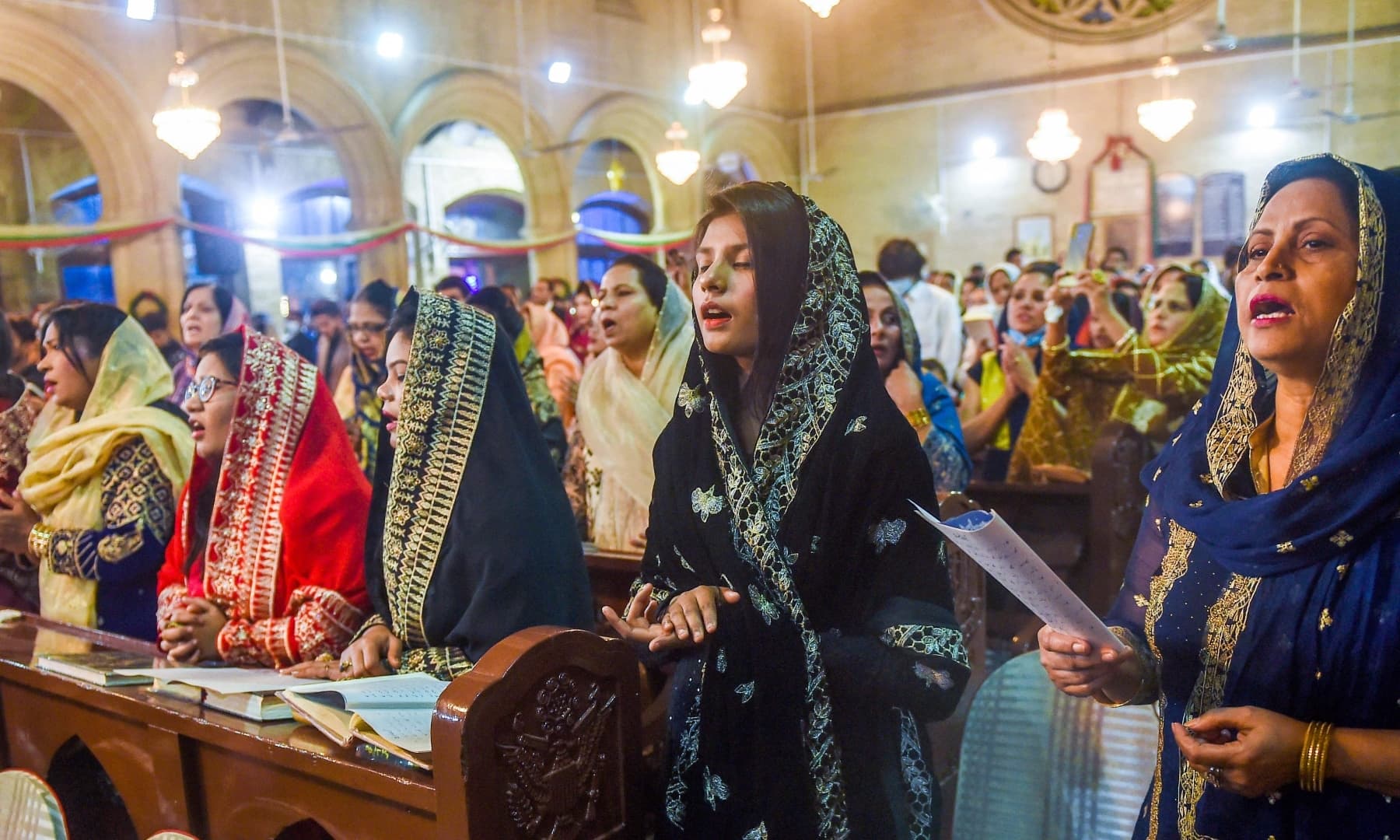
FAISALABAD, Pakistan: A Christian woman from an exceptionally vulnerable family in Faisalabad is pursuing justice after allegedly fighting off a ne
Day After Osama: By The Very Rev. Canon Patrick P. Augustine, D.Min., Rector

The Sermon delivered on The Third Sunday of Easter, May 8, 2011, at Christ Episcopal Church, La Crosse, Wisconsin by The Very Rev. Canon Patrick P. Augustine, D.Min., Rector)
Luke 24: 13-35
Choose to Live the Day After
On September 11, 2001, we saw hate in action, as devastation and destruction came to cities of the United States. The blood of the innocent, and the dust and debris of steel, and cement and ashes, from the sacrifice of burnt human bodies in the inferno of fanatical terror ultimately engulfed all humanity. It was a sad day in human history when misguided zealots in the name of religion attacked innocent lives. In the wink of an eye, precious lives were lost, children became orphans, wives became widows, and God was portrayed as a God of hatred and destruction. These heinous and dastardly acts do no service to any religion. The acts of terror further spread to London, Madrid, Nairobi, Aden, Bombay, Kabul and Islamabad. The leader of Al-Qaeda had thought that it could do as it liked without suffering the consequences. As the poet George Herbert put it, “The mills of God grind slowly”, but in the end there will be justice and accountability as there is no escape from the sin of terror.
At this moment in history with many of you I feel a great sense of relief that a man who terrorized humanity for a decade has met his inevitable end. Osama will have to be accountable for his evil deeds before his Creator. I am grateful to those who serve our country in both our military and intelligence agencies. As follower of Jesus Christ I am also reminded that Jesus taught us to “Love your enemies and pray for those who persecute you” (Matt. 5:44). In the previous years many times I have personally prayed for Osama and his followers to come to know the saving embrace of the one who stretched out his arms of love on the hard wood of the cross to forgive their sins. As a follower of God in the way of Christ, I also firmly believe that no one's death is a cause for celebration. Jesus Christ died for all and there are no human beings beyond the reach of his saving embrace. As one rabbi has written:
"It's not the celebration on the day of the death of an enemy that exemplifies justice, but how we choose to live the day after."
It is my prayer as we reflect after the day, weeks and months on the significance of this momentous development of war against terror. May we never every forget that our goal is not revenge but to create a safer world where all can live in peace. That nobody shall starve from the lack of food; children in Africa do not die of hunger and disease. Woman in Afghanistan do not have to suffer anymore. As the most affluent nation we shall have heart of compassion with enlarged vision that in the sweep of history goodness will triumph.
The real question is "how we choose to live the day after," and I believe that is a choice made much more vivid by the resurrection of Jesus, the Christ. The resurrection of Jesus gives us the capacity to imagine our lives in a certain way[1] to be a community of hope. In the appointed Gospel today two disciples after watching the death of Jesus on the cross were returning to their village Emmaus, about seven miles from Jerusalem. Although there was light of the sun upon the road but they felt like groping, stumbling in the dark disappointed with lost hope as their Messiah is dead and buried in the grave. There was nothing left for them to look forward in Jerusalem. They could not stop talking about the terrible things had happened to their Messiah Jesus. It was simply a way of expressing the hurt, despair, frustration each of them felt. Most of their questions could be summed up in the one word, “Why?” Why had this Man whom we had come to call Master and who had spoken so confidently of God had to suffer in such violent way? Why had he who had performed such mighty works as making the blind to see, the lame to walk and the dead to rise was let himself to be nailed to a cross and crucified as a common criminal? Why could he not ask angels to send fire from heaven to punish his persecutors? Now it was the third day. There was significant momentous news in Jerusalem which other disciples had heard but these disciples had left Jerusalem. Even after the day of resurrection these disciples on the road to Emmaus were in despair without hope.
All of a sudden they realized that there was a third person who was also travelling with them on the road. He listened for a while, and then he spoke, “What is this about which you are talking?” They shared their disappointments with him. The stranger seems to know the Scriptures very well and explained them from the Prophets why Jesus had to suffer. They arrived in the village and invited the stranger to come to their house. As he took the loaf of bread and said the blessing and broke the bread their eyes were opened to see the risen Christ. They understood that Jesus was saying “no” to death and saying “yes” to life. He spoke about life at a time when his disciples’ attention was fixed on death. You and I are called to say “no” to death and embrace life Jesus offers us in his resurrection.
We are a community of resurrection and people of hope. Together we can face our despairs—personal, global, or ecclesiastic as we discern God’s will for the Diocese of Eau Claire. Together, too, we can find the risen Lord, emerged from the tomb of despair, ready once again to love us first. In embracing us, Jesus gives us the hope we need to find and live the life he has hidden in us and in the world.[2] I like to finish this with a quote from a Persian Easter hymn written by Bishop Hassan Deqhani, the former Bishop of Iran. During the Islamic revolution in Iran his only son was assassinated and he and his wife were attacked in their bed room by Khomeini’s guards. I want you to listen what he says about new life after you meet the risen Christ:
“Spread the news! Look abroad
He is risen to reign!
Now at last heaven is open’d
to earth once again.
Now that death’s power is spent
and is vanquished for aye
Who should fear any storm,
who now cringe in dismay?
Lift your eyes to the hills,
greet the bright rising sun;
Now our hearts and our souls
are renewed all as one!
See the tomb is found bare;
this the work of God’s hand:
See our Jesus now risen,
In this faith may we stand!”[3]
Alleluia! Christ is risen!
He is risen indeed! Alleluia!
--------------------------------------------------------------------------------
[1] Father Rick Lord
[2] Henri Nouwen, The Road to Peace, Orbis Books, 1998, p. Pp. 205-208
[3] Hassan Dehqani-Tafti, In Christ and Christianity in Persian Poetry, Sohrab Books, Basingstoke, no date given, Pp. 20-21.
You May Also Like
SHEIKHUPURA, PAKISTAN: “Bring my son home.” Behind these words is the desperate cry of a Christian mother who says she has been separat
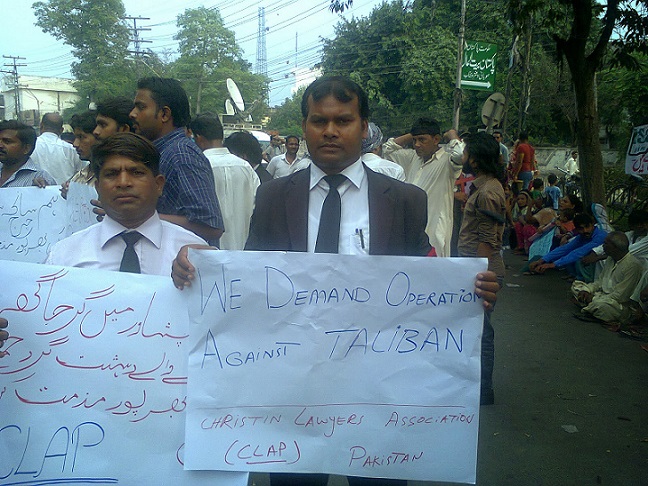
Sardar Mushtaq Gill Calls for a New Standard in Bible Distribution: “A Bible Must Be Read, Not Simply Distributed”
LEAD Minis


PCP need your support that we may provide you better services: click on donate


"Trial of Pakistani Christian Nation" By Nazir S Bhatti
On demand of our readers, I have decided to release E-Book version of "Trial of Pakistani Christian Nation" on website of PCP which can also be viewed on website of Pakistan Christian Congress www.pakistanchristiancongress.org . You can read chapter wise by clicking tab on left handside of PDF format of E-Book.