
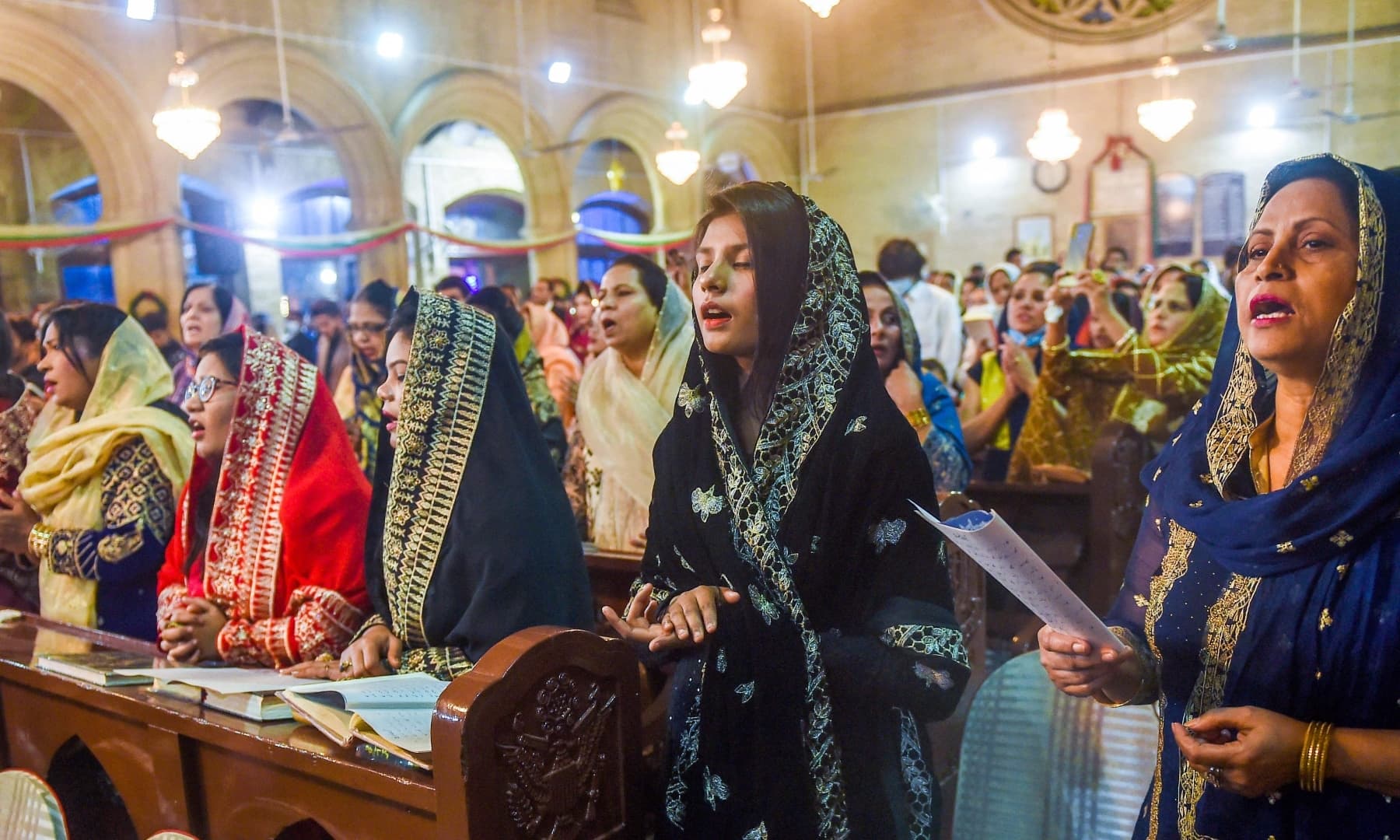
FAISALABAD, Pakistan: A Christian woman from an exceptionally vulnerable family in Faisalabad is pursuing justice after allegedly fighting off a ne
Rev. Patrick Augustine’s Sermon on “Fifth Sunday in Lent” at Christ Episcopal Church, La Crosse, Wisconsin

Ezekiel 37: 1-14, Psalm 130, Romans 8: 6-11, John 11: 1-45
“Mortal, can these bones live?”
The readings appointed this Sunday are about God interacting with his people in times of deep despair. Just hear the prayer of the Psalmist in Psalm 130:
Out of the depths I cry to you, O Lord.
Lord hear my voice!
Let your ears be attentive
To the voice of my supplications! (Ps. 130: 1-2)
In these stories, God says, "I am with you." All is not lost. There is hope. You will live. But it is up to you to hear the word and respond to the call."
In the first reading we hear one of the most imaginatively dramatic readings in all Scripture. It is Ezekiel’s vision of the valley of dry bones. The Hebrew Bible is largely silent regarding any blessed afterlife for the dead, and this Grey’s Anatomy account may be the earliest appearance in the Bible of what became a central belief of both rabbinic Judaism and Christianity: the resurrection of the body. Let me give you little background in what context this vision came to Ezekiel.
A Babylonian king Nebuchadnezzar in 597 BC defeated the Jehoiachin, king of Judah. A plunder was taken, the leadership, the craftsmen and artisans were deported to Babylon. Among this group of exiles was the prophet Ezekiel. It is here in exile Ezekiel is brought by the hand and spirit of God to a valley full of dry human bones. What a dismal place. The valley is full of human bones baked white and dry on the desert floor. Could this be the same valley where King Zedekiah's sons and army were put to death? We aren't told, but it could be very well that Ezekiel was looking at the bones of his own Hebrew community lying in a foreign land in dishonor.
These bones in this valley symbolize that Israel is dead. In fact, the people in their despair of the Exile identify themselves with the dry, white bones. They say to one another: "Our bones are dried up and our hope is gone; we are cut off" (Ezek 37:11). As Ezekiel surveys this gruesome scene, God asks him a surprising question: "Mortal, can these bones live?" I read a comment on this question stating that in Hebrew this question is asked in such a way that the only possible answer will be: “No, God.” These bones have been lying in the sun, all moisture has long been sucked out and the marrow is dried up and dead. No, No, No. I am absolutely sure these are not going to live. But, this prophet is a man of faith, too; he retorts with a nod to divine omniscience, “O Lord God, you know.”
Then the instruction from the Spirit of God comes to Ezekiel:
Prophesy to these bones, and say to them: O dry bones, hear the word of the Lord. … I will cause breath to enter you, and you shall live.
Under Ezekiel’s watchful eyes, these white, dry, brittle bones hear the word of the Lord. They suddenly reassemble themselves in a great clatter, then are strapped with sinew and flesh and skin, and finally reanimated with a breath called forth from the four winds.
And the breath came into them, and they lived, and stood on
their feet, a vast multitude.
Here in this story the major theme is renewal, resuscitation, restoration, rejuvenation, and resurrection. Here we are given a promise only God can give. God tells the prophet to speak to these bones, saying, “Thus says the Lord God: I will cause breath to enter you and you shall live.” This breath is the spirit of God, the life-giving ruach God breathed in the first human creature in the garden.
Then in the gospel story the same breath was breathed into the dead body of Lazarus and he is raised to life again. The same breath of God breathes into the dead body of Jesus in the tomb and we hear such good news:
“Why do you look for the living among the dead?
He is not here, but has risen.” (Luke 24: 5)
The same breath touched us at our baptism. We were given the gift of the Holy Spirit to be living sons and daughters of the living God. This breath moves through the world, raising people into new life when all the odds are against it. We need to hear the vision of Ezekiel in the valley of the dry bones. This scene is meant to live in the imagination and the heart, when we find ourselves gasping for breath, struggling to stay alive.
We may ask ourselves where the dry bones are today; where is the valley of death that needs to hear the promise of the living God? The question for us is the same, “Can these dry bones live again?” Remember the gospel story when Jesus is standing at the tomb of Lazarus calling, “Lazarus come out.” Be alive again. It reverberates throughout the tomb, awakening Lazarus’s lifeless body to the revivifying call to life. Jesus is telling them to unbind him and let him go. Think for a moment. If we all let Jesus unbind us from graveclothes of self doubt, and tear away the wrappings of fear and anxiety, we may allow the breath of God to make us creative agents of the good news to the poor, release to the captives, give sight to the blind, freedom to the oppressed and redemption and release from the power of sin. Surely this is a portrait of the reign of God coming!
In these stories, God says, "I am with you." All is not lost. There is hope. You will live. But it is up to you to hear the word and respond to the call." Have you been lying in the valley of dry bones? Come to Jesus: He says, “I am the resurrection, I am the life” as Lazarus came to life our spiritual lives shall be also revive, renew and empower with the Holy Spirit.
Consider the possibilities!
Resources used and directly quoted from:
John Stott, The Living Church
Reginald H. Fuller, Preaching the Lectionary
David L. Bartlett and Barbara Brown Taylor, Editors, Feasting on the Word.
Darrell L. Guder, Missional Church
You May Also Like
SHEIKHUPURA, PAKISTAN: “Bring my son home.” Behind these words is the desperate cry of a Christian mother who says she has been separat
Sardar Mushtaq Gill Calls for a New Standard in Bible Distribution: “A Bible Must Be Read, Not Simply Distributed”
LEAD Minis


PCP need your support that we may provide you better services: click on donate


"Trial of Pakistani Christian Nation" By Nazir S Bhatti
On demand of our readers, I have decided to release E-Book version of "Trial of Pakistani Christian Nation" on website of PCP which can also be viewed on website of Pakistan Christian Congress www.pakistanchristiancongress.org . You can read chapter wise by clicking tab on left handside of PDF format of E-Book.