
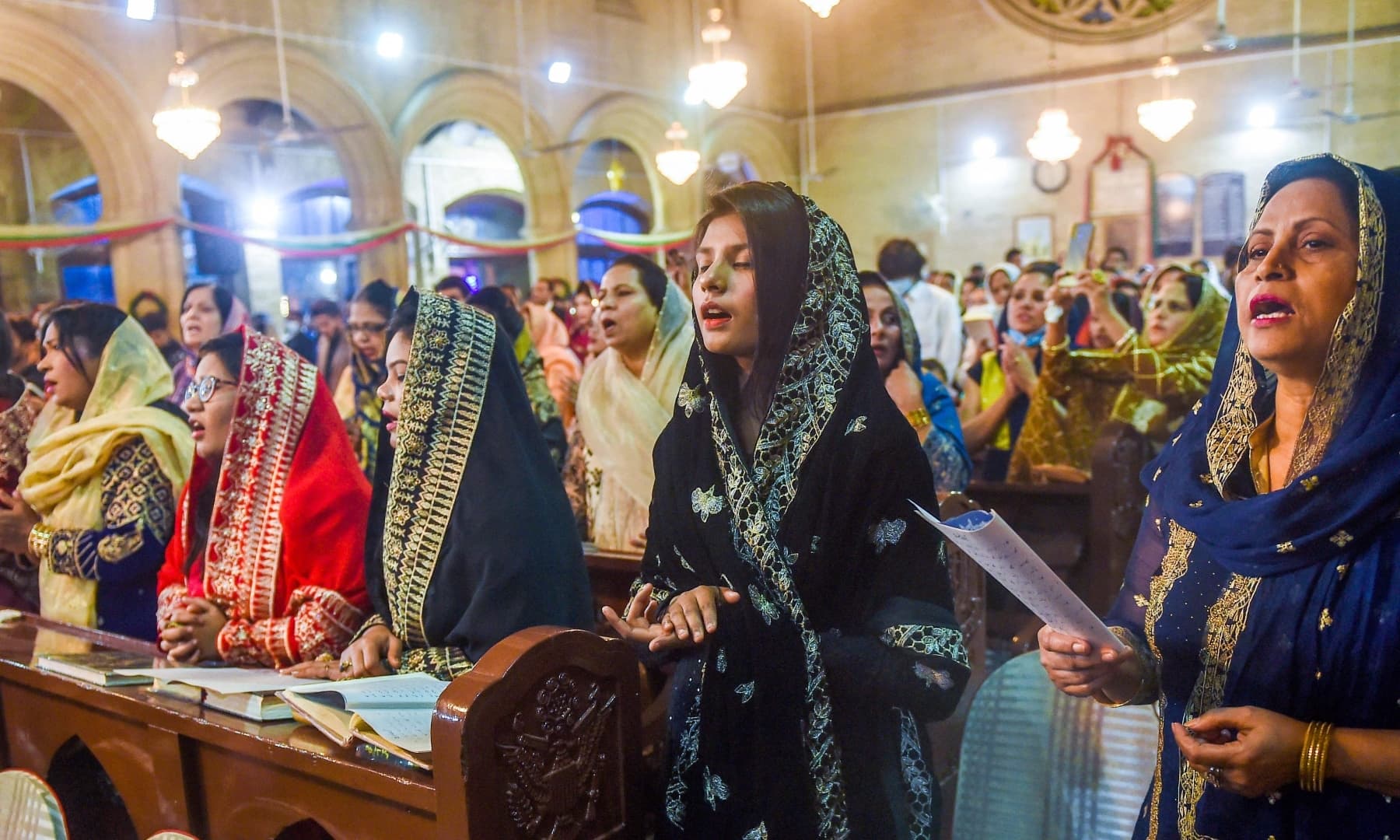
FAISALABAD, Pakistan: A Christian woman from an exceptionally vulnerable family in Faisalabad is pursuing justice after allegedly fighting off a ne
'Focusing on Pakistan’s human element' By Robert terpstra

Rajanpur. Mianwali. Swat. As argued previously, areas affected by the flooding Indus become breeding grounds for militants hoping to employ destitute people in their dirty work. But what about the legitimate parties within Pakistan – the government and ruling coalition, the opposition parties? How will they utilize this once-in-a-lifetime opportunity to achieve political capital? Who wins and who loses?
For the sake of argument, the PPP and PML(N) will, in this case, have to be considered legitimate. Semantics aside, besides the two largest parties in Parliament, what does the army chief or Supreme Court Chief Justice stand to gain? And are these questions even relevant or necessary to ask when close to 12 per cent of the country’s 175 million people are affected by the flood?
For a moment, let’s toss aside talk regarding corrupt government officials and elitists and focus on the human element.
Observing the damage strictly from the perspective of those who will be hurt the most, ‘tomorrow’s leaders’, are those 14 and under. Notably, this age group composes more than 35 per cent of Pakistan’s population. According to The Economist, which ran a brilliant, exhaustive briefing on the floods in its Sept. 16 issue, 7,000 schools have been affected. To paraphrase Joseph Stalin, ‘One school is a tragedy, thousands of schools is just a statistic’. Unfortunately, this same mindset will befall the majority of readers: 20 million affected, 1.5 million diarrheal cases, 200,000 livestock gone … next slide please … next slide ….
To perhaps lay credence to the fact that 7,000 schools is a tragedy, consider the numbers illustrated on the CIA World Factbook’s website. A wealth of information, unfortunately a sad reminder of what little has been achieved and how far Pakistan still needs to go.
Those in the 0-14 age demographic are expected to stay in school a total of seven years. Seven. Five years ago, one in three females over 15 years old were literate. That number is not expected to change. As a nation, Pakistan allocates 2.6 per cent of its GDP on education. That positions it 155th of countries worldwide. How will the great deluge affect Pakistan’s infrastructure in the years to come? This author posits that when noting improvements in ‘the 3 Rs’: Reading, writing and arithmetic, the numbers won’t add up.
Children that are sick and hungry, who are without necessary resources and lack a fundamental skill set are already handicapped. Send children to a decrepit institution without food in their stomach and who may be suffering from diarrhea or fever will have little energy in order to learn. Now compound that with the scenario that a bright female student who looks to her left and then to her right will see two students struggling with Punjabi characters on the page. Further complicate the process by not allowing those three students access to writing materials, a competent teacher and a roof over their heads. Finally, multiply this by the events surrounding July 2010: The great deluge quotient. The math in this just became infinitesimally more difficult.
For the future of Pakistan, a zero sum game does not result. There are no winners. At least not for those who will in the end raise this country back to its natural glory.
This column was supposed to be about Pakistan’s leaders, but instead focused on the people of Pakistan, perhaps not a bad idea after all.
You May Also Like
SHEIKHUPURA, PAKISTAN: “Bring my son home.” Behind these words is the desperate cry of a Christian mother who says she has been separat
Sardar Mushtaq Gill Calls for a New Standard in Bible Distribution: “A Bible Must Be Read, Not Simply Distributed”
LEAD Minis


PCP need your support that we may provide you better services: click on donate


"Trial of Pakistani Christian Nation" By Nazir S Bhatti
On demand of our readers, I have decided to release E-Book version of "Trial of Pakistani Christian Nation" on website of PCP which can also be viewed on website of Pakistan Christian Congress www.pakistanchristiancongress.org . You can read chapter wise by clicking tab on left handside of PDF format of E-Book.