
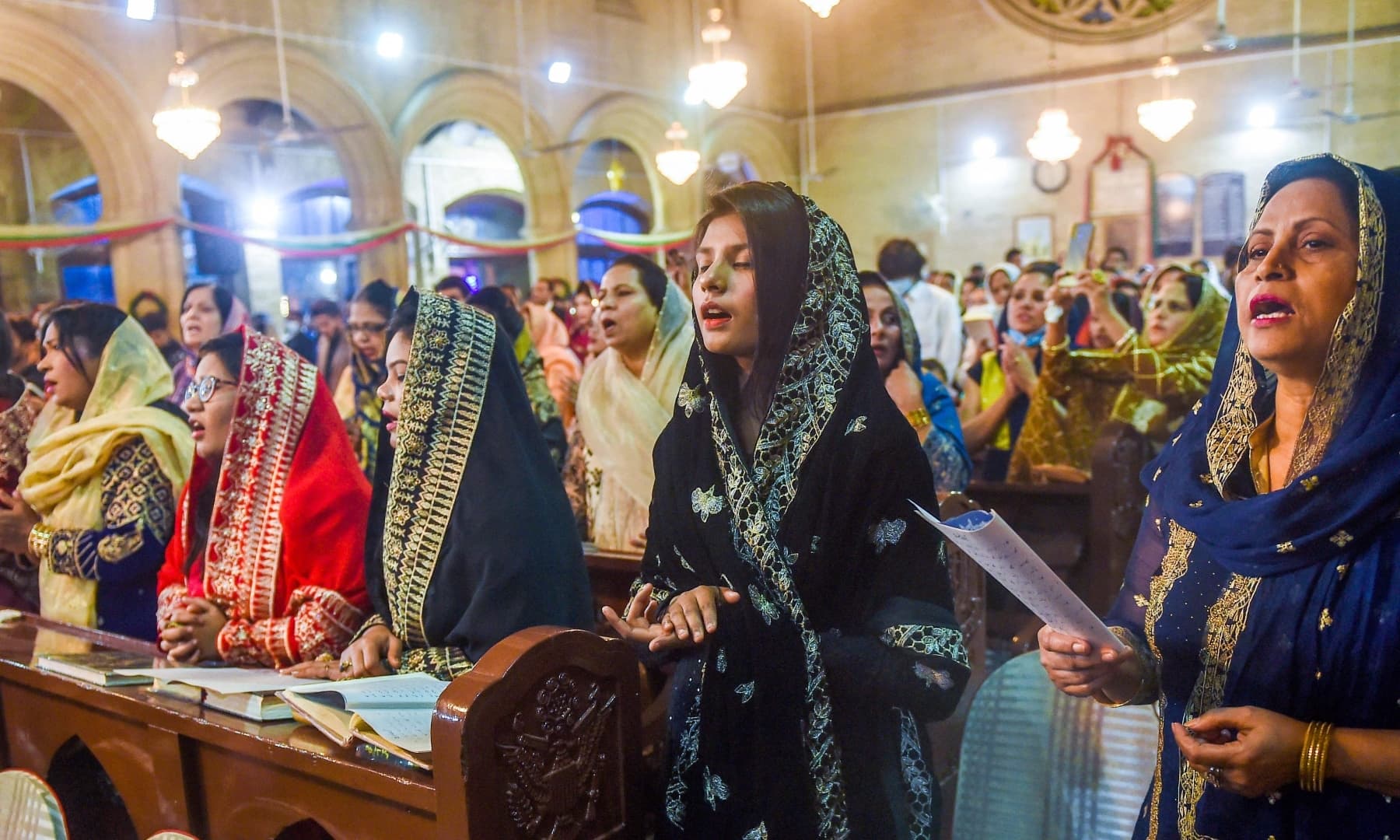
FAISALABAD, Pakistan: A Christian woman from an exceptionally vulnerable family in Faisalabad is pursuing justice after allegedly fighting off a ne
Punjabi generals plan to turn Balochistan into second Afghanistan. Ahmar Mustikhan

Washington DC: July 15, 2010. (PCP) "It's a civil war," journalist Malik Siraj Akbar declared on phone from Quetta.
And the thought crossed my mind : may the Punjabi generals never covet your homeland; if they do Balochistan might become a second Afghanistan.
As I pen these lines, I share the pall of gloom and massive anguish that has descended over Balochistan in the wake of the killing of two seasoned political activists, who jointly had more than six decades of struggle behind them: Habib Jalib Baloch and Maula Bakhsh Dashti. Even if the two slain leaders had serious political differences with organizations that are closest to my heart, like for instance the Baloch Students Organization [Azad] of Baloch folk heroine Banuk Karima Baloch -- the first-ever female to be charged with sedition in Pakistan --, or for that matter the two party of martyrs, Baloch National Movement and Baloch Republican Party, that does not mean I shall stop short from condemning their murders in the strongest possible terms.
Let me go in the time tunnel more than three decades back.
"Revolution in the Revolution?" by Regis Debray was once his favorite book more than 30 years ago and he highly recommended the book to others. He was reputed to be so enthusiastic about political polemics and debate, that according to his own token he could talk non-stop on Balochistan liberation for four days in a row.
When he came to visit me at my home, I felt the same reverence for him as a diehard person of religion would have for his prophet or saint. Straight hair, dimunitive, at the time slim, and with piercing looks, something told me he would have his name in history one day. And I was darn right.
His favorite quotation was Goethe's "All theory is gray. The golden tree of life is green."
He is now no more. My friend Habib Jalib Baloch, a Baloch intellectual and lawyer of the supreme court, former chairman of the Baloch Students Organization, general secretary of the Balochistan National Party, and one the best brains of Balochistan. Not many know but he was a member of the largely nomadic Pirkani tribe that roams the expanse of the Pakistan-Afghanistan border in Occupied Balochistan.
"The Wretched on the Earth," by Frantz Fannon was once his favorite book more than 30 years ago, at around the same time Habib Jalib Baloch was chairman of the BSO, he was the chairman of the Baloch Students Organization [Awami]. He was one of the main brains behind the unified Baloch Students Organization in the middle 1980s, a dedicated political worker.
The first time I saw him, I vividly remember he was fixing the Scotch whiskey drinks for the then guerilla leader with huge bloodshot eyes Sher Mohammad Marri, as he combed his overflowing hair, at his hotel room at the Frontier Hotel near the Intercontinental Hotel in Karachi in 1979.
He is now no more. My friend Maula Bakhsh Dashti, a Baloch activist, and former chairman of the B.S.O. [Awami] and member of the central committee of the National Party.
Both of them had been to my home in Karachi on different occassions. Both of them were once my leaders.
I remember I was so very much buoyed by the idea of Baloch liberation then, just as I am now, that when my late uncle, the famous Karachi builder A. Sattar Mustikhan, gave me Rs. 1,000 as reward for scoring high marks in my matric exams, I went straight to the hostel of the Dawood College of Engineering and Techonology in Gulshan-i-Iqbal and delivered it to Habib Jalib Baloch. As a 20-year-old, I thought this act was a baby step towards Baloch liberation.
In the case of Habib Jalib Baloch, the hand of the dirty angels of Pakistan, the Military Intelligence and the Inter Services Intelligence is clearly visible as an organization of their hired guns, the so-called Baloch Mussalah Tanzim claimed responsibility.
But in the case of Maula Bakhsh Dashti a hitherto unknown organization the so-called People's Liberation Army claimed responsibility for the cowardly act. Even if it is true that the five years of Dashti as District Nazim left much to be desired and were not the most shining part of his political career, he certainly did not deserve death.
The faceless, leaderless, shadowy organization must be condemned in the strongest possible terms, because the names of the armed resistance that command pockets of popular support are well-known to the Baloch populace -- Baloch Liberation Front, Baloch Liberation Army, Baloch Republican Army and the relatively new, Lashkar-i-Balochistan. Every politically conscious Baloch knows who their respective leaders are.
Balochistan must not be allowed to become a second Afghanistan or Lebanon of the 1980s where countless armed groups, teared apart their national and state fabric. In our case, Balochistan has not even been reborn as a state and this free-for-all can lead to still birth. If these splinter, faceless armed groups are given a license to do what they want, the entire political society would become their hostage.
Other than Malik Siraj Akbar, I called a Baloch journalist, whose documentaries on society and environment are one of the most interesting ones I have ever seen, Aziz Sanghur
Sanghur said, "Killing of the two leaders shows there is a nexus and something more than what meet the eyes." He said Maula Baksh Dashti was a commoner, who never went after worldly riches or corruption and those who killed him have committed a grave injustice.
My brother and political teacher since early 1980s, Dr. Zaffar Baloch, president of the Baloch Human Rights Council of Canada, said it was possible even the killing of Dashti was a handiwork of the agencies to create pubic support in Mekran for a military operation.
That the Punjabis really want to plunge Balochistan into civil war is bared by the ludicrous police report to Islamabad that says the killing of Habib Jalib could have been in retaliation for the killing of Maula Bakhsh Dashti,
Like Dr. Zaffar Baloch, UAE-based veteran Baloch intellectual and freedom activist Saeed Amiri condemned the cold-blooded murders, saying "Pakistan has adopted a new strategy of cleansing of Baloch leadership and leave Baloch as a headless nation."
Amiri said, "Yesterday they killed Maula Bakhsh Dashti, today Habib Jalib and tomorrow they will murder another leader."
An advocate of armed struggle, he regretted the road to parliament for Habib Jalib Baloch and Maula Bakhsh Dashti ended in their assassinations.
It is true that the two leaders, besides once being chairmen of two different factions of the militant Baloch Students Organization, had one other thing in common: they were staunch advocates of parliamentary politics.
However, during their student leadership days, Maula Bakhsh Dashti used to say Pakistan's Western-style bourgeois democracy would not give much to the Baloch masses, while Habib Jalib was famous for his quotation that even if the Baloch elected representatives become "Tarzans" in Pakistan's parliament, they can do precious little for they are heavily outnumbered by the Punjabis.
To a question from a dear friend, I wrote back, "Yes we fully support sarmachars [freedom fighters], but we will never support the hichmachars [terrorists] for the latter can only lead us into an Afghan-style perpetual civil war situation that in my humble view is counter-productive to Baloch national interests and aspirations. We reserve our right to condemn actions that we think undermines the international legitimacy of the just struggle of the Baloch people.
"I mean you can see how much I condemn the politics of Senators Hasil Bizenjo and Malik Baloch, but of course I would never want them dead. Political differences and debates should not be settled by violent means."
Balochistan is not the first liberation struggle in history; neither will it be the last. In all liberation wars, there have been divergent shades of political opinion. Some want autonomy, others self-determination and yet others outright liberation. All these political camps viewed each other with utmost suspicion and level wild accusations against one another of being government agents.
Ask Andrew Eiva, a major supporter of Balochistan independence in Washington DC, about his experiences in his ancestral Lithuania, where he took part in the liberation war. I was surprised to learn from Eiva the animosity among different groups during the Lithuanian war of independence against Russia was no different from what is today seen in Balochistan as it struggles to end the Punjabi stranglehold.
Of course the bravest were those who publicly demanded independence as they were the ones who were willing to sacrifice their all, but still under certain circumstances, even those who were meekly asking for autonomy, played a heroic role, Eiva recalls.
Baring a few exceptions, in Balochistan, there are not many Baloch politicians or political workers who can truly be called pro-Pakistan. Not even hashish-lover Chief Minister Nawab Aslam Raisani, nor auntie-eloper Governor Nawab Zulfikar Magsi. One possible exception is the "Thief" of Jhalawan, Sardar Sanaullah Zehri, who allegedly killed his brother and as many as 100 Zehri people with his own hands, and who is dreaming overtime to become the next chief minister of Balochistan.
You May Also Like
SHEIKHUPURA, PAKISTAN: “Bring my son home.” Behind these words is the desperate cry of a Christian mother who says she has been separat
Sardar Mushtaq Gill Calls for a New Standard in Bible Distribution: “A Bible Must Be Read, Not Simply Distributed”
LEAD Minis


PCP need your support that we may provide you better services: click on donate


"Trial of Pakistani Christian Nation" By Nazir S Bhatti
On demand of our readers, I have decided to release E-Book version of "Trial of Pakistani Christian Nation" on website of PCP which can also be viewed on website of Pakistan Christian Congress www.pakistanchristiancongress.org . You can read chapter wise by clicking tab on left handside of PDF format of E-Book.