
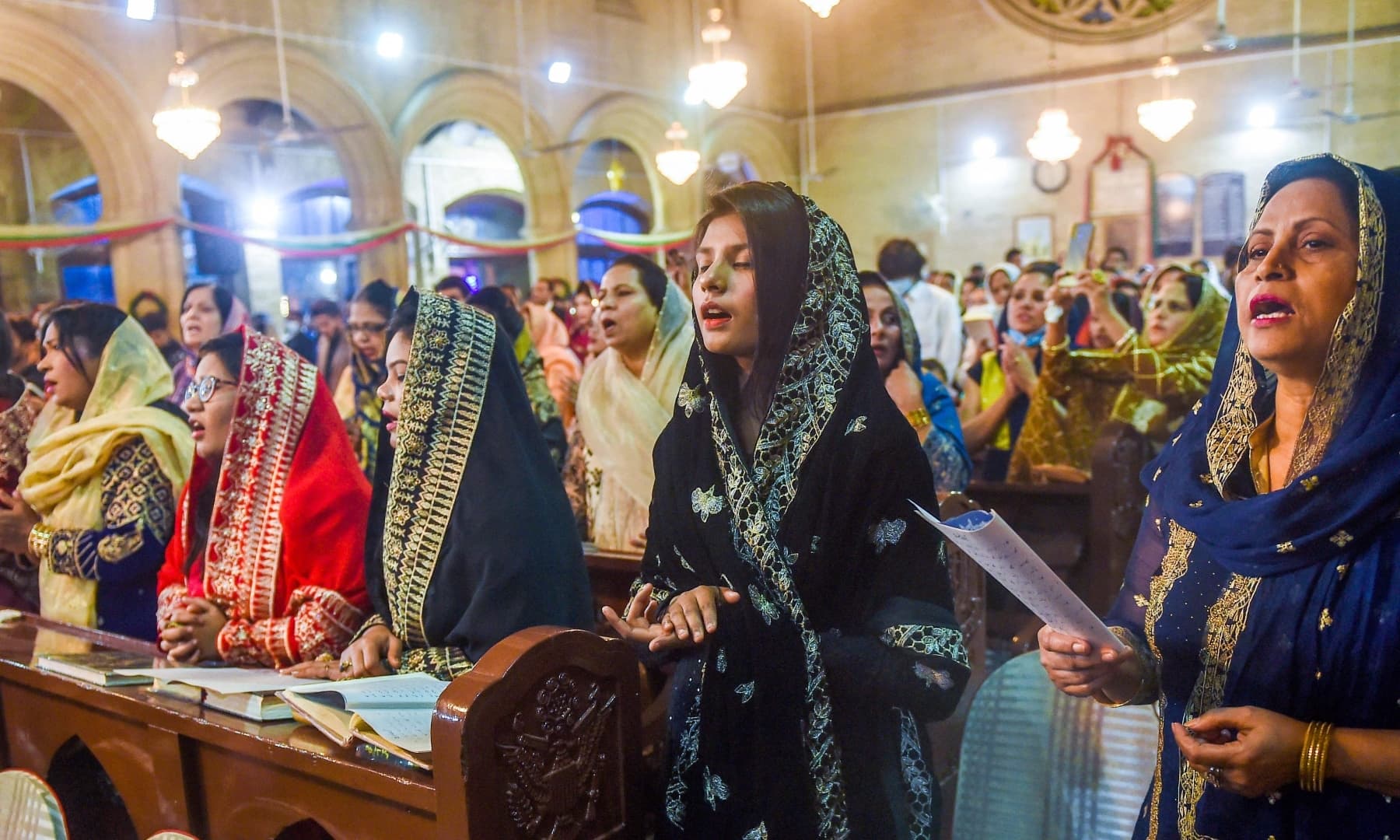
FAISALABAD, Pakistan: A Christian woman from an exceptionally vulnerable family in Faisalabad is pursuing justice after allegedly fighting off a ne
PJF urges G8 and G20 leaders to support mediation to resolve longstanding Kashmir issue

Toronto: June 26, 2010: (PCP) On the occasion of the G-8 and G-20 summits (June 25-27), Peace and Justice Forum (PJF) has urged the leaders and Presidents of the European Council and Commission for their help in encouraging both India and Pakistan to come up with some kind of a road map, in their next month’s foreign ministers meeting in Islamabad, aimed at achieving a lasting political settlement of the Kashmir issue, which is fuelled by political alienation. Moreover, India must be persuaded to put an end to widespread human rights violations by its forces in Kashmir and to bring the perpetrators to justice.
Mr. Mushtaq A. Jeelani, Executive Director of PJF, in separate letters to Argentinian President Cristina Fernández de Kirchner, Australian Prime Minister Julia Gillard, Brazilian President Luiz Inácio Lula da Silva, British Prime Minister David Cameron, Canadian Prime Minister Stephen Harper, Chinese President Hu Jintao, French President Nicolas Sarkozy, German Chancellor Angela Merkel, Indian Prime Minister Manmohan Singh, Indonesian President Susilo Bambang Yudhoyono, Italian Prime Minister Silvio Berlusconi, Japanese Prime Minister Naoto Kan, Mexican President Felipe Calderon, Korean President Lee Myung-bak, Russian President Dmitry Medvedev, Saudi Arabia’s King Abdullah Bin Abdul-Aziz, South African President Jacob Zuma, Turkish Prime Minister Recep Tayyip Erdoðan, US President Barack H. Obama, European Council President Herman Van Rompuy and President of the European Commission José Manuel Durão Barroso, expressed his serious concern about India’s failure to live up to its promise of a “zero-tolerance” policy towards human rights violations, and the failure of India and Pakistan bilateral process to resolve the longstanding Kashmir issue.
The Executive Director wrote: The situation in Kashmir is very volatile and it has the potential to spin out of control. The mood on the ground is angry, thousands of people have been protesting against the occupation forces’ heavy-handed approach to suppress the people’s movement demanding democratic values, respect for human rights, justice, freedom and the right of self-determination. He underlined that during the last few weeks, several protesters have been killed and hundreds have been wounded in pitched street battles between anti-India protesters chanting: “We want freedom” – “Indian forces leave Kashmir,” and the Indian occupation troops using brute force to get the situation under control.
Mr. Jeelani recalled that the Kashmir issue has dominated the geopolitics of South Asia for nearly 63 years because of continuing rivalry between India and Pakistan. They have fought three major wars since their independence from Britain in 1947, two of them over the disputed region of Kashmir. He underscored the Kashmir dispute between the rivals is the root of the nuclear arms race, which has resulted in the diversion of resources from human development to militarization. Unfortunately, the people of Kashmir are caught in the middle of this deadly tug-of-war.
He reminded the leaders that since October 1989, the 700,000 strong Indian forces have killed more than 100,000 Kashmiris – many more scarred and wounded, to silence the people’s demand for justice, respect for human rights, freedom and the right of self-determination. They continue to carry out arbitrary detention, summary executions, custodial killings, extrajudicial executions, enforced disappearances, rape, sexual exploitation, torture and fake encounters. Generations of Kashmiris have grown up under the shadow of the gun; not a single family is unaffected; property worth hundreds of millions of dollars has been destroyed and the suffering and devastation continues unabated that has inflicted loss of life and destruction on an unprecedented scale, sadly drawing no significant attention from the international community.
The Executive Director warned that impunity has become a licence for the Indian occupation forces to wreak havoc with the lives of Kashmiris. The deliberate and unprovoked attacks and other patterns of abuse have all become too frequent to report. No perpetrator has ever been prosecuted in a real manner, despite the fact that such crimes have been extensively documented by many international human rights organisations including Human Rights Watch and Amnesty International.
He reminded the leaders of a recent (June 7, 2010) statement on Kashmir by New York-based Human Rights Watch about the situation in Kashmir: “The recent killing of three men by soldiers in Jammu and Kashmir in an apparent faked encounter with so-called militants underscores the urgency for the Indian government to repeal the Armed Forces Special Powers (Jammu and Kashmir) Act (AFSPA). Under the Act, which has been in force in Kashmir since 1990, soldiers may not be prosecuted in a civilian court unless sanctioned by the federal [Indian] government, which is extremely rare.”
Mr. Jeelani underlined India’s failure to live up to its international obligations: “After a visit to India in March 2009, UN High Commissioner for Human Rights Navanethem Pillay called upon the government to… repeal of laws such as the Armed Forces Special Powers Act ‘that breach contemporary international human rights standards’ and encouraged India to welcome the visits of UN special rapporteurs. India is yet to act on those recommendations,” Human Rights Watch, World Report 2010.
The Executive Director underscored “zero tolerance” promise of the Indian Prime Minister is yet to be honoured: “If his [Indian Prime Minister, Manmohan Singh] promise of ‘zero tolerance’ of human rights violations is to have any significance, the… Government needs to ensure that all persons suspected of involvement in… killings, including Army soldiers and officers irrespective of rank, are brought to justice, in proceedings which meet international standards of fairness. The Government must also ensure that all incidents of suspected summary, extrajudicial or arbitrary executions are probed promptly, thoroughly and effectively through independent and impartial bodies in line with India’s obligations under international human rights law,” Amnesty International, June 8, 2010.
Mr. Jeelani requested leaders’ attention to an investigative report that describes the situation in Kashmir: The Harvard Law Record, published an article on January 12, 2010 authored by Anil Choudhary, India buries dissent in Kashmir: “Nearly 2,600 bodies have been discovered in single, unmarked graves and in mass graves throughout mountainous Indian-controlled Kashmir… This report is one of the most damning pieces of evidence of the ‘crime against humanity’ perpetrated by the Indian armed forces in their occupation of the disputed territory of Kashmir. The Indian occupation of Kashmir casts a dark shadow over India’s shining image as the largest democracy in the world. Indian democracy prides itself on freedom of speech and expression and the right of its people to dissent. But the manner in which the dissent of the Kashmiri population has been crushed illustrates that India still has a long way to go to be a real functional democracy… The Indian state has, for decades, been suppressing the largely non-violent dissent of Kashmiri people against the militarization of Kashmir. The Indian state has used the divisive propaganda of militancy and religion as tools to suppress any kind of dissent against its forced occupation of the region. The Indian state has tried to keep not only the international community in the dark about its hostilities toward Kashmiris but also the local Indian population, by controlling media reports of the real situation on the ground in Indian occupied Kashmir...”
He reminded leaders that last few years have seen spontaneous, massive and non-violent protests where virtually everyone young and old, men and women, boys and girls are out on the streets protesting against India’s continued occupation. Such – on and off – protests have invigorated the Kashmiri freedom struggle into a classic people’s movement. The voice that India has tried so forcefully to silence in Kashmir has massed into a loud thunder. Kashmir’s young generation that has helplessly watched the Indian forces’ brutality against innocent civilians for more than 20 years has suddenly discovered the power of mass protest, which has shocked the Indian government.
The Executive Director urged leaders to remind India that it is high time to realise the fact that control over a region alone does not mean sovereignty over a chunk of land. It is the people who make up a nation and if they are perpetually alienated, any territorial supremacy achieved through brute force alone can never guarantee long-term peace.
He reminded leaders that Kashmir’s resolution is important for the stability of Afghanistan: Dr. Daniel Markey, Senior Fellow for India, Pakistan, and South Asia, at Council on Foreign Relations (CFR), a Washington-based think tank, elaborates on how the unresolved Kashmir issue affects security in South Asia: “There is little doubt that normalized relations between India and Pakistan, including a regionally acceptable settlement on Kashmir, would offer tremendous benefits to the United States. Indo-Pak tensions are especially dangerous because they bring two nuclear states toe-to-toe; they distract Islamabad from the urgent task of combating terrorists and militants on its own soil; and they contribute to Pakistani suspicions about India’s activities in Afghanistan. Thus, the long-standing dispute over Kashmir is one part of a wider regional dynamic that has direct implications for Washington’s ability to support a stable Afghan state and to address the threat posed by terrorist groups in South Asia...”
Mr. Jeelani cautioned leaders of any optimism about chances for peace between India and Pakistan are being better now than they have been for decades; there has to be considerable caution because the nuclear-armed rivals have been there many times before: one step forward, two steps back, pledging peace only to be threatening each other with even greater bitterness, sometimes the very next day. At stake are the issues of settlement of the Kashmir imbroglio, a root-cause of the on-off tensions during the past 63 years, and creating sustainable peace between two neighbours. Both issues are interrelated, that makes it essential to settle the former in order to achieve the latter.
The Executive Director urged leaders to support Finland’s call for a third party mediation to resolve the longstanding Kashmir issue.
Mr. Jeelani underlined the perception that the Kashmir issue is a bilateral matter between India and Pakistan is unfounded. Kashmir is not a territorial or bilateral issue. It is about the future of 15 million people with their own history of independence; their own language and culture. This has been an explicit explanation for the failure to resolve the Kashmir issue through on-again and off-again bilateral dialogue for the past 63 years. The people of Kashmir have lost complete faith in the bilateral process of India and Pakistan and their ability to resolve the issue.
He underscored that the conflict in Kashmir is a “political” and “human” tragedy and the world community, including India and Pakistan, have overlooked this critically important human dimension of the issue. The Kashmiris’ demand is simple and in accordance with international law: implementation of the United Nations resolutions for a plebiscite to determine the future status of the disputed region in a peaceful and democratic way. Whatever the outcome, it will be impartial and binding for all the three parties – the people of Kashmir, India and Pakistan.
The Executive Director urged leaders’ attention towards yearning of the15 million people of Kashmir for peace, justice, freedom and the right of self-determination. They want a just and dignified peace that guarantees total freedom from foreign occupation and alien domination. Their struggle to achieve that right of self-determination will not be extinguished until India and Pakistan accept its exercise by the people of Jammu and Kashmir.
He said PJF appreciates their (leaders) unequivocal commitment to global peace, security, international law, democratic values, human rights and fundamental freedoms.
Mr. Jeelani emphasised that the world community must help India and Pakistan to transform the Kashmir issue from being a bone of contention to a bridge of understanding for lasting peace and prosperity of South Asia’s billion plus people. A peaceful solution of the Kashmir issue will help to bring stability in the South Asian region, including in Afghanistan and eliminate a potential threat of another major war. This would help lay the foundation for a new era of coexistence between India and Pakistan.
“More importantly, it is time the international community demanded an end to widespread human rights violations by the Indian occupation forces in Kashmir and to bring the perpetrators to justice,” continued Mr. Jeelani.
“PJF hopes that leaders would give due consideration to the unresolved issue of Kashmir and use their influence to persuade New Delhi and Islamabad to let the people of Kashmir determine the future status of the disputed region in a peaceful and democratic way,” concluded the Executive Director.
You May Also Like

SHEIKHUPURA, PAKISTAN: “Bring my son home.” Behind these words is the desperate cry of a Christian mother who says she has been separat
Sardar Mushtaq Gill Calls for a New Standard in Bible Distribution: “A Bible Must Be Read, Not Simply Distributed”
LEAD Minis


PCP need your support that we may provide you better services: click on donate


"Trial of Pakistani Christian Nation" By Nazir S Bhatti
On demand of our readers, I have decided to release E-Book version of "Trial of Pakistani Christian Nation" on website of PCP which can also be viewed on website of Pakistan Christian Congress www.pakistanchristiancongress.org . You can read chapter wise by clicking tab on left handside of PDF format of E-Book.