
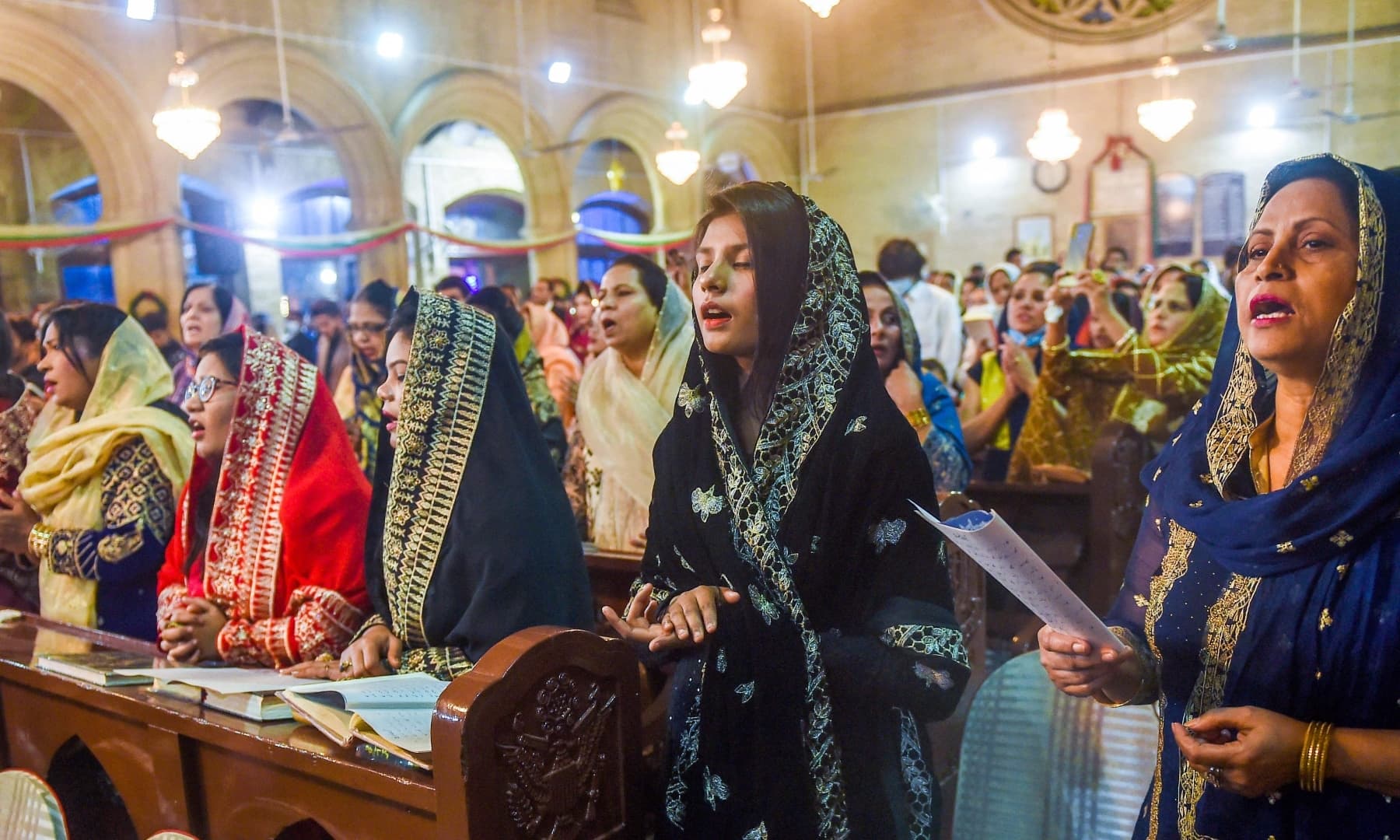
FAISALABAD, Pakistan: A Christian woman from an exceptionally vulnerable family in Faisalabad is pursuing justice after allegedly fighting off a ne
Famous Indian writer Yogi Sikand clarifies about his article in Times of India

Dear Dr. Zafrul Islam Khan,
This is with regard to your letter sent to the editor of the Times of India in response to my article that was published on 13th May, 2010.
When I look back at what I had written, I now do agree that my use of the terms 'temerity' and 'blood-curdling' were uncalled for. I do regret using them, and I apologise, but I wonder why you do not appear similarly upset when different sectarian groups among the ulema often use much more harsh words against each other in their seemingly endless sectarian polemics.
I must say that I do not at all agree with some of the claims that you have made in your letter.
Firstly, I have not tried to 'malign the whole tribe of Muslim scholars, the ulama', as you allege. I have been writing on the ulema for a long time, and some of my pieces have been published in your Milli Gazette as well. Many of these articles recognise and highlight the positive contribution that some ulema are making or have made in the past.
Secondly, you mention that 'This particular fatwa which was an individual opinion expressed by an individual scholar to another individual and never made public by either side.' I beg to differ. The said fatwa is hosted on the website of the Deoband madrasa's Dar ul-Ifta, which, one supposes, is meant for interested members of the general public to read.
Thirdly, I have consistently, throughout all my writings, made it very clear that Indian madrasas have nothing to do with terrorism. Many of my articles making this point have been published in your own magazine as well as various other periodicals. I have even written, along with a Deobandi scholar, an Urdu book precisely to rebut false allegations of Indian madrasas being engaged in terrorism.
In the original version of my article, which I had sent to the TOI correspondent Mr. Sameer Arshad (at his request), I had written, "Although charges about Indian madrasas being involved in training terrorists are unfounded, the allegation that, generally speaking, they teach, preach and foment obscurantist and ultra-reactionary beliefs in the garb of Islam certainly cannot be dismissed easily. Nor can the assertion that, under certain circumstances, such beliefs can indeed lead to extremism and even violence, as the case of Pakistan illustrates, be ignored."
Anyone who reads this sentence should be easily able to understand what I had intended to say and that my intention was certainly not to claim that Indian madrasas are engaged in fomenting terror ( contrary to what you have alleged). Firstly, this sentence clearly insists that charges about Indian madrasas being engaged in terror are false and unfounded. Secondly, it suggests that the allegation that certain views [as, for instance, about other Muslim sects] taught in many madrasas can, if lead to extremism (as is obviously and undeniably the case in Pakistan) cannot be ignored. In other words, even if the allegation is wrong, we cannot ignore it....we need to engage and even critique it, if necessary. This does not at all mean that I have argued (as you seem to claim) that madrasa education necessarily leads to extremism and violence. In any case, my first point--that the charges against Indian madrasas being engaged in terrorism are unfounded--should effectively rebut your claim that I have argued that "madrasa teachings lead to 'extremism and even violence' ".
I must here mention that I had instructed Mr. Sameer Arshad of the TOI to use only the draft of the article that I had sent to him and not to tamper with it in any way, given the sensitivity of the subject. However, entirely without my knowledge and permission, the Times of India published a considerably mis-edited version of my article on the 13th of May, 2010. In this mis-edited version, it substituted the original line, ' 'Although charges about Indian madrasas being involved in training terrorists are unfounded, the allegation that [...] under certain circumstances, such beliefs can indeed lead to extremism and even violence, as the case of Pakistan illustrates, be ignored.' with the following line: "Nor can the assertion that such beliefs lead to extremism and even violence be ignored." This it did entirely without my knowledge.
Apalled at the way my article was disfigured without my knowledge or permission by the Times of India, I immediately sent (13th May morning) an email message to the editor of the newspaper [cc-ed to everyone on my extensive email list] protesting against the mis-editing of my article. In my email message I added, " I would request you to immediately publish an apology in your paper for making this case of serious mis-editing wholly without my permission."
I regret to say that the Times of India has not taken any action on my letter and has not issued any apology so far.
Fourthly, your claim that I assume to be an 'Islamic scholar' is quite misplaced. I have never studied Islam formally in an institution. My interest is largely in Muslim social issues. But, I must say, my interest in recent months has gone wider than that and I am beginning to feel that I should devote my energies on other issues and social groups as well.
Regards
Yoginder Sikand
You May Also Like
SHEIKHUPURA, PAKISTAN: “Bring my son home.” Behind these words is the desperate cry of a Christian mother who says she has been separat
Sardar Mushtaq Gill Calls for a New Standard in Bible Distribution: “A Bible Must Be Read, Not Simply Distributed”
LEAD Minis


PCP need your support that we may provide you better services: click on donate


"Trial of Pakistani Christian Nation" By Nazir S Bhatti
On demand of our readers, I have decided to release E-Book version of "Trial of Pakistani Christian Nation" on website of PCP which can also be viewed on website of Pakistan Christian Congress www.pakistanchristiancongress.org . You can read chapter wise by clicking tab on left handside of PDF format of E-Book.