
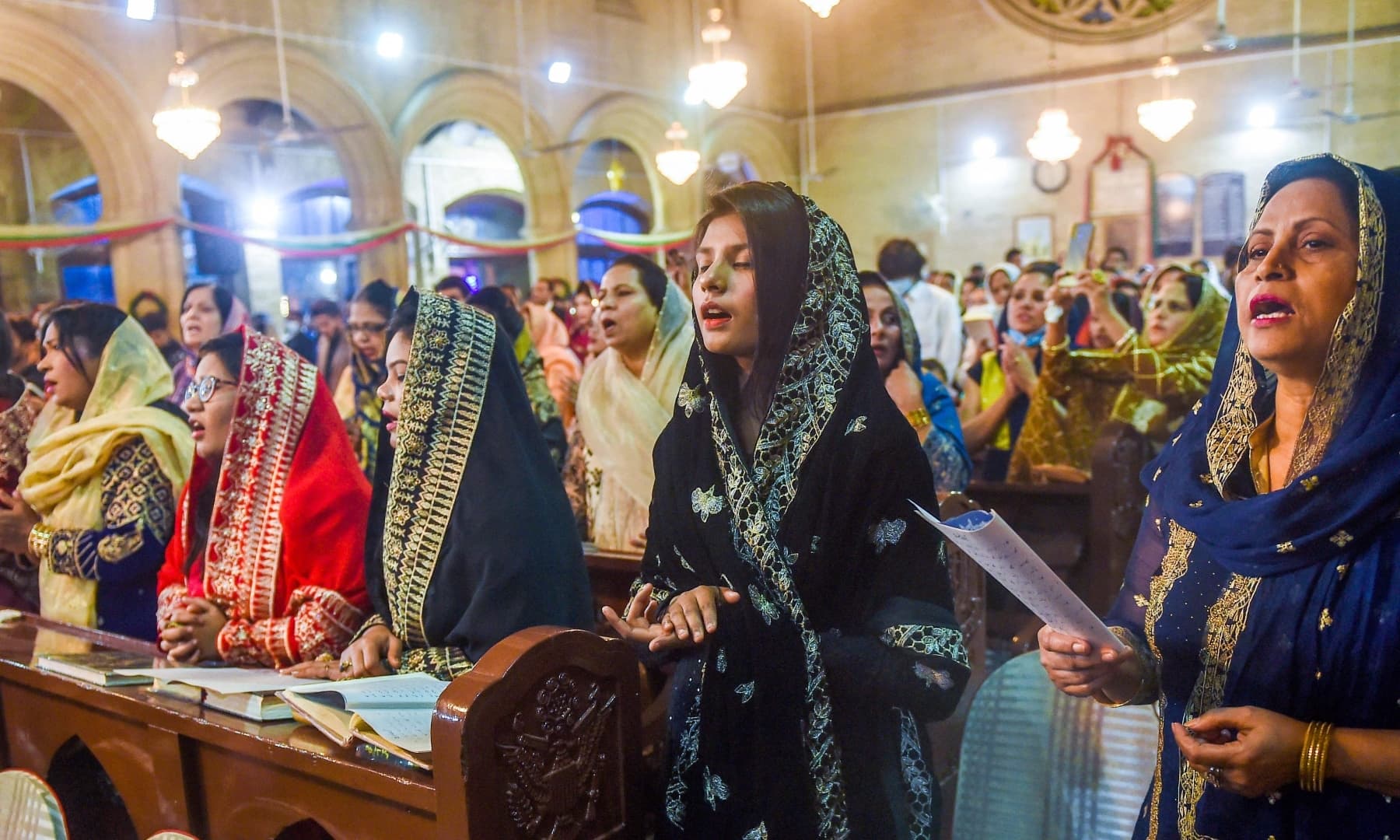
FAISALABAD, Pakistan: A Christian woman from an exceptionally vulnerable family in Faisalabad is pursuing justice after allegedly fighting off a ne
AFB joins other Baloch nationalist in Switzerland to voice freedom of Balochistan

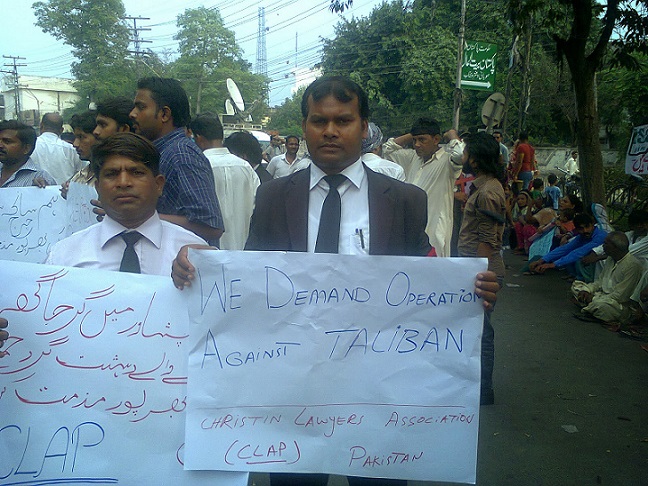
GENEVA: March 21, 2010. (PCP) "Pakistan, Pakistan -- Taliban, Taliban" and "Who did nine-eleven, Pakistan, Pakistan" slogans raised by Malik Baloch of the American Friends of Balochistan caught the fancy of by passers at the Broken Chair -- that symbolizes the opposition to cluster bombs -- today in front of the Palace of Nations in Geneva, Switzerland.
The Baloch resistance accuses Pakistan of using cluster bombs against Baloch freedom fighters in Texas-sized Occupied Balochistan in southwest Asia.
The North American team made a powerful impact at the 13th session of the United Nations Human Rights Council meeting in Geneva. The team was invited to Geneva by Mehran Baluch, who has represented Balochistan at the U.N. Human Rights Council for a decade now and who is the youngest son of the chief ideologue of Balochistan independence, Nawab Khair Bakhsh Marri.
Mehran Baluch in his speeches delivered at the United Nations has made it clear attainment of human rights in Balochistan was inseparably linked to the exercise of Baloch right to statehood.
The North American team included Laurie Deamer and Malik Baloch, presiding council members of the American Friends of Balochistan, and Dr. Zaffar Baloch and Aziz Baloch of the Human Rights Council of Canada.
In a seminar organized by the Interfaith International on March 11, Deamer said:
"I am a presiding council member of the American Friends of Baluchistan, which was founded in order to unite Americans and Baloch living in the United States, and create awareness of the need of a safe, independent, secular and peaceful Balochistan in southwest Asia."
Following is the full text of Laurie Deamer's speech:
"I have come here today to advocate for a safe Balochistan, by providing an update and making an urgent request, in the spirit of the yet to be ratified 2006 Convention for Protection of All Persons Against Enforced Disappearance, which states in Article 1, Section 1, that “no one shall be subjected to enforced disappearance,” and in Article 5 that “The widespread or systematic practice of enforced disappearance constitutes a crime against humanity as defined in applicable international law and shall attract the consequences provided for under such applicable international law.”
"Baloch people which meet the Convention’s criteria currently number anywhere from 992 (the most consistently reported figure), to 1,695 to 4,000 to 8,000 and includes women and children. The number of released persons also varies, the highest figure being 262. The National Crisis Management Cell of Islamabad has also published a missing persons lists.
"Many of the missing have been detained for months, in some cases years, without having criminal charges brought against them. Multiple sources state that detainees endure routine mental and physical torture as part of interrogation about the Baloch insurgency. Families of the disappeared are suffering the intense distress of being ignorant of their loved ones’ whereabouts, and of being economically deprived by the absence of male relatives.
"This crisis has heightened existing tensions between residents of the occupied territories of Balochistan, the federal government, security forces and intelligence agencies, the latter two parties of which are the alleged perpetrators of involuntary, enforced disappearances, according to the Human Rights Commission of Pakistan’s October 2009 report, generated on an extensive visit to the province.
"The Chairperson of the HRCP urged the federal government, in the interest of proving its reconciliatory intentions as declared in the Balochistan Package, to minimize its use of security forces.
"On behalf of Baloch missing persons and their families, and in observance of Article 1, Section 2 of the 2006 Convention, which declares that “No exceptional circumstances whatsoever, whether a state of war or a threat of war, internal political instability or any other public emergency, may be invoked as a justification for enforced disappearance,” Mr. Chairman, I again humbly and respectfully ask for your swift assistance in recovering the disappeared. The Baloch people have expressed confidence that the United Nations will continue to act in accordance with the principles proclaimed in its Charter (A. Baloch, 2008), and they are relying on your help for protection of what is widely known to be a controversial and precarious political process."
In his speech, Baloch poet and intellectual from Toronto, Canada, Dr. Zaffar Baloch, said, "There can not be a human rights violation greater than the enslavement of a people." He added, " All the categories of rights and freedoms are lost or snatched away with a single stroke." [Under foreign occupation].
Dr. Zaffar Baloch said, "Such is the case of Baloch nation, occupied by colonial powers in the 19th centruy, followed by the division into three geographical units [Pakistan, Iran and Afghanistan], and finally its forceful annexation into other political states to complete the process f degradation from nationhood into non-existence as a people."
He said," Indepdence for Baloch people can not be simply related to the nation's socio-economic development but it aaddresses the very core question of survival as a historical entity."
"Today, the ongioing gross human rights violations in the Iranian and the Pakistani occupied Balochistan cannot be termed as internal matters of the oppressor states; instead it needs to be understood as agressive measures against other nations."
You May Also Like
SHEIKHUPURA, PAKISTAN: “Bring my son home.” Behind these words is the desperate cry of a Christian mother who says she has been separat
Sardar Mushtaq Gill Calls for a New Standard in Bible Distribution: “A Bible Must Be Read, Not Simply Distributed”
LEAD Minis


PCP need your support that we may provide you better services: click on donate


"Trial of Pakistani Christian Nation" By Nazir S Bhatti
On demand of our readers, I have decided to release E-Book version of "Trial of Pakistani Christian Nation" on website of PCP which can also be viewed on website of Pakistan Christian Congress www.pakistanchristiancongress.org . You can read chapter wise by clicking tab on left handside of PDF format of E-Book.