La Crosse, Wisconsin: September 15, 2009. (PCP report) The Rev. Canon Patrick P Augustine, D.Min, Rector at Christ Episcopal Church, La Crosse, Wisconsin, USA, in his 15 Pentecost, September 13, 2009
Sermon presented biblical note from Mark 8:31-37 saying :
Take up your cross, the Savior said,
if you would my disciple be;
take up your cross with willing heart,
and humbly follow after me (The Hymnal 1982)
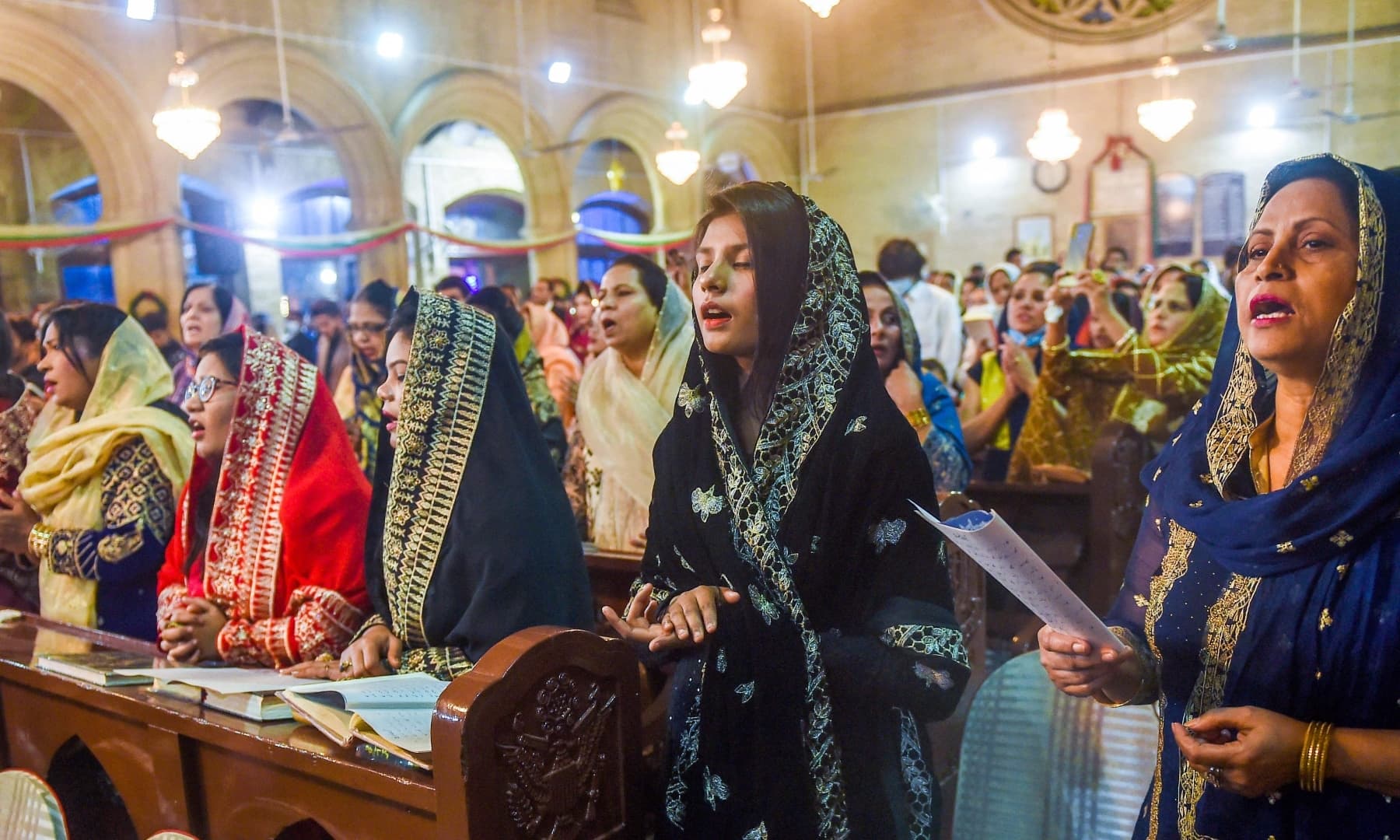
The Presiding Bishop of the church of Pakistan, Bishop Samuel Azariah, in his letter writes about the situation in the church in Pakistan states:
It is apparent that each time the Islamic identity is emphasized in the larger political and policy discourse of Pakistan, it threatens the minorities existence deeply; the more Islamic Pakistan becomes the less secure is the status of minorities in it. Christians remain under the closest scrutiny of these Islamic fundamentalist groups. --- There is a fundamental paradox in Pakistan vis-à-vis Christian-Muslim relations. On the one hand, the Christians are seen as being dalits, and therefore totally irrelevant and of no consequence. On the other hand, whenever something goes wrong between Islam and the West, the first people to feel the brunt of reactions are the Christians who face the threat of mob violence against which the state is either unwilling or unable to protect the minorities. As a church worker and in my personal understanding of the situation I believe one of our biggest problems is that the state does not show the spine or the willingness to fight for a full blown democracy and extension of rights which will be the only way to secure religious freedom as well as protection for religious minorities and their rights.
Don’t we hear the echo of the Gospel just read to us in the letter of the Presiding Bishop of the church of Pakistan? “Jesus said, “If any want to become my followers, let them deny themselves and take up their cross and follow me. For those who want to save their life will lose it, and those who lose their life for my sake, and for the sake of the gospel, will save it” (mark 8:34-35).
For the church in Pakistan there is no other option for the faithful followers to hear to “lift high the cross, the love of Christ proclaim, till the entire world adore his sacred Name.” It is their mission and their ministry to witness to the love and saving grace of their Savior in the face of persecution, discrimination and acts of terror committed against them. In order to remain grounded in the faith of the risen Christ, they understand the mystery that it is on the cross of Jesus the powers of hatred and violence were defeated that meek and week may have life of hope and resurrection. The cross is the heart of the Christian faith and the Gospel reading today articulates that theme for us. Archbishop Carey has said, “Lose the cross and you lose everything; shift it from the center to circumference and everything becomes out of focus.”
Every religion and ideology has its visual symbol, which illustrates a significant feature of its history or beliefs. The lotus flower, for example is associated with Buddhism. Judaism has adopted the symbol of Star of David. Islam is symbolized by a Crescent. The secular ideologies of our time also have their recognizable signs. The Marxist symbol is hammer and sickle. Hitler in the last century adopted ancient symbol of Swastika (6000 years old Sanskrit word ‘svasti’ meaning well being). Christianity, then is no exception in having a visual symbol.
In the early church one would consider such an idea crazy to adopt a cross as the church’s symbol. Christians in the early century avoided the cross because of its shameful association with the execution of common criminals. The first symbols which the church adopted, one finds on the walls of catacombs in Rome. There were paintings of a peacock (symbolized immortality), a dove, or, in particular, a fish ischthys was an acronym for Iesus Christos Theou Huios Soter (‘Jesus Christ, Son of God, Savior’). But none of these signs made it to the Christian symbol.
We know that it seems certain from the second century onwards Christians not only drew, painted and engraved the cross as a pictorial symbol of cross. The early church father, Turtullian, the North African lawyer-theologian wrote in about AD 200:
At every forward step and movement, at every going in and out, when we put on our clothes and shoes, when we bathe, when we sit at table, when we light the lamps, on couch, on seat, in all ordinary actions of daily life, we trace upon the forehead the sign [the cross].
For the early church using the symbol of a cross seemed to me to have been a sure way of killing a new faith stone-dead. St. Paul admits as much in his first letter to the church at Corinth, “We preach Christ crucified; a stumbling block to Jews and foolishness to Gentiles” (1 Cor. 1:23). The tiny, early church grew in spite of fierce opposition which came through satire, contempt, abuse and scorn – and eventually physical persecution. It grew from the cross. The cross became its proud symbol; the sign of early church, Christians’ secret identification signal; the way of the Cross was the only life the followers of Jesus wanted to live.
What does cross means to us today? What are our crosses? Sometime we jokingly say my trails or hardships are my cross. It is typical to think of a nutty boss or bossy mother-in-law as our “cross”, or wardens can say their rector is their “cross.” But they are not. Neither can we properly call an illness or a handicap a cross. A cross comes from specifically walking in Christ’s step, embracing his life—that Jesus is “the Way and the Truth and the Life” (John 14:6)
One way of looking at this text is that the call of Christ is no easy matter. What Jesus calls us to do is not pleasant; it is not easy; it should not be done without serious contemplation. He is simply honest with us and wants us to know very clearly what it may cost to follow him. For Christians in the Sudan, Pakistan, Saudi Arabia, Iran and Indonesia it is no small matter to be a follower of Christ. In Sudan in the last twenty years more than two million Christians have been killed by the Arab government in the North. In Pakistan, for confessing the name of Christ, thousands recently have been made homeless and dozens of them killed.
Some of us wonder “Am I worthy to be a disciple of Jesus?” Do I have stamina, perseverance to carry his cross? Martin Luther was right when he said: “God can carve the rotten wood and ride the lame horse.” Jesus chose just such people: fishermen and tax collectors, known as sinners and zealots. They were not particularly part of the religious establishment. Jesus took these ordinary earthen vessels and filled them with His grace and power to lift high the cross.
This morning we begin our fall program year with ministry Sunday. I have no idea to what Jesus is calling you to serve him in this community. One thing Gospel makes clear: “If any want to become my followers, let them deny themselves and take up their cross and follow me.” I want you to pray in your heart and come to the foot of the cross of Christ. Let us ask Jesus where he is calling us to serve him. Please join us in the undercroft following this service. We have a ministry display there. Look around on those posters that represent different ministries. Whatever the calling, it may be costly but it shall be gracious. You will experience God’s empowerment as you seek to fulfill what you have discerned to be God’s calling in your life. Let us join those saints of God in Pakistan and Sudan and others like whose names we read in the pages of the church history like Maximilian Kolbe, the Polish priest who in 1941 freely gave his life so that another prisoner at Auschwitz might live. May this be a song in our hearts this morning:
I have decided to follow Jesus
No turning back, no turning back
The world behind me
The cross before me
No turning back, no turning back